Forest fire in Iwate advances toward unevacuated zones as suppression efforts intensify
Local authorities and fire services deploy approximately 1,300 personnel for ground operations as the blaze enters its fifth day
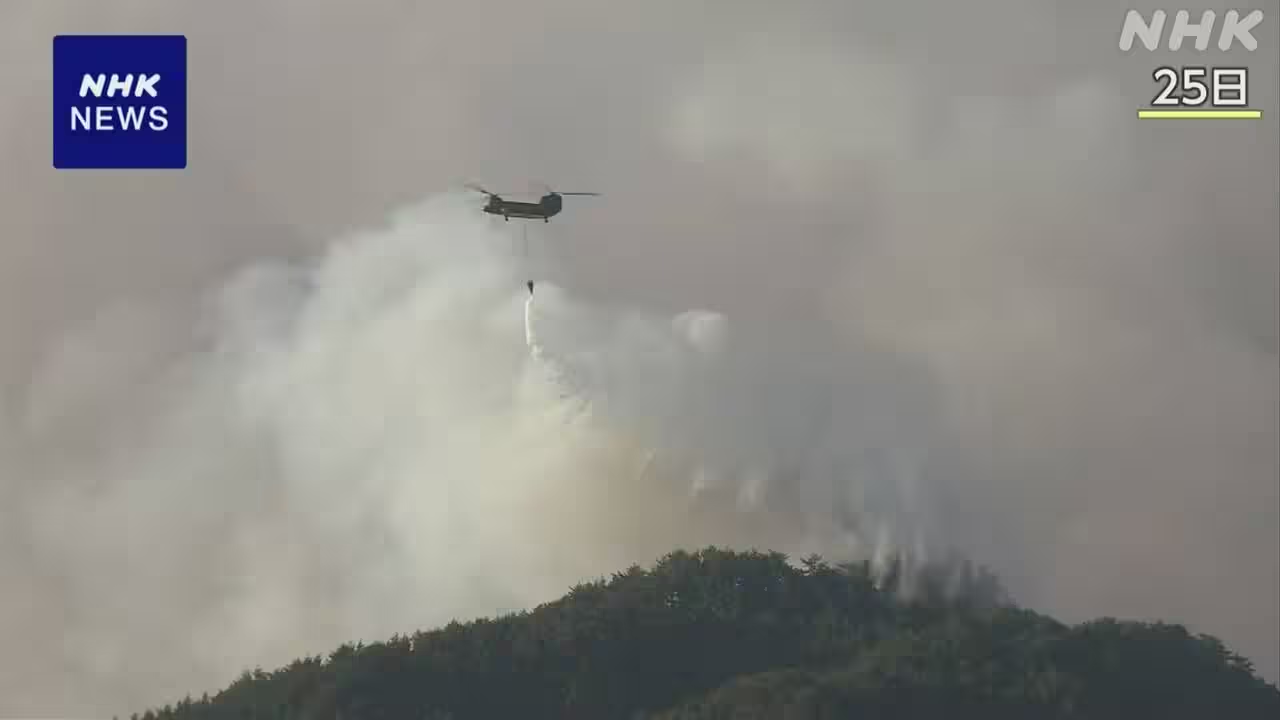
A persistent forest fire in Odate Town, Iwate Prefecture, has entered its fifth day of burning, prompting urgent reassessment of containment strategies by local authorities. As of 26 April 2026, reports from the town administration and fire services indicate that flames are now advancing toward residential areas that do not currently fall under existing evacuation orders.
This escalation marks a significant shift in the operational landscape, moving beyond the initial containment of the blaze within designated zones. While previous updates on 25 April noted the fire approaching residential peripheries, the current situation sees the threat extending into areas without formal evacuation mandates, raising the stakes for local governance and emergency response protocols.
In response to this developing threat, a substantial workforce has been mobilised to conduct ground-based firefighting operations. Approximately 1,300 personnel are currently deployed to the scene, working to suppress the flames and prevent further encroachment on unevacuated communities. The sheer scale of the deployment underscores the severity of the incident and the critical nature of the immediate response required by the fire service.
The persistence of the fire for five consecutive days suggests a sustained intensity that challenges standard suppression timelines. Local officials are monitoring the situation closely, particularly as the boundary between controlled and uncontrolled zones becomes increasingly ambiguous. The lack of specific details regarding the precise proximity of the flames to the threatened areas leaves a gap in the immediate risk assessment, though the reported advance is treated as an imminent danger to life and property.
Despite the extensive ground operations, the fundamental cause of the fire and the prevailing weather conditions contributing to its spread remain unconfirmed in the available reports. This absence of data on ignition sources or meteorological factors complicates the formulation of long-term policy interventions and highlights the reliance on real-time tactical adjustments rather than predictive modelling at this stage.
As the operation continues on 26 April, the focus remains on stabilising the perimeter and securing the safety of the unevacuated zones. The situation serves as a stark reminder of the dynamic challenges faced by emergency management in the face of rapidly evolving environmental hazards, requiring continuous coordination between local government bodies and fire services.