Japan Meteorological Agency Raises Seismic Risk Profile for Hokkaido and Sanriku Offshore Regions
The Japan Meteorological Agency has activated a specific post-earthquake alert, urging residents to verify their disaster preparedness protocols.
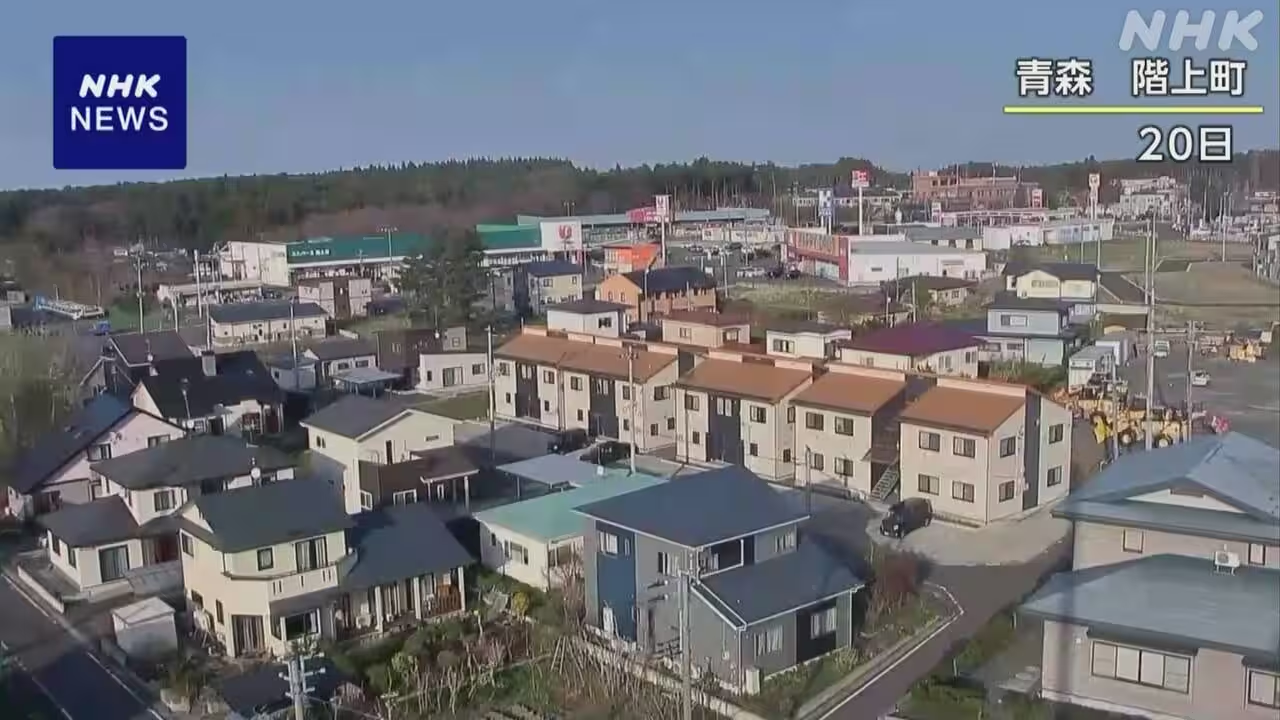
The Japan Meteorological Agency has officially issued a "Post-Earthquake Alert for Hokkaido and Sanriku Offshore" following a magnitude 7.7 earthquake that struck the Sanriku offshore area on 20 April. This institutional announcement marks a shift in the agency's hazard assessment, formally recognising that the current seismic environment differs from baseline conditions.
The alert specifically targets the tectonic activity along the Kuril and Japan Trenches. The agency states that the likelihood of a major earthquake occurring in these subduction zones is currently higher than usual. This designation reflects a policy response to the stress adjustments in the crust following the significant April event, rather than an indication of an immediate, guaranteed occurrence.
While the probability of subsequent seismic activity has been elevated, the agency clarifies that this does not imply a major earthquake is imminent or certain. The warning is strictly regional, focusing on the Hokkaido and Sanriku offshore areas and the associated trench systems, rather than constituting a general warning for the entirety of Japan.
In light of this increased statistical likelihood, the Japan Meteorological Agency has advised residents in the affected regions to check their daily disaster preparations. This recommendation serves as a precautionary measure to ensure that emergency protocols are functional and ready for potential future events within the heightened risk period.
The source material does not specify the precise duration of this elevated risk phase, nor does it provide a quantitative probability increase beyond the qualitative description of being "higher than usual." Consequently, the alert functions as a directive to maintain vigilance and administrative readiness rather than a forecast with a fixed expiration date.
This development underscores the ongoing monitoring of the Kuril and Japan Trenches, which remain critical fault systems capable of generating major seismic events. The agency's decision to activate this specific alert highlights the importance of institutional oversight in managing public safety during periods of heightened tectonic stress.