Seasonal Fires Cast Thick Haze Over Northern Thailand as Tourism Suffers
Unusually warm and dry conditions have triggered a high-risk alert from the ASEAN Specialised Meteorological Centre, impacting air quality and travel in the region.
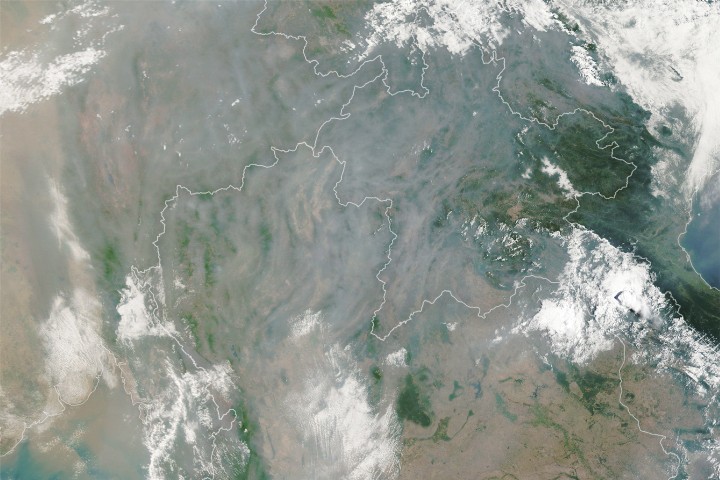
Smoke has increasingly darkened the skies over northern Thailand during the dry season, particularly affecting Chiang Mai, the country's second-largest city. A satellite image captured on 22 April 2026 shows haze partially obscuring the narrow valleys and ridges that typically offer panoramic views of the surrounding mountains. This seasonal phenomenon has become more pronounced in recent decades, with smoke frequently darkening the sky during March and April.
Most of the smoke originates from small agricultural and forest fires lit to clear crop debris or maintain forest ecosystems. Satellite sensors detected a rise in fire activity starting in January, with detections becoming more numerous and widespread through February, March, and April. Research indicates that smoke from biomass burning is a major contributor to poor air quality in the region, with one estimate suggesting that about 70 per cent of fine particulate matter (PM2.5) in Chiang Mai during April comes from these fires.
While biomass burning is the primary cause, other smaller contributors include vehicles, power plants, industry, and charcoal burning for cooking and heating. Geography also plays a critical role in trapping the pollution; the surrounding mountains block airflow and encourage temperature inversions that keep both local emissions and regional haze contained within the valleys. On the day the satellite image was taken, ground sensors recorded unhealthy to very unhealthy levels of PM2.5 throughout Chiang Mai and the wider region.
Prolonged exposure to such high levels of air pollution can contribute to respiratory and cardiovascular diseases and other health problems. The haze has also taken a significant toll on the local tourism industry. News reports indicate that the number of international travelers arriving in Pai, a popular backpacker destination northwest of Chiang Mai, has fallen by 90 per cent following more than a month of persistent haze.
Unusually warm and dry conditions have gripped the region in recent weeks, creating an environment conducive to severe transboundary haze. On 27 March, the ASEAN Specialised Meteorological Centre (ASMC) issued a high-risk alert, elevating its warning level to three, the highest on their scale. Meteorologists with the ASMC noted that dry conditions were forecast to persist over most parts of the Mekong sub-region, with prevailing winds expected to blow from the south or southwest.
Under these specific meteorological conditions, the ASMC warned that the hotspot and smoke haze situation could escalate further. The group observed that scientists report seasonal crop fires are now burning later in the day than in previous years, a shift that may influence the spread and intensity of the smoke across the landscape.