NASA Artemis II Mission Successfully Demonstrates Laser Communications
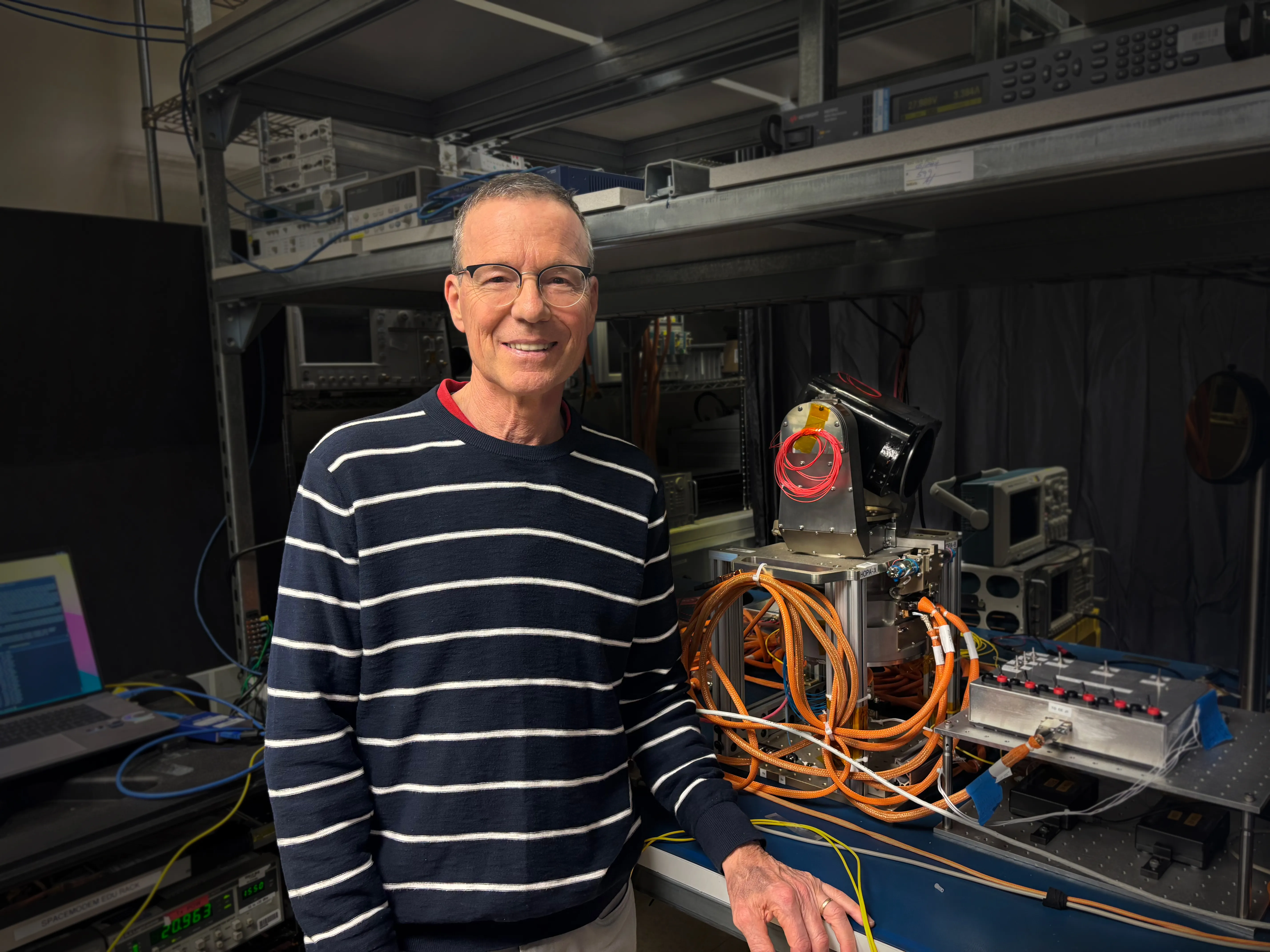
Flight manager Peter Rossoni oversaw the first operational use of laser communications on a crewed mission, freeing traditional radio systems for critical data while enhancing connectivity for astronauts around the Moon.
In April 2026, NASA's Artemis II mission achieved a significant milestone by successfully demonstrating the first operational use of laser communications on a crewed deep space flight. During the approximately 10-day journey around the Moon, the optical terminal aboard the Orion spacecraft transmitted more than 450 gigabytes of data to Earth. This transfer included video, photographs, and engineering information, marking a new era in how data is relayed from deep space.
The optical communications system utilised invisible infrared light to achieve downlink speeds of up to 260 megabits per second. This capacity is equivalent to transmitting a full-length 4K movie in about a minute. By packing more data into a single transmission compared to traditional radio, the technology significantly enhanced the connection between the crew and their support teams on the ground.
Flight Manager Peter Rossoni, who oversees the Orion Artemis II Optical Communications System at NASA's Goddard Space Flight Center, managed the transmission. Rossoni noted that the demonstration phase is now complete, having proven the system's operational viability for future long-duration deep space exploration. His role involved ensuring smooth data flow from the laser terminal on Orion to the Mission Control Center at the agency's Johnson Space Center in Houston.
The mission featured a diverse crew of four astronauts: Reid Wiseman, Victor Glover, Christina Koch, and Canadian Space Agency astronaut Jeremy Hansen. Throughout the flight, the optical terminal flew alongside the crew, successfully merging with existing infrastructure to operate in parallel to traditional radio communications before tying into the same Mission Control Center networks.
This technological advancement allowed the team to free traditional radio systems for critical data streams, which is essential for mission safety and sensitive operations. The result was a communications system with up to 100 times greater capacity, ensuring a vital link back to home base as astronauts venture into deep space for longer periods. Rossoni described communications as the secret sauce behind all NASA missions, a sentiment echoed by the successful completion of the test flight.
Rossoni followed his parents' footsteps into science, a path that eventually led him to laser communications and this specific test flight. The demonstration phase has concluded, validating the system's ability to support future exploration infrastructure. As the team looks ahead, the successful integration of high-performance communications and networking remains a key element for upcoming missions.