Russian oil exports slump to lowest levels since 2023 as Ukraine intensifies strikes on energy infrastructure
Kyiv claims Moscow has lost at least $2.3bn in revenue in March alone as long-range strikes target Tuapse, Sizran, and other facilities, even as global crude prices surge above $100 due to Gulf tensions.
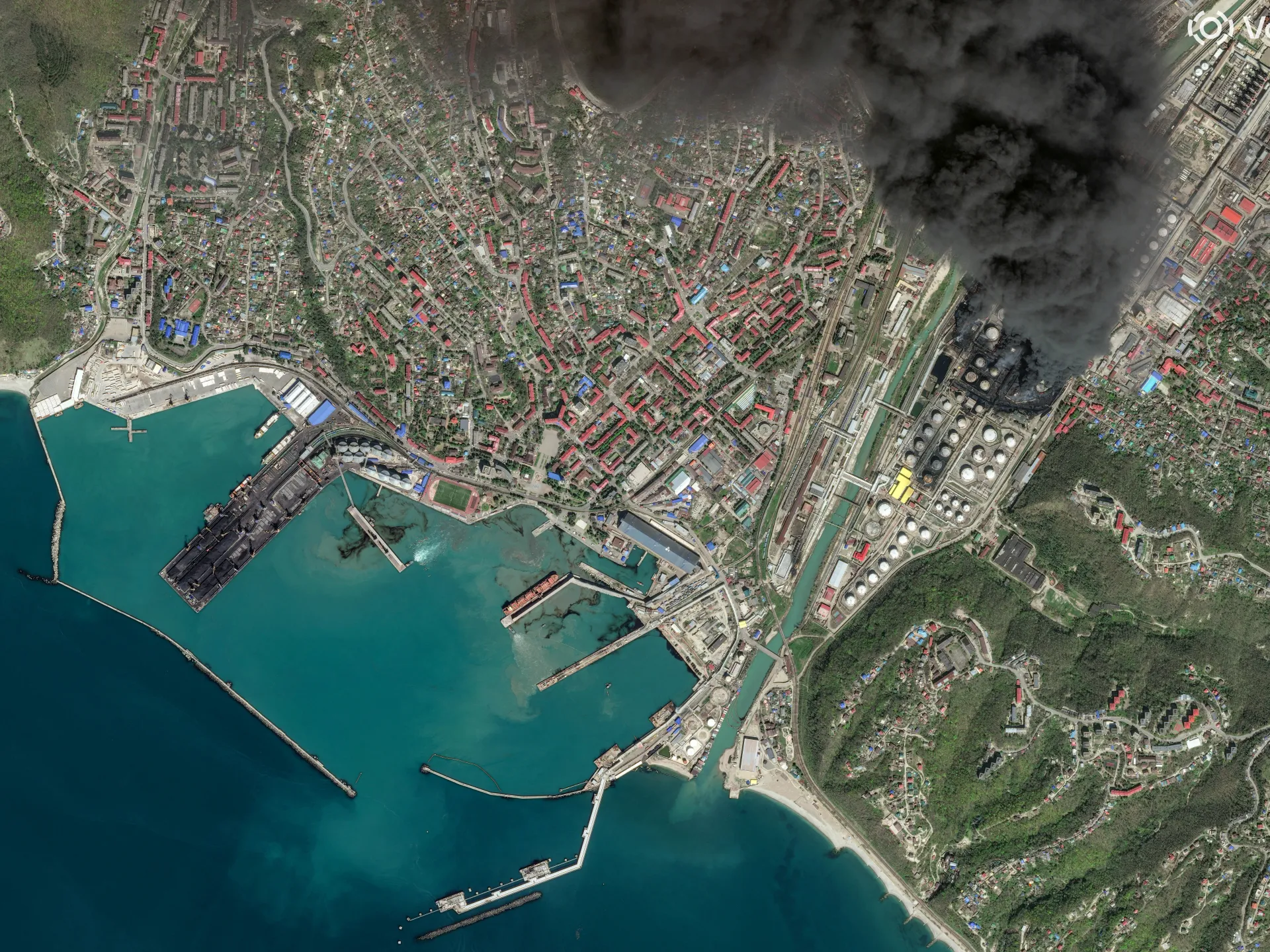
Russian oil exports have plummeted to their lowest levels since 2023, a development that defies the expectations set by a temporary waiver of US sanctions. Although Washington suspended restrictions in early March and renewed them until 16 May to stabilise global prices following the closure of the Strait of Hormuz, the measure has failed to prevent a significant decline in Russian transhipments. Data indicates that exports dropped by 300,000 barrels a day in March, with further reductions anticipated for April.
The decline is directly attributed to intensified long-range strikes launched by Ukraine against Russian port infrastructure and refineries throughout March and April. Ukrainian President Volodymyr Zelenskyy confirmed in a video address on 19 April that these operations deprived Russia of at least $2.3bn in oil revenue during March alone. The strategic targeting of facilities has forced Moscow to cut crude production by between 300,000 and 400,000 barrels a day due to the inability to export the volume.
Specific infrastructure has been neutralised, with geolocated footage confirming fires and operational halts at the Tuapse loading berths and refinery, as well as the Sizran, Novokuibyshevsk, Samara, and Gorky refineries. At Tuapse, repeated strikes caused large fires and black rain, rendering the refinery unable to ship refined products. The destruction of these nodes has effectively severed the supply chain, compelling Russia to reduce output to match the diminished capacity to move oil.
The timing of these export slumps coincides with a surge in global crude prices driven by the war in the Gulf and the closure of the Strait of Hormuz. Brent crude has topped $106 per barrel during ceasefire windows and risen as high as $119 per barrel during periods of open hostilities. While the US waiver was intended to ease pressure on global markets following Iran's blockade of the strait, the simultaneous disruption of Russian supply has created a complex market dynamic where high prices are met with reduced Russian volume.
Domestic political fallout is also evident within Russia, where repeated strikes on Baltic ports such as Ust-Luga and Primorsk have led Leningrad regional Governor Alexandr Drozdenko to declare St Petersburg a "front-line region". In response, authorities have called for reservists to form mobile fire groups to protect industrial facilities. Concurrently, President Vladimir Putin's approval rating has begun to decline, falling from 72.9 percent to 66.7 percent over six weeks, according to state polling data.
Amidst this escalation, Ukraine has diversified its security posture by signing 10-year defence cooperation agreements with Saudi Arabia, Qatar, and the UAE, while organising private air defence groups to counter drone threats. The European Union has also released a €90bn loan to Kyiv, clearing a deadlock previously caused by a Hungarian veto, just as Ukraine faces a cash shortfall in April.