NASA opens NASA-grade airflow simulation tool to US aerospace community
The computational fluid dynamics package, previously used for Artemis and Mars missions, promises to accelerate innovation by running complex simulations in hours rather than weeks.
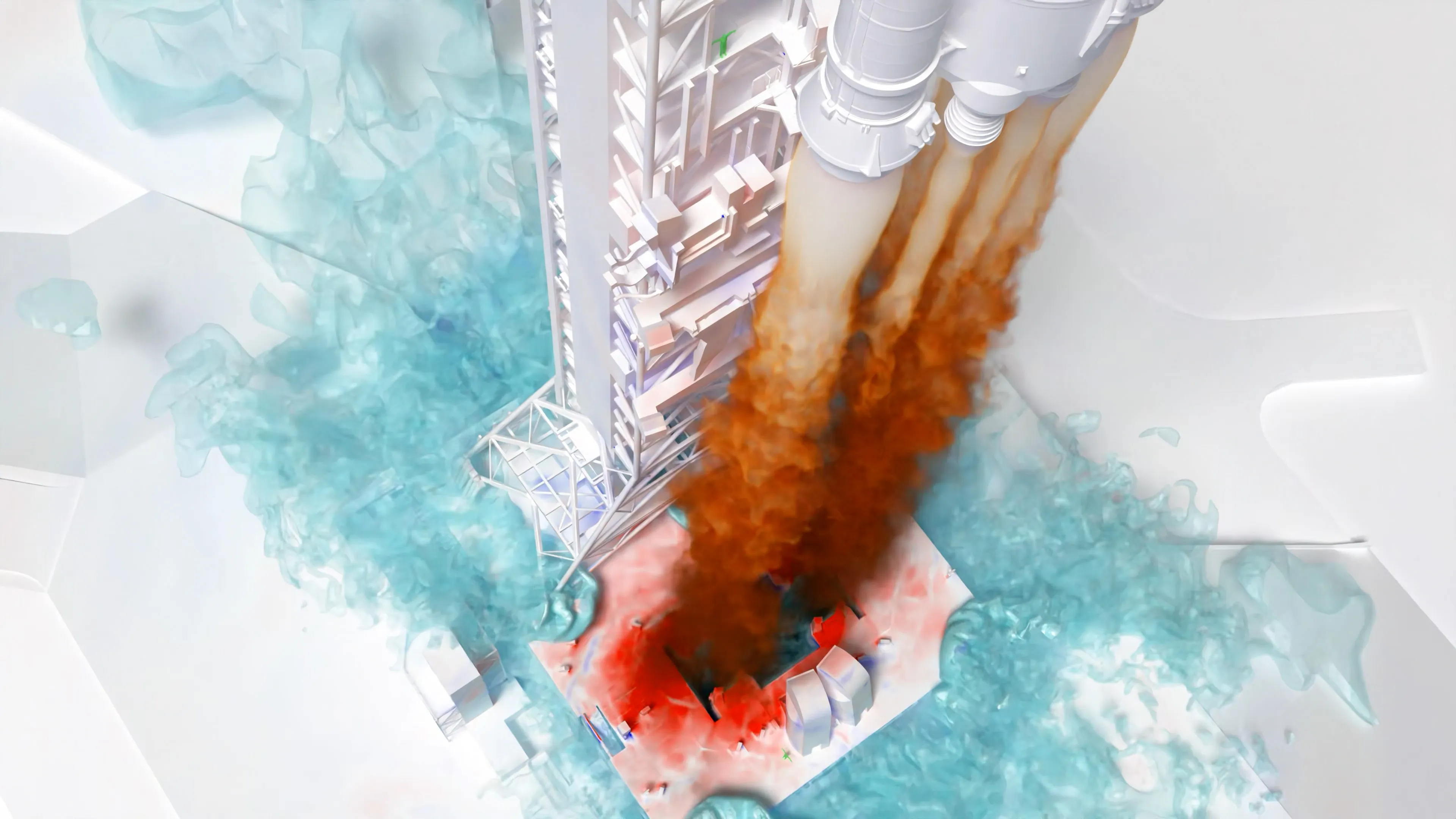
NASA has officially released the Launch, Ascent, and Vehicle Aerodynamics (LAVA) computational fluid dynamics software package to the US aerospace community. Previously an internal tool utilised by NASA engineers for critical missions, the software is now accessible to university researchers, private companies, and innovators via the agency's software catalog. The release aims to accelerate industry innovation by providing NASA-grade precision for simulating airflow around rockets, aircraft, and spacecraft.
Developed to predict how air moves around vehicles with stunning accuracy, the tool allows users to run complex simulations that previously required significant resources in just hours. Historically, the agency used LAVA to simulate Mars lander environments, predict ice formation effects on aircraft performance, and model the Space Launch System flight environment for the Artemis I mission. These capabilities are now available to the wider sector to optimise designs with high-fidelity accuracy.
A key innovation driving this efficiency is the software's compatibility with graphics processing units, or GPUs. This feature allows complex simulations to run on modest computing resources rather than requiring massive supercomputing power. Jared Duensing, LAVA team lead at NASA's Ames Research Center in California's Silicon Valley, stated that the release is about "unleashing potential" by allowing small companies and university researchers to optimise designs with high-fidelity accuracy.
The LAVA framework offers a flexible "toolbox" of three distinct options for generating meshes, which are grids of connected dots used to predict fluid behaviour. Users can switch between mesh types or combine them depending on the specific problem being solved, a significant departure from traditional computational fluid dynamics software that often forces engineers to choose a single approach. This flexibility enables users to tailor simulations to specific engineering challenges, from large supersonic airliners to smaller delivery drones.
The work on LAVA was supported through NASA's Transformational Tools and Technologies project, which sits within the Transformative Aeronautics Concepts Program under the Aeronautics Research Mission Directorate. While the software is described as having high accuracy, the full extent of adoption rates among the US aerospace industry following the release is currently unknown. Additionally, independent verification of its performance against proprietary industry standards by third parties has not yet been reported.