NASA deploys IVGEN Mini to International Space Station to test on-demand intravenous fluid production
The device converts drinking water into sterile medical-grade fluid, but the output will be returned to Earth for analysis rather than administered to astronauts.
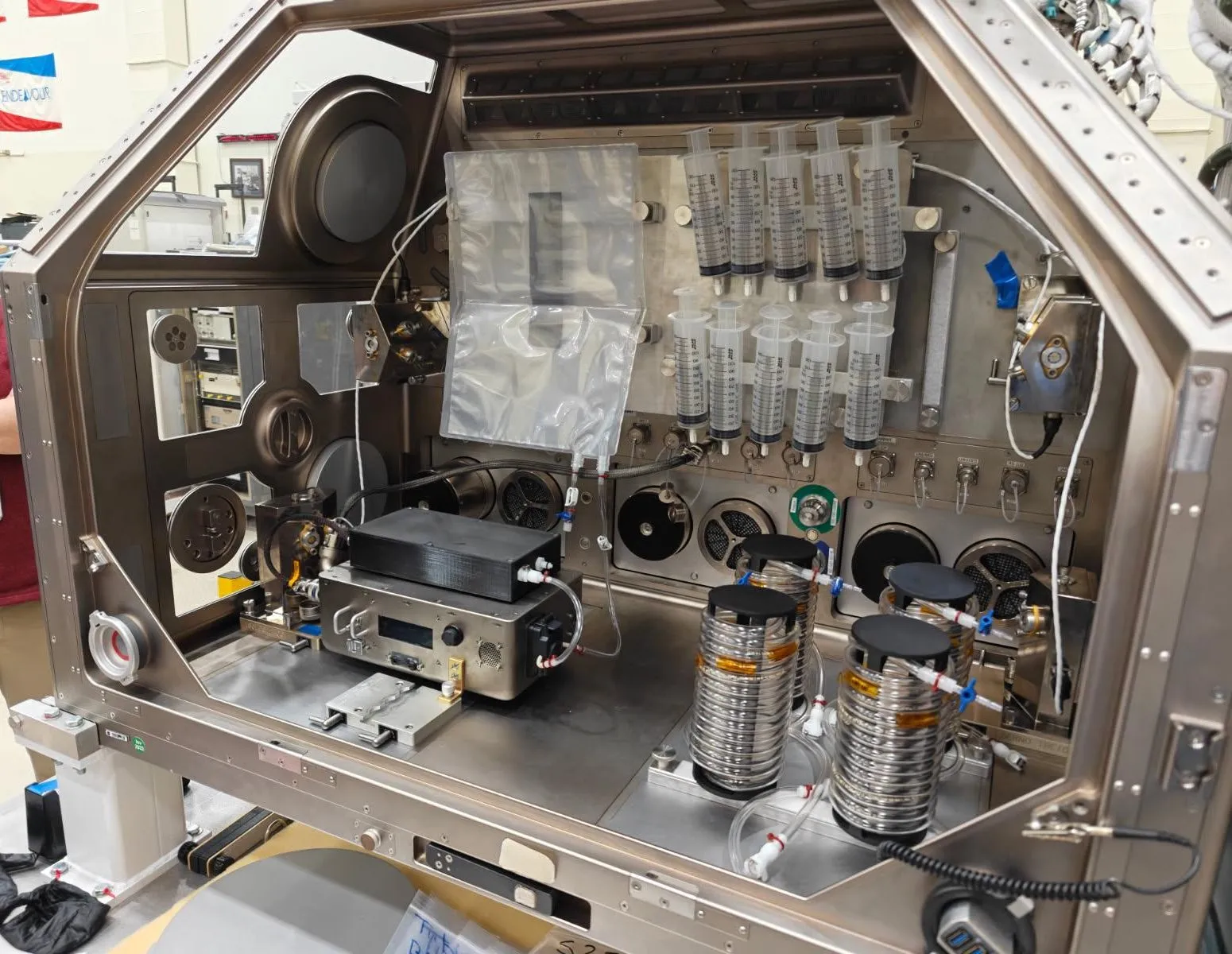
NASA has launched the IVGEN Mini system to the International Space Station to validate the on-demand production of intravenous fluid. The technology, managed by the agency's Mars Campaign Office, is designed to address the critical limitation of prepackaged fluids expiring after 16 months, a constraint that poses significant risks for deep space missions lasting up to three years.
The device arrived at the station on April 11 aboard the Northrop Grumman Commercial Resupply Services 24 mission. It operates by filtering space station drinking water to remove particulates and mineral ions before mixing the output with premeasured sodium chloride to create sterile, medical-grade fluid. This approach aims to eliminate the need to stock perishable supplies for long-duration travel to destinations such as the Moon or Mars.
IVGEN Mini represents the second iteration of this technology, having been significantly reduced in size and weight compared to the 2010 prototype. The new system utilises miniaturised pumps to move fluid, replacing the gaseous nitrogen used in earlier designs. This optimisation is essential for cargo-limited missions where every kilogram counts, allowing the spacecraft to carry the device rather than bulk quantities of fluid that might expire before use.
Initial demonstrations are scheduled for spring and fall, during which the system will generate 10 litres of fluid. However, the fluid produced during these phases will not be administered to the crew. Instead, it will be prepared for return to Earth to undergo rigorous analysis. The testing aims to verify that the system meets United States Pharmacopeia standards regarding pH, salinity, and the absence of bacteria, organic carbon, or particulates.
The technology is intended to treat up to 30 per cent of medical conditions that may occur in flight, including dehydration and burns. By producing fluid on demand, the system ensures that supplies remain within their expiration period and are available when needed, removing the risk associated with packing large volumes of fluid that could spoil during a multi-year journey.