Local elections proceed across occupied West Bank and Deir al-Balah amid ongoing Israeli restrictions
The electoral process remains limited to the Fatah party and excludes those holding Israeli citizenship, occurring alongside military attacks that killed 12 Palestinians on election day.
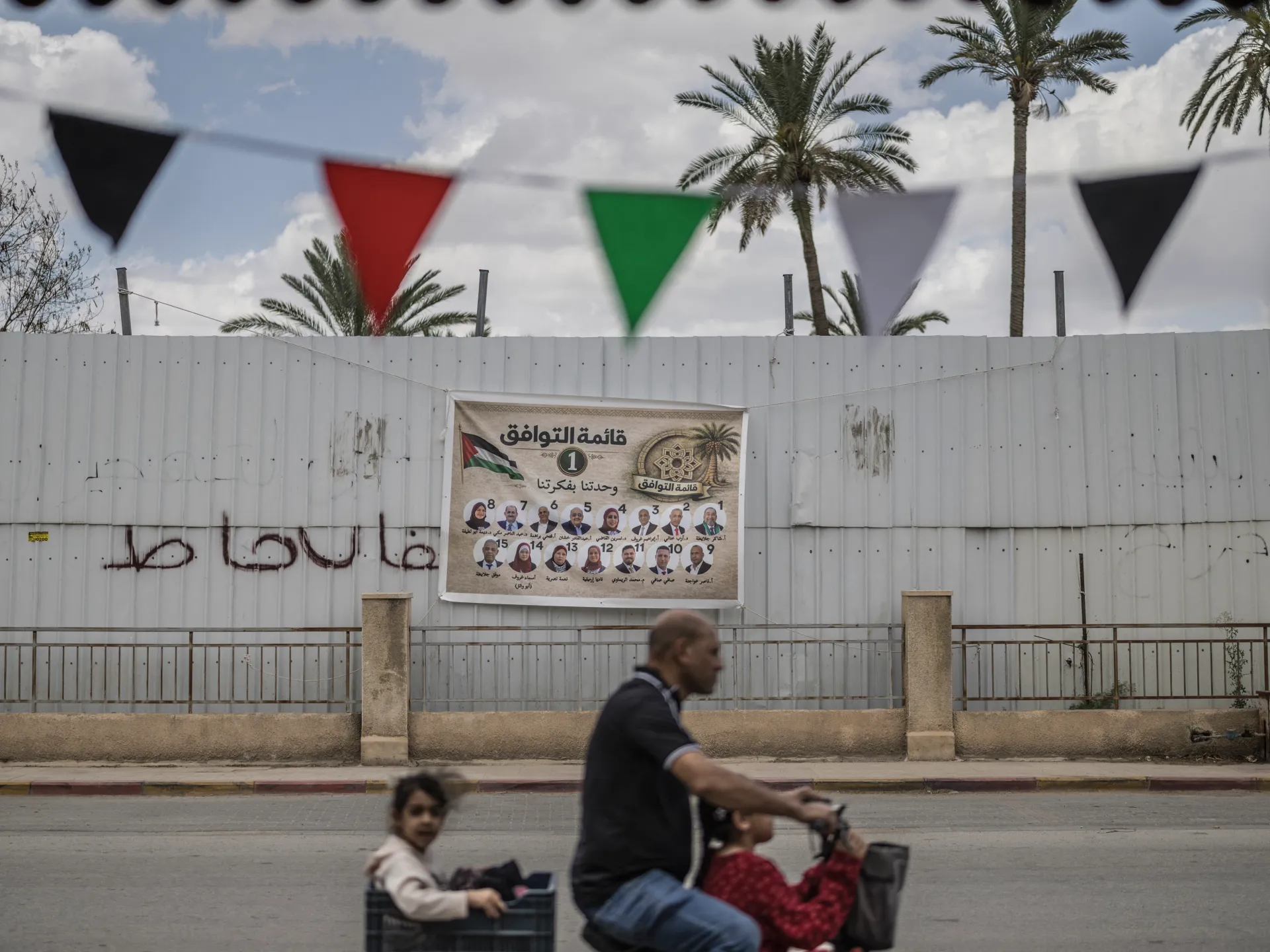
Palestinians voted in local elections on 25 April 2026 to select representatives for municipal and village councils across 420 local authorities in the occupied West Bank and the Deir al-Balah municipality in Gaza. The event marks the first time voting has occurred in Gaza since the outbreak of the war in 2023, yet it takes place within a framework defined by severe constraints on political participation and the continuation of Israeli occupation.
The electoral process was limited exclusively to the Fatah party, with no candidates from other factions permitted to participate. This restriction reflects the broader political landscape where governance decisions require Israeli approval, effectively reducing the scope of self-determination for the electorate. The elections are described as a mechanism for political participation that exists without sovereignty, occurring after years of postponed national legislative votes, none of which have been held since 2006.
Voting eligibility was further narrowed by the exclusion of Palestinians holding Israeli citizenship or Jerusalem IDs, as well as the majority of the Palestinian diaspora. Consequently, the electorate is fragmented, with more than one million eligible voters unable to participate due to these legal and geographic barriers. The jurisdiction and capacity of the elected representatives remain in constant flux, shaped by checkpoints, closures, and the dense web of policy structures enforced by the occupying power.
On the day of the vote, the context of the election was marked by violence as Israeli forces conducted multiple attacks across Gaza. These operations resulted in the deaths of 12 Palestinians, including six police officers, underscoring the precarious conditions under which the electoral process unfolded. While the specific locations within the territory where these strikes occurred have not been detailed in available reports, the incident highlights the ongoing nature of the conflict despite the administrative exercise of voting.
The structure of the Palestinian Authority, established under the Oslo Accords, is viewed as a system designed to manage daily life under occupation rather than serve national liberation. This institutional framework has been criticised for absorbing Palestinian resistance into monitored environments, thereby reducing the costs of occupation for Israel while preventing the development of a governance model that answers to Palestinian needs.
Western governments and international bodies have repeatedly called for elections without acknowledging the obstructions imposed by Israel or the conditions required for genuine self-governance. The local vote serves as a testament to the ability to persist within ever-shrinking possibilities for self-governance, yet it does not reflect the free expression of collective will in a context of systemic fragmentation and external control.