Yemen’s agricultural heartland choked by waste crisis as state collapse deepens
Farmers in Hadramout and Taiz provinces face crop failure and disease risks as plastic pollution and sewage contaminate irrigation channels and drinking water sources
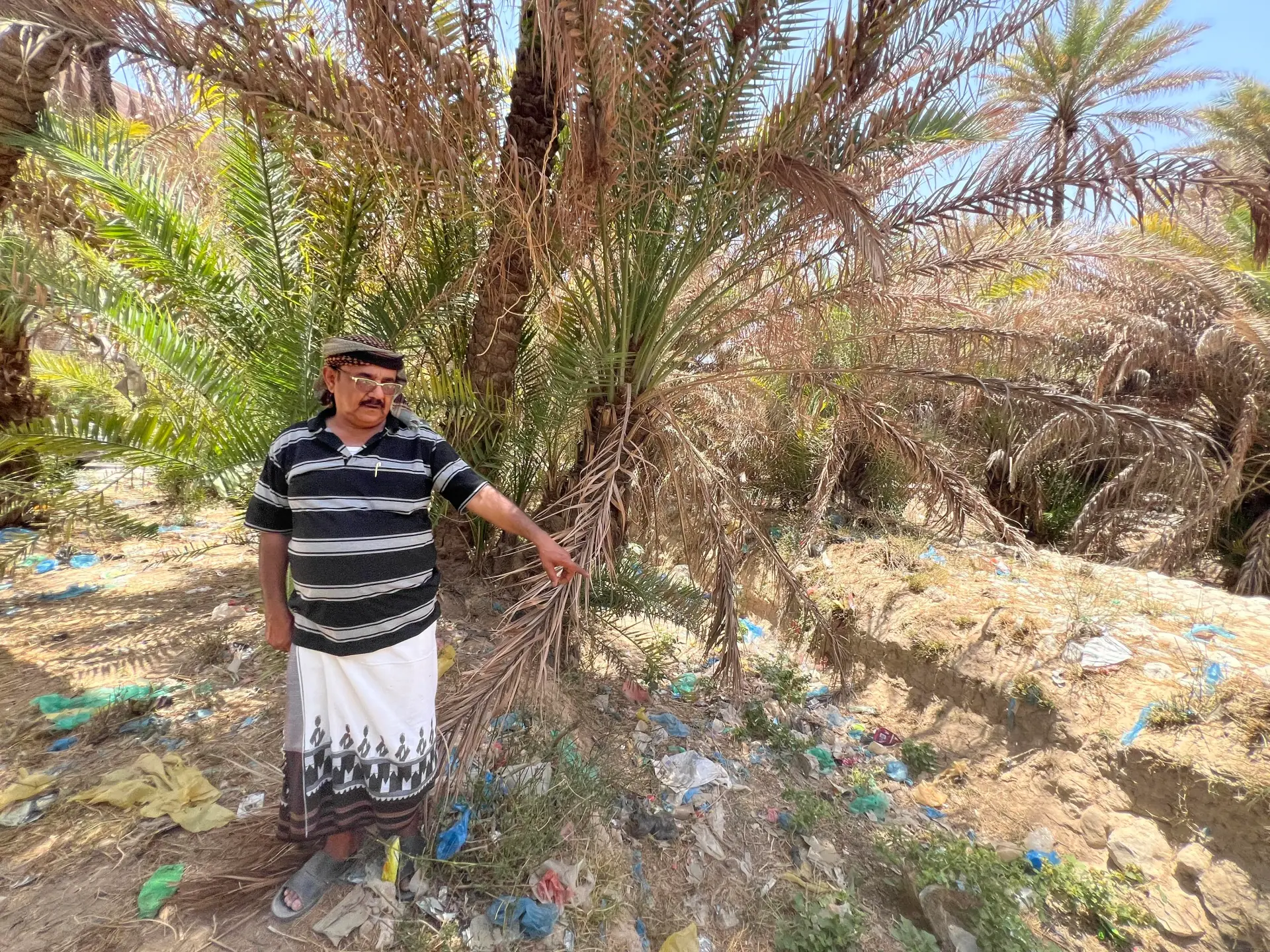
Yemen’s eastern Wadi Dawan valley, historically celebrated for its date palms and honey production, is now grappling with a severe environmental crisis driven by the accumulation of plastic waste and household rubbish. Farmers in the Hadramout province are forced to manually clear debris from irrigation channels to prevent crop failure, a task complicated by hidden hazards such as broken glass and the mixing of sewage with floodwaters.
The crisis is rooted in the collapse of state institutions following a decade of conflict between the Iran-backed Houthis and the Saudi-backed internationally recognised government. This war has devastated administrative capacity, leaving local authorities with negligible funding and poor vehicle maintenance, which disrupts garbage truck collections. Salem Raji, head of the Ministry of Agriculture’s office in Wadi Dawan, reports a monthly budget of only 8,000 Yemeni riyals, approximately $5, which severely limits his ability to conduct field visits or educate residents on waste management.
Raji warns that plastic waste contaminates the soil and blocks main irrigation canals, damaging canal walls and preventing floodwater from reaching farmland. Consequently, some farmers lose entire harvest seasons due to a lack of irrigation. Despite efforts to raise awareness through local media and social media, residents continue to dump waste, including dead animals and construction debris, into the wadi bed, where it mixes with sewage and pollutes the atmosphere.
The environmental degradation extends beyond Hadramout to other regions such as Taiz, where waste dumping has contaminated drinking wells and dams. Dr Yassin Abdul Malik al-Shuraihi, who heads disease surveillance in Taiz, reports chronic delays in waste collection and a severe shortage of rubbish bins. He notes a recorded increase in diarrhoea cases throughout the year as sewage contaminates drinking water sources, posing significant public health risks to the province’s millions of residents.
Experts from Hadramout University have issued urgent warnings regarding the long-term impacts of this pollution. Professor Khaled Saleh Bawahidi states that accumulated waste is degrading natural habitats and threatening the health of palm trees and bee populations, which could reduce the quality of dates and honey. He further cautions that waste creates breeding grounds for insects and rodents, transmitting diseases to both humans and livestock, underscoring the urgent need for institutional intervention.