US-Iran Maritime Deadlock in Strait of Hormuz Drives Global Oil Prices Past $106
Brent crude benchmarks surge as Washington imposes a de facto blockade on the waterway, prompting sharp reactions from global financial markets.
Global oil prices have surged past $106 per barrel as heightened tensions between the United States and Iran have effectively ground shipping activity to a standstill in the Strait of Hormuz. Brent crude, the international benchmark for pricing oil, reached $106.80 early on Friday, marking a significant increase from its closing price on Wednesday when it briefly surpassed the $100 mark. This sharp rise in commodity costs is a direct consequence of the escalating confrontation over the key maritime route that transports approximately one-fifth of the world's supply of oil and natural gas.
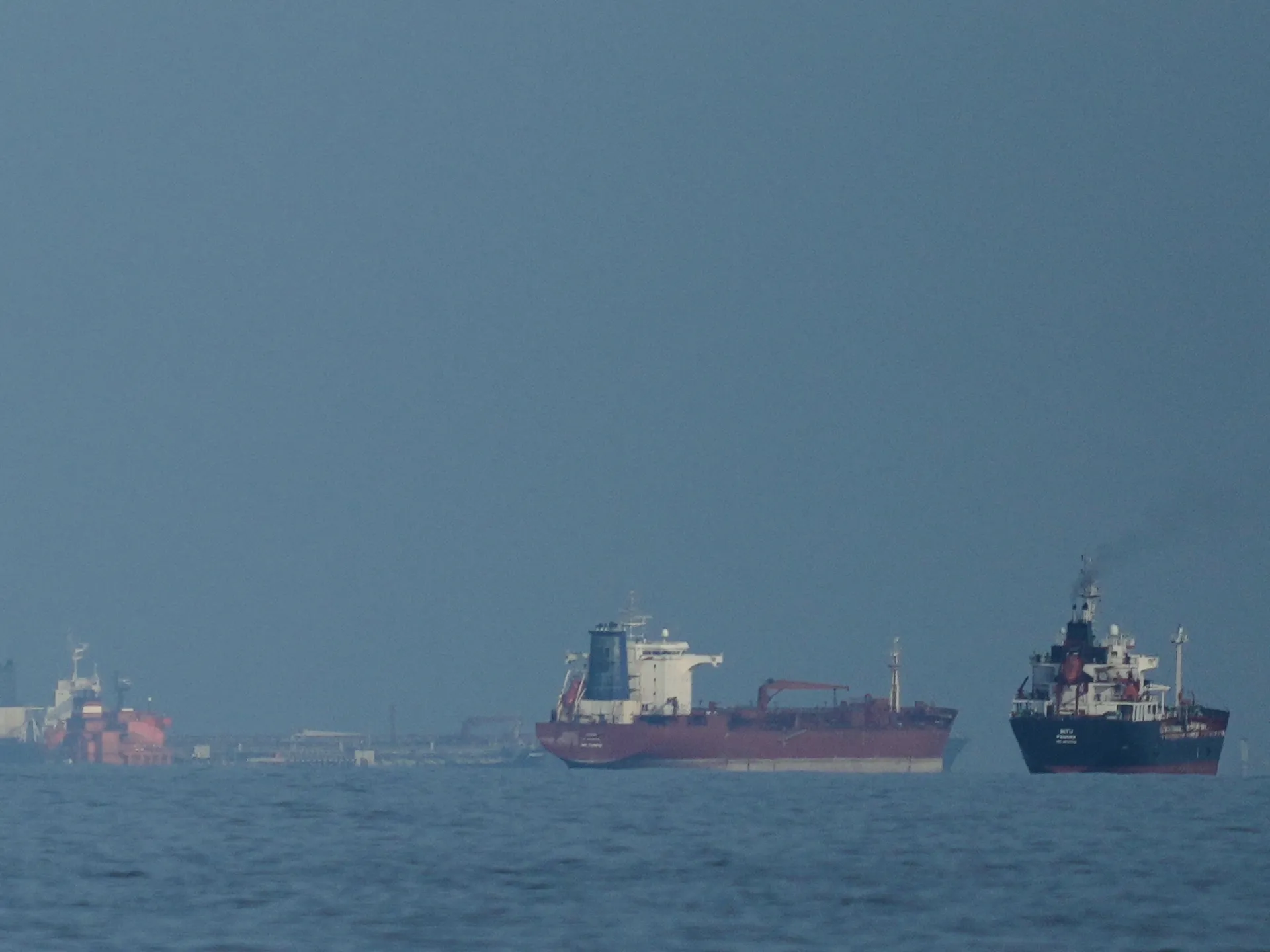
The immediate catalyst for the price spike is a reported deadlock in which maritime traffic has plummeted. According to maritime intelligence data, only nine commercial vessels transited the strait on Wednesday, a stark contrast to the average of 129 daily transits recorded prior to the conflict escalation on 28 February. This dramatic reduction in flow follows a series of reciprocal actions between the two nations, with the United States blocking Iranian maritime trade while Iran has sought to assert control over vessel passage.
US President Donald Trump has intensified the situation by issuing a directive via Truth Social ordering the US Navy to destroy any Iranian boats laying mines within the strait. Furthermore, the President expanded the scope of the naval blockade, stating that no ship can enter or leave the waterway without explicit approval from the US Navy. This policy effectively seals the critical waterway until a diplomatic deal is reached, creating an environment where Washington and Tehran are engaged in a tit-for-tat campaign involving the capture of commercial ships.
The US Navy recently seized a tanker carrying sanctioned Iranian oil for the second time in less than a week, reinforcing the US stance on blocking trade. In response, Iran's Islamic Revolutionary Guard Corps (IRGC) claimed to have captured two foreign cargo vessels in the waterway. However, the Greek Maritime Affairs and Insular Policy Ministry has disputed the IRGC's claim regarding the capture of the Greek-owned vessel Epaminondas, stating that the vessel remains under the control of its captain.
Financial markets reacted negatively to the geopolitical instability and the resulting supply concerns. Overnight trading saw the benchmark S&P 500 index dip 0.41 percent, while the tech-heavy Nasdaq Composite dropped 0.89 percent. The volatility underscores the sensitivity of global energy markets to disruptions in the Strait of Hormuz, a chokepoint where the current standoff has reduced daily shipping volumes to a fraction of pre-conflict levels.