Fabricated BBC footage falsely links stolen Cézanne to Zelensky office
Investigations by France 24 and RFI confirm the viral clip is a manipulated version of genuine footage, part of a broader Russian GRU-linked offensive.
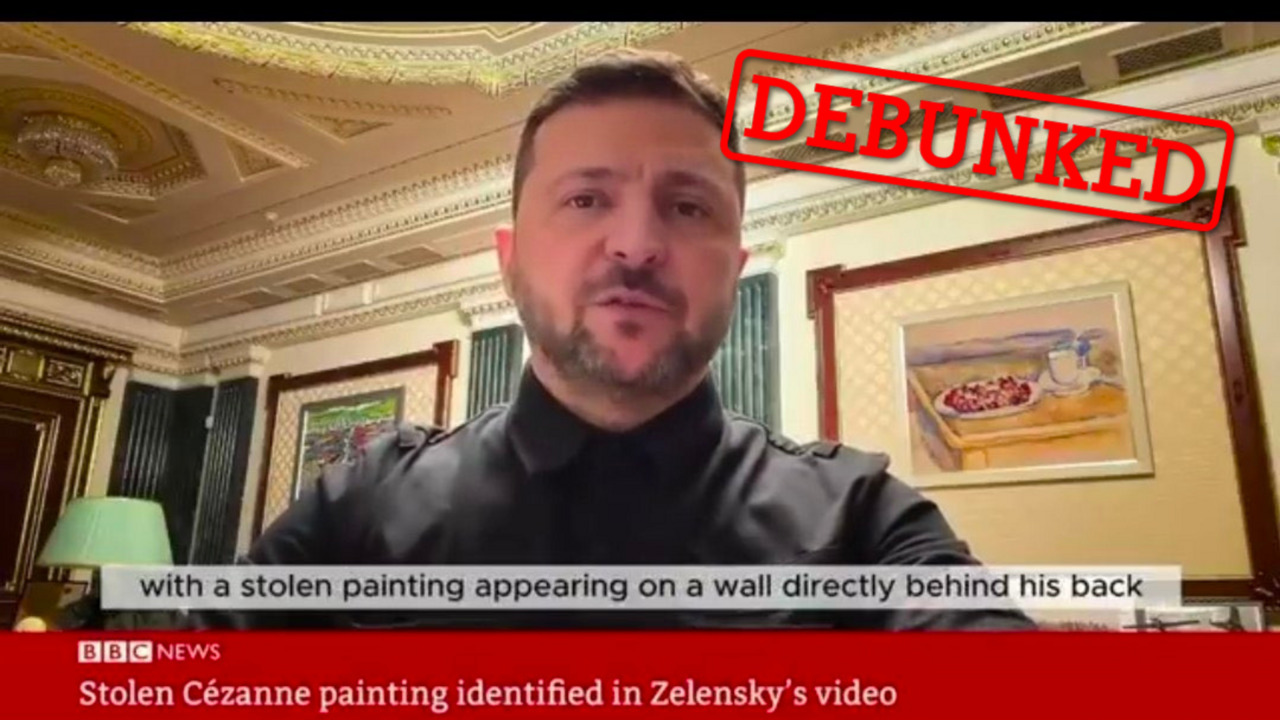
A fabricated news report mimicking the branding of the BBC has circulated on the social media platform X, falsely alleging that Ukrainian President Volodymyr Zelensky is displaying a stolen Paul Cézanne painting in his office. The disinformation campaign, attributed to the Russian GRU-linked network Storm-1516, seeks to undermine trust in Western media institutions while targeting key political figures in Europe.
The fraudulent narrative relies on a video that appears to be a BBC News programme titled "Stolen Cézanne painting identified in Zelensky's video". Investigations by France 24 and RFI have confirmed the footage is doctored; an image of the artwork, which was stolen in Italy in March 2026, was photoshopped onto a genuine video of Zelensky originally posted on January 19, 2026. The backdrop remains identical to the original recording, with the only alteration being the insertion of the stolen artwork behind the President.
France 24's Observers team contacted the BBC directly to verify the origin of the clip, which garnered over 400,000 views on X following its release by an account supporting influencer Dan Bilzerian. The British media outlet confirmed in no uncertain terms that the video in question is fake and does not exist on their official channels. This direct refutation highlights the sophistication of the operation, which uses a trusted media brand to amplify a false accusation regarding organised crime and stolen art.
The disinformation operation is linked to Storm-1516, a Russian network previously identified by the US Treasury Department and French authorities as being connected to Unit 29155 of the GRU and the Moscow-based think tank the Center for Geopolitical Expertise. This network has a history of targeting Western countries, including a February 2026 operation involving a fake report about Emmanuel Macron and the Epstein files, demonstrating a pattern of targeting high-profile Western leaders with fabricated scandals.
Reverse image searches and comparisons with the original video revealed that the Cézanne image was edited in to cover the actual artwork hanging on the wall. The specific painting, known as "Nature morte aux cerises" or "Still Life with Cherries", was stolen from a museum in the Italian region of Parma along with works by Auguste Renoir and Henri Matisse. By associating this stolen property with the President of Ukraine, the campaign attempts to create a narrative of corruption that has no basis in the original footage.
The BBC's official denial and the forensic breakdown of the video by international fact-checkers serve to expose the mechanics of the attack. The operation relies on the speed of social media dissemination, where a single post can reach hundreds of thousands of viewers before fact-checkers can intervene. The involvement of Storm-1516 underscores the institutionalised nature of these efforts, moving beyond opportunistic misinformation to coordinated state-sponsored interference.