US carrier redeployment signals shift in Asia-Pacific security strategy
The movement of the USS George Washington to the Middle East has prompted regional allies to reassess Washington’s deterrence capability against China, reinforcing a strategic push for greater burden-sharing in the Asia-Pacific.
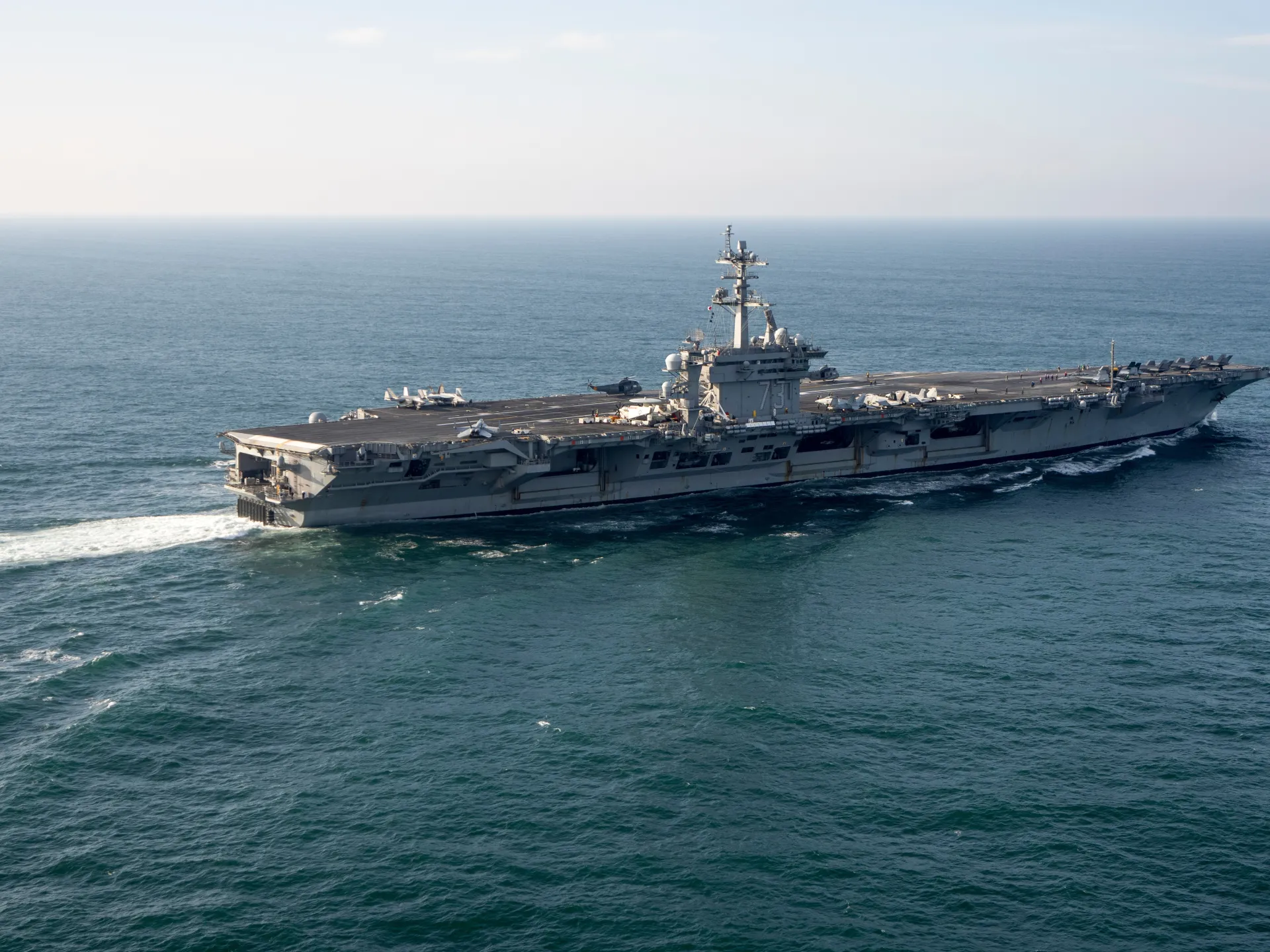
Washington has redeployed the USS George Washington from Japan to the Middle East to relieve the USS Abraham Lincoln, which has been deployed for nine months during the US-Israel war on Iran. This move removes the last US aircraft carrier from the Asia-Pacific region, a decision that has raised concerns among regional allies regarding the United States’ capacity to deter China as naval activity in the Western Pacific intensifies.
The redeployment follows the earlier transfer of parts of the Terminal High Altitude Area Defence (THAAD) system from South Korea to the Middle East. According to reports, the USS Abraham Lincoln has faced significant logistical challenges, including food shortages and unsanitary conditions, with at least one sailor reportedly attempting to jump overboard. These developments have compounded fears that US power projection in Asia is being diminished to sustain operations in the Middle East.
William Yang, a senior analyst for Northeast Asia at the International Crisis Group, noted that these moves are impacting the overall effectiveness of US-led regional deterrence. He highlighted that Chinese coastguard activity has increased since June in waters east of Taiwan, overlapping with the exclusive economic zones of Japan and the Philippines. Yang described these maritime operations as aimed at Taipei, Manila, and Tokyo, while also testing the US capability to respond.
Despite the carrier’s departure, the majority of US forces remain in the region, with approximately 375,000 US military and civilian personnel assigned to the US Pacific Command. Ja Ian Chong, a political scientist at the National University of Singapore, suggested that the redeployment is symbolic of a broader strategic shift under the Trump administration, which views regional allies as taking the leading role in their own defence. The US 2026 National Defense Strategy calls for allies in Europe and Asia to raise military spending to 3.5 per cent of gross domestic product (GDP) and security-related spending to 1.5 per cent of GDP by the 2030s.
In response to these strategic signals, Asian nations are accelerating their own defence budgets. Taipei announced this week that it aims to boost defence spending in 2027 by 18 per cent, while Philippines Defence Secretary Gilberto Teodoro Jr called last month for defence spending to rise to 4 per cent of GDP. South Korea and Japan have similarly moved to ramp up their defence expenditures, reflecting a trend towards greater self-reliance in the region.
Analysts suggest that while the short-term reduction in US assets is concerning, it does not necessarily indicate a long-term strategic disengagement. Kei Koga, an expert in East Asian security at Nanyang Technological University, stated that the move is concerning from a short-term perspective but not evidence of a lasting withdrawal. Furthermore, key assets such as US Amphibious Ready Groups, which can host F-35B stealth fighters, remain in the region, maintaining a significant US military presence.