US arms sales to Taiwan set for discussion with Beijing during Trump's visit
The White House leader cites a desire from the Chinese president to halt the programme, a stance that follows a historic $11bn defence package and recent military drills.
Donald Trump has confirmed he will raise the issue of United States arms sales to Taiwan during his scheduled meeting with Chinese President Xi Jinping later this week. The announcement comes as the former president prepares to arrive in Beijing on Wednesday, marking his first visit to the nation in nine years.
During a briefing at the White House, Trump stated that he intends to address the transfer of weapons directly with his Chinese counterpart. He reported that President Xi has expressed a desire for the United States to cease such sales, a point Trump plans to discuss as part of their broader diplomatic engagement.
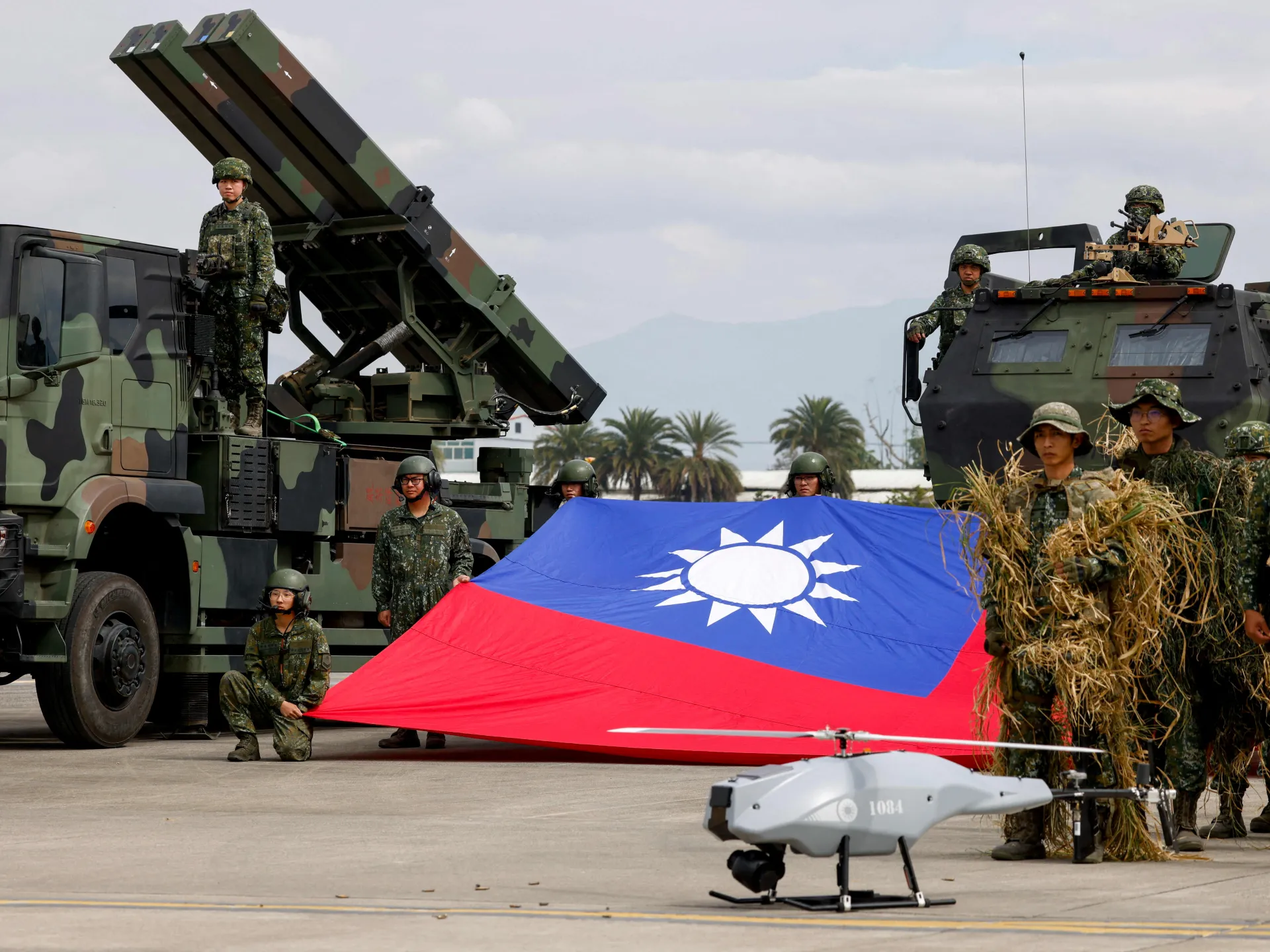
This diplomatic initiative follows the announcement in December of a historic weapons package for Taiwan valued at more than $11bn, the largest in history. The timing of the visit coincides with recent Chinese military drills that simulated a blockade of Taiwanese ports, an action widely interpreted as a warning against external forces aiding the island.
US defence support for Taiwan remains a longstanding source of tension with Beijing, which claims the territory as an essential part of its sovereign domain. While the United States maintains no official position on Taiwanese sovereignty, it continues to provide the island with military equipment capable of countering potential Chinese assaults.
Despite the reported friction over arms transfers, Trump reiterated his assessment that a conflict between the United States and China over Taiwan is unlikely in the near future. He attributed this optimism to his strong personal relationship with President Xi, noting that the Chinese leader is aware of his own reluctance to see such an escalation occur.
The self-governed island has consistently rejected threats of Chinese military force and insists on the right of its people to determine their own future. Meanwhile, the United States has called on both Taipei and Beijing to peacefully resolve questions regarding the island's status, even as the prospect of a direct discussion on halting weapons sales looms over the upcoming talks.