Tunisia protests enter second month as economic strain deepens
Sustained demonstrations in Tunis demand the ousting of President Kais Saied, driven by rising inflation, shortages of basic goods, and a perceived crackdown on civil society.
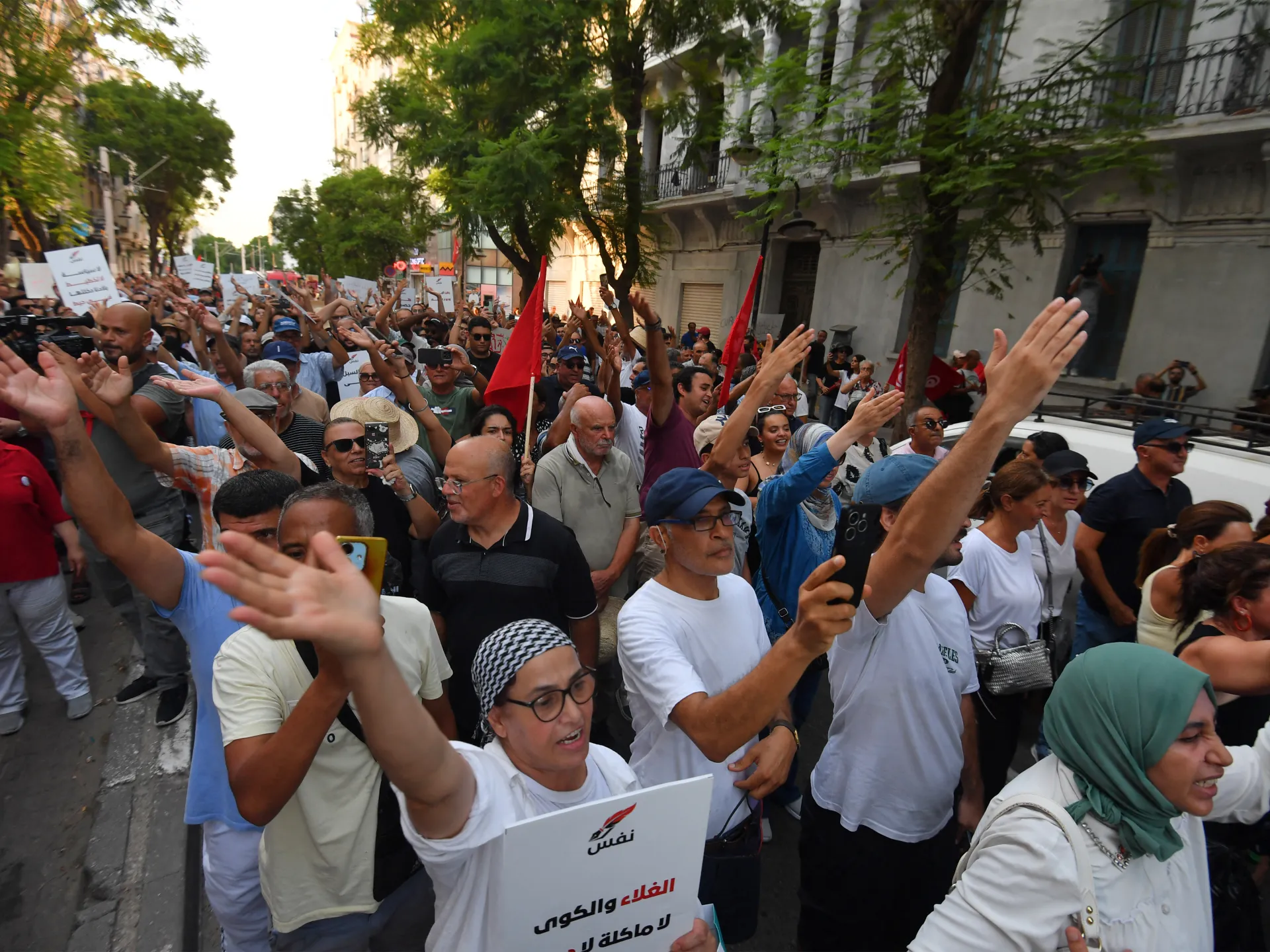
Hundreds of protesters marched through the streets of Tunis on Thursday, marking the second consecutive month of sustained antigovernment demonstrations. The march was organised to demand the ousting of President Kais Saied and the restoration of democracy, with demonstrators explicitly rejecting what they described as “one-man rule” and “a slide towards dictatorship.”
The political demands are closely linked to deteriorating economic conditions. According to the World Bank, Tunisia’s inflation rate currently stands at 5.2 percent, contributing to mounting cost-of-living pressures. Residents are facing shortages of basic goods and medicines, alongside a general decline in public services. Investment in the country has fallen precipitously, prompting the government to introduce cost-saving measures such as halting public sector hiring and reducing imports.
Activist Wissem Sghaier, who participated in Thursday’s march, described the situation as the country “experiencing a complete collapse.” The demonstration follows a similar protest on 25 July, which was timed to coincide with the anniversary of Saied’s 2021 dismissal of the government and suspension of parliament. Saied, a 68-year-old independent politician and former constitutional lawyer elected in 2019, began ruling by decree in 2021 and dissolved parliament in 2022.
Unrest has recently spread beyond the capital to other regions, where protests have broken out over water and power cuts and environmental problems. This suggests that public anger is expanding from political disputes to the mounting hardships of everyday life. The country was also one of several North African nations hit by major wildfires this summer, further straining local resources.
Rights groups allege that Saied has presided over a broad crackdown targeting opposition leaders, independent civil society groups, journalists, and activists. Demonstrators have specifically called for the release of jailed opposition figures, activists, and journalists. Saied has implemented judicial reforms that gave him unprecedented control over Tunisia’s courts via the creation of a new governing body with him at the head, a move that has drawn criticism from international observers.
The government has cited the need for fiscal discipline in response to falling investment, while critics argue that the centralisation of power has eroded democratic checks and balances. As the protests continue into their second month, the intersection of economic hardship and political centralisation remains the central driver of public discontent.