Tokyo Stock Exchange records highest closing value as semiconductor rally outpaces energy sector
The Nikkei average closed at a record 59,716.18 yen on 24 April 2026, driven by semiconductor expectations while investors rotated out of oil-sensitive holdings due to uncertainty in the Iran situation.
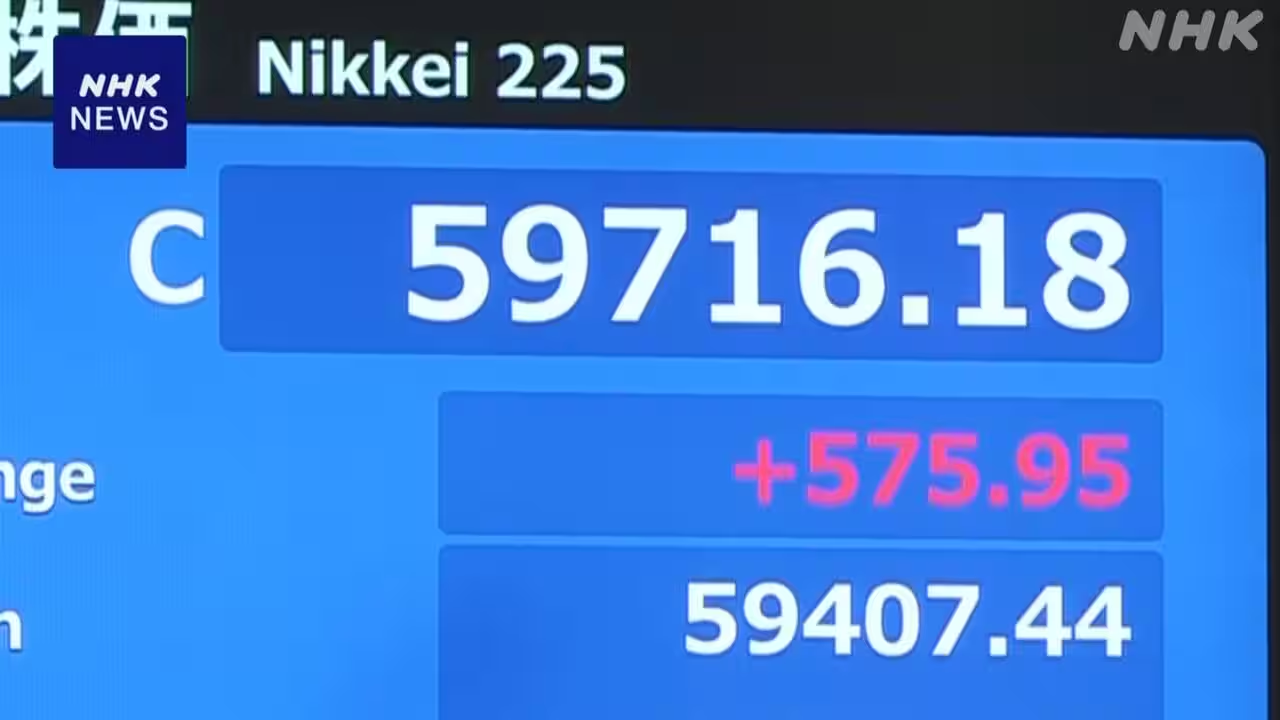
The Tokyo Stock Exchange concluded trading on 24 April 2026 with the Nikkei average index closing at 59,716 yen and 18 sen. This figure establishes a new record high for a closing value, marking a significant milestone in the market's recent performance according to NHK News Japan.
The upward movement was primarily engineered by semiconductor stocks, which rallied on the back of prevailing expectations regarding broader market expansion. Institutional sentiment appears to be favouring these growth-oriented sectors over traditional energy plays, suggesting a strategic pivot within the Japanese equity market.
Conversely, capital flowed out of companies sensitive to rising crude oil prices. NHK reports that this rotation was triggered by ongoing uncertainty surrounding the situation in Iran. The geopolitical instability has created an environment where investors are wary of assets exposed to volatile energy markets.
The divergence between the semiconductor rally and the sell-off in oil-linked stocks highlights a clear policy-driven shift in investor behaviour. While the semiconductor sector benefits from anticipated expansion, the energy sector faces headwinds from the unquantified risks associated with the regional conflict.
The source material notes that the specific magnitude of the market expansion expectations driving the semiconductor surge remains unquantified. Furthermore, the duration and potential resolution of the Iran situation remain unclear, factors that could influence the sustainability of the current market rotation.
Ultimately, the closing data reflects a market recalibrating its risk profile. The record high stands as a testament to confidence in technology growth, even as geopolitical friction continues to suppress appetite for energy-sensitive equities.