Tensions escalate in the Strait of Hormuz as Washington and Tehran diverge on ceasefire terms
US President Trump extends the truce with Iran, yet the two nations hold irreconcilable positions on the seizure of vessels and the feasibility of reopening critical shipping lanes.
US President Donald Trump has officially confirmed the extension of the ceasefire agreement with Iran. While this development signals a continued effort to stabilise the region, the underlying diplomatic friction remains acute as the two governments fail to agree on the current status of the Strait of Hormuz.
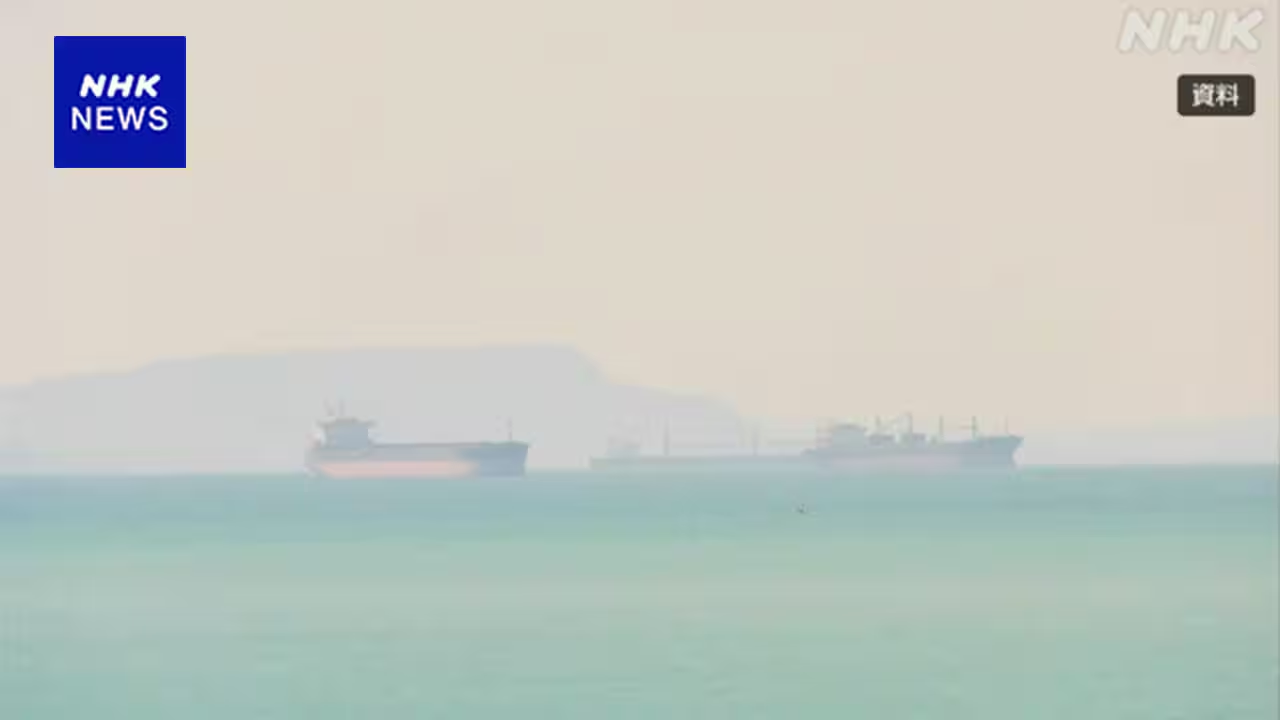
Amidst these ongoing negotiations, Iranian authorities have announced the seizure of two ships within the strait. Tehran has subsequently declared that the reopening of navigation is currently impossible, citing the detention of the vessels as a primary obstacle to safe passage.
The United States administration has firmly disputed the Iranian narrative regarding the seizure and the consequent closure of the waterway. Washington maintains a stance that contradicts Tehran's assertion, suggesting that the reported impediments to maritime traffic do not reflect the reality on the ground.
This fundamental disagreement has cast a shadow over the potential for realising the diplomatic talks that both sides claim to prioritise. The divergence in their accounts of the situation in the Strait of Hormuz suggests that a unified front is unlikely to emerge in the immediate future.
As the ceasefire extension takes effect, the focus of international observers remains fixed on whether the two nations can bridge this specific gap. Without a resolution to the conflicting claims regarding the seized ships and the status of the strait, the path to a durable diplomatic settlement appears obstructed.
The situation underscores the complexity of the current geopolitical landscape, where official announcements of peace coexist with operational realities that suggest continued instability. The coming days will be critical in determining if the extended truce can translate into tangible improvements for regional security.