Tehran rejects US narrative of leadership fracture, cites institutional unity
President Pezeshkian, Foreign Minister Araghchi and Parliament Speaker Ghalibaf describe the country as a "single soul" under Supreme Leader Mojtaba Khamenei while Washington maintains a naval blockade on Iranian ports
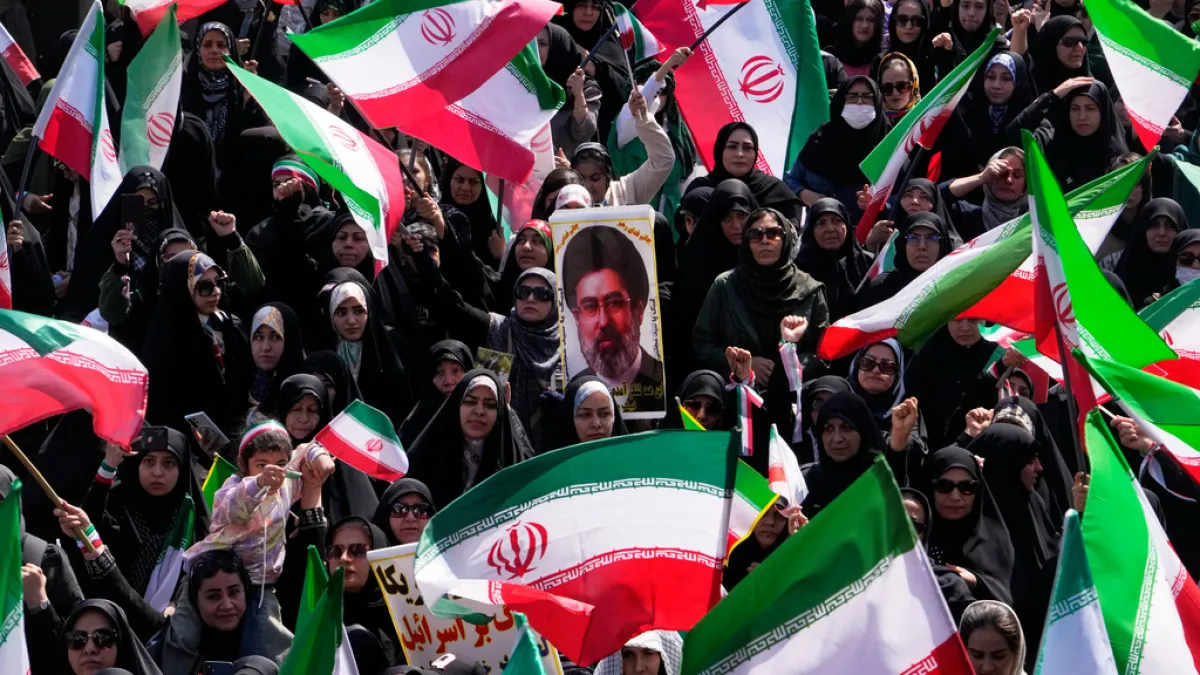
Iranian officials have issued a coordinated response to United States allegations of internal discord within Tehran's leadership, firmly rejecting President Donald Trump's claims of a leadership rift. President Masoud Pezeshkian, Foreign Minister Abbas Araghchi, and Parliament Speaker Mohammad Bagher Ghalibaf released joint statements asserting that the nation remains a single soul united under Supreme Leader Mojtaba Khamenei. This diplomatic pushback comes as Washington continues to utilise narratives of infighting between moderates and hardliners to justify a sustained naval blockade on Iranian ports.
The official messaging from the Iranian government emphasises an iron unity between the state and its people, explicitly denying the existence of radicals or moderates. Mohammad Reza Aref, Iran's first vice president, reinforced this stance by describing the country as a stronghold of unity where political diversity serves democracy but does not fracture national purpose during times of peril. Foreign Minister Araghchi further dismissed suggestions that the military is at odds with political leadership, stating that battlefield operations and diplomatic fronts are fully coordinated.
Central to the current diplomatic impasse is the absence of Supreme Leader Mojtaba Khamenei from public view since succeeding his father, Ali Khamenei, who was killed in a US-Israeli strike on 28 February. While US officials have stated that the younger Khamenei was wounded and disfigured in the attack, reports citing unidentified Iranian officials suggest he remains mentally sharp despite being gravely wounded. The Supreme Leader's continued seclusion has been a focal point for Washington's claims that Iranians are struggling to identify their leader.
Tehran attributes the failure of recent diplomatic talks, which were scheduled to take place in Pakistan, to the US blockade rather than any internal governance issues. President Pezeshkian and Speaker Ghalibaf posted identical messages on social media platforms, declaring that the aggressor criminal would regret their actions due to the complete obedience shown to the Supreme Leader. The administration maintains that the blockade is an act of war that has stalled necessary negotiations and inflicted economic pain on the region.
Tensions remain elevated as Israel's Defence Minister Israel Katz indicated that his country is awaiting a green light from the US to resume hostilities, with targets already marked. Meanwhile, air defences were activated over Tehran earlier this week, though no official confirmation of an attack has been issued. The uncertainty surrounding a potential double blockade in the Gulf, involving both Iranian closure of the Strait of Hormuz and a US naval siege, has contributed to rising oil prices and regional volatility.
The US administration has reiterated its position that a deal will only be made when appropriate for American interests, maintaining the status quo blockade to pressure Tehran without resuming full-scale war. This strategy relies heavily on the narrative of Iranian internal disarray, a claim that Iranian state institutions have categorically rejected. As the diplomatic stalemate continues, the focus remains on whether the alleged leadership fractures are a genuine reality or a construct used to legitimise ongoing economic and military pressure.