Spain and France declare national emergencies as wildfires displace 140,000
Mass evacuations and military mobilisation follow unprecedented wildfire activity across Spain and France, driven by extreme heat and drought conditions that have overwhelmed local emergency services.
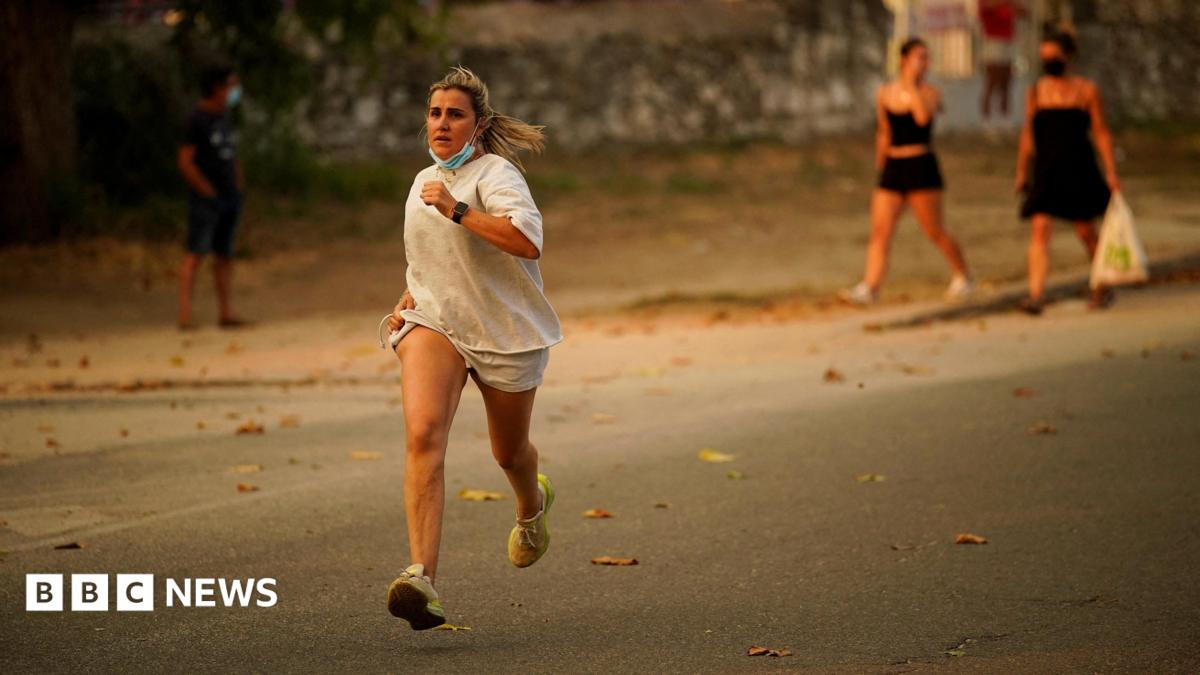
Severe wildfires in Spain and France have triggered mass evacuations and declarations of national emergency, as extreme heat, drought, and strong winds create conditions that have overwhelmed local firefighting capabilities. In Spain, three fires near Madrid merged into a single blaze described by officials as the "worst in the region's history," forcing the evacuation of at least 30,000 people and placing an additional 20,000 under lockdown. The Spanish government has declared a national emergency, deploying the Military Emergency Unit (UME) to protect areas near El Escorial.
Madrid’s regional emergency management chief, Carlos Novillo, stated that the wildfire is "at its peak" and "beyond the capacity of firefighters to contain." Consequently, authorities have shifted to defensive measures, focusing on protecting populated areas rather than direct attack. Madrid regional president Isabel Díaz Ayuso described the situation as "completely unusual and catastrophic," citing a "perfect storm" of high temperatures, relentless wind, and merging fire fronts. The fire has burned more than 6,000 hectares in the Madrid region and nearly 9,000 hectares in nearby Ávila province, with eight municipalities fully evacuated.
In south-west France, over 110,000 people were evacuated from the Gironde and Landes regions as fires, described as "XXL" and "self-sustaining," advanced towards Bordeaux. The Gironde fire has burned over 19,000 hectares and destroyed approximately 80 homes, including on the Cap Ferret peninsula. French Interior Minister Laurent Nuñez noted that around 50 firefighters had been injured and described the blaze as changing direction to move east towards the city. French President Emmanuel Macron mobilised the military and activated the EU civil protection mechanism, receiving reinforcements including Black Hawk helicopters from the Czech Republic and Slovakia.
Both governments are grappling with the logistical challenges of managing multiple large-scale incidents simultaneously. In Spain, Prime Minister Pedro Sánchez visited the emergency coordination centre, while in France, Prime Minister Sebastian Lecornu chaired government crisis meetings. The European Union has deployed additional aircraft and helicopters to support firefighting efforts in both countries, acknowledging the scale of the disaster. Officials in Ávila province are investigating a separate fire near Burgohondo for potential negligence involving heavy machinery.
The crisis underscores the growing impact of climate change on European governance and emergency response structures. The EU’s Copernicus Climate Change Service reports that Europe is heating at more than twice the global average since the 1980s, creating drier vegetation that fuels faster-spreading fires. The European Environment Agency has warned that climate change has increased forest fire risk across Europe, with southern Europe facing the greatest danger. Wildfires have already burned more land in Europe this year than the annual average for the past two decades, according to the European Forest Fire Information System.