Perseid Meteor Shower Peaks August 12-13 With Exceptional Viewing Conditions
NASA and the European Space Agency advise observers to seek dark locations away from light pollution for the peak of the annual event.
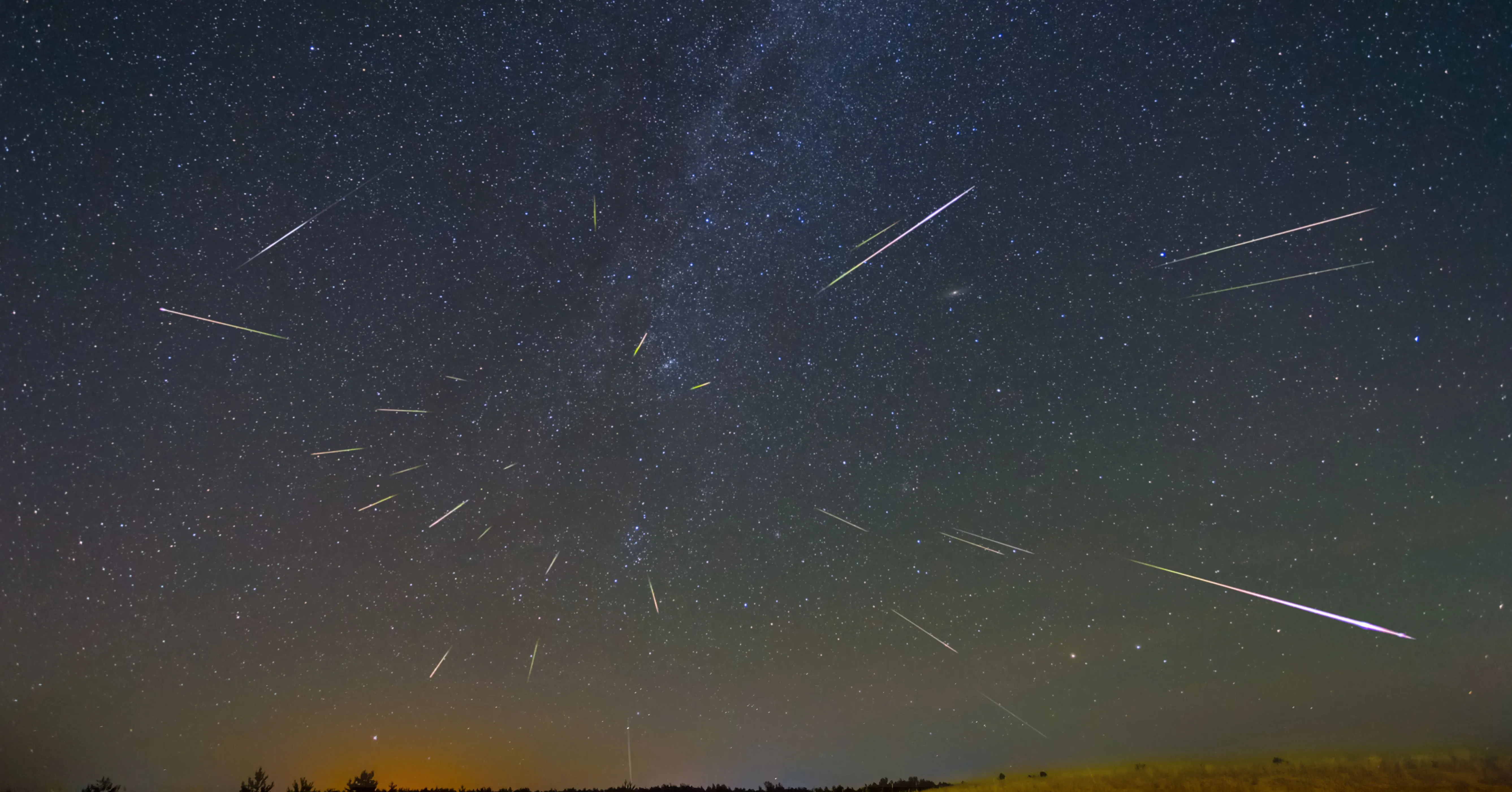
The Perseid meteor shower is set to reach its peak activity between the night of August 12 and the early morning of August 13, 2026. Viewing conditions are forecast to be exceptional due to the new moon phase, which will provide dark skies without moonlight interference. Observers in the northern hemisphere and parts of the southern hemisphere are advised to view the shower with the naked eye from locations away from light pollution, ideally after midnight.
The event is described as one of the most spectacular meteor showers of the year, with a traditional peak rate of up to 100 meteors per hour under ideal conditions. The Perseids are considered one of the three most intense annual meteor showers, alongside the Geminids in December and the Quadrantids in January. Meteor showers occur when Earth passes through trails of particles left by comets, causing atmospheric friction that makes these fragments burn up as streaks of light.
According to WIRED, the 2026 peak coincides with the new moon, a factor cited by NASA and the European Space Agency (ESA) as creating particularly favourable viewing conditions. The agencies recommend that observers get away from city light pollution to find spots with dark skies and unobstructed horizons. It takes the human eye 20 to 30 minutes to fully adjust to the dark, after which fainter meteors become easier to spot.
Observers are advised to avoid using cell phones or other bright screens, as they reduce eye sensitivity. NASA explains that telescopes and binoculars should also be avoided, as they narrow the field of view. Since meteors can appear anywhere in the sky, it is best to observe with the naked eye, preferably by lying down or using a reclining chair to cover a wide portion of the sky.
Although the Perseids get their name from the constellation Perseus, from which the meteors appear to radiate, it is not necessary to look directly at it. The frequency of visible meteors increases after midnight when the shower’s radiant reaches a higher point above the horizon. The agencies note that patience is essential, as meteors do not appear at a steady rate and several minutes may pass without any activity before a sudden burst.
This story originally appeared on WIRED en Español and has been translated from Spanish. The source material also notes that August 2026 features a historic total solar eclipse, though details regarding this concurrent event are not elaborated upon in the provided text.