Nepal Department of Tourism confirms natural ice obstruction at Mount Everest summit route
Officials state the glacial block poses a critical safety risk to climbers and icefall doctors, while authorities consider helicopter logistics to mitigate delays in route preparation
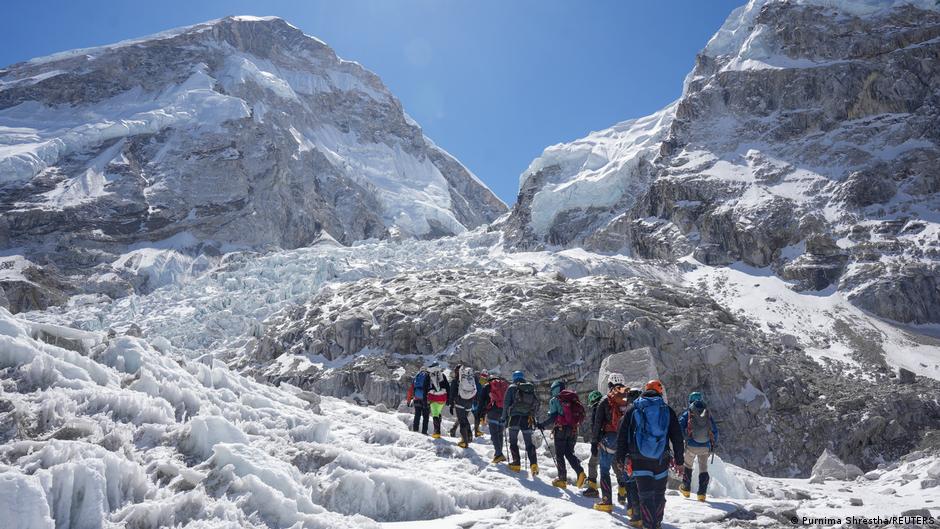
A large serac of glacial ice suspended above the Khumbu Icefall near Camp One has obstructed the primary climbing route to the summit of Mount Everest, creating a significant safety hazard for both commercial climbers and specialist icefall doctors. The Department of Tourism has confirmed that this specific natural formation cannot be physically moved or fixed, necessitating a shift from active route clearing to close monitoring and the development of alternative strategies.
The obstruction, located at an altitude of more than 5,300 metres, renders the treacherous section of the South Col ascent unsafe for ascent. Himal Gautam, spokesperson for the Department of Tourism, stated explicitly that the block is a natural occurrence and that authorities can only wait and assess the situation. While icefall doctor Dawa Jangbu Sherpa indicated that the team expects the ice block to clear naturally within a few days, the immediate inability to manipulate the glacier has forced approximately 1,000 individuals, including foreign climbers and support staff, to shelter in a remote tent village at safer altitudes.
This development critically shortens the already brief window for the spring climbing season, which typically concludes by the end of May before the monsoon season renders the mountain unsafe. With acclimatisation and base camp preparations taking place from March to late April, the summit window is usually reserved for May. The compression of this timeframe heightens risks, particularly given that the current season has issued 410 permits, nearing the all-time record of 479 set in 2023.
In response to the potential for further delays, authorities are actively considering dropping supplies via helicopter to ensure that routes can be prepared on schedule once the obstruction clears. The Khumbu Icefall remains a constantly shifting maze of crevasses and ice blocks, traditionally considered one of the most dangerous sections of the ascent even under normal circumstances. The caution regarding large glacial ice blocks is rooted in the 2014 tragedy where 16 Nepali guides were killed when a similar chunk of the glacier sheared off, causing a deadly avalanche.
Mountaineering remains a major revenue stream for Nepal, which is home to eight of the world's 10 highest peaks, yet the current situation underscores the policy challenges of managing high-volume tourism against immutable natural hazards. Overcrowding on the mountain has become a compounding factor, with issues such as traffic jams and detritus amplifying risks as the climbing window shrinks. As experts devise alternative plans, the focus remains on balancing the economic imperatives of the industry with the absolute necessity of safety protocols.