Libyan factions join US-led Flintlock exercise in rare display of operational unity
A joint national budget and shared military training mark a tentative step toward reconciliation, yet deep fractures over resources and external influence remain unresolved
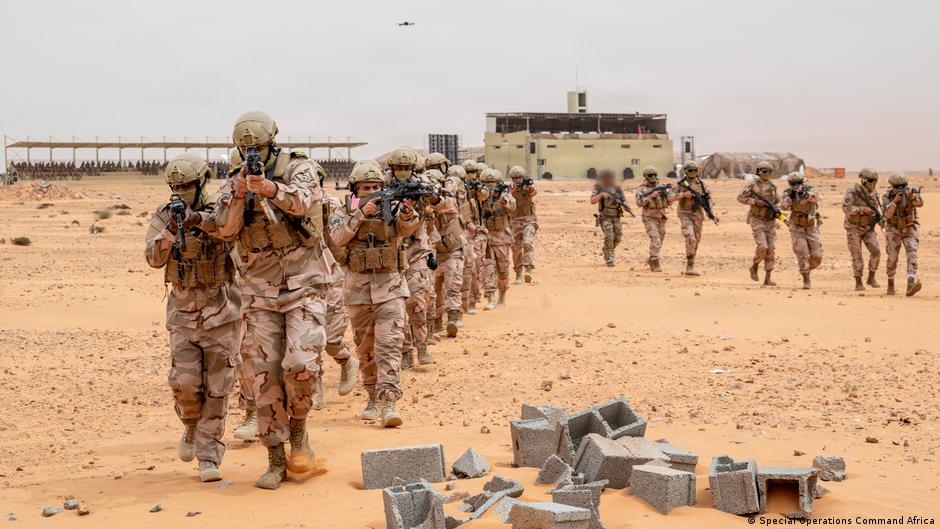
For the first time, representatives from Libya's rival eastern and western administrations have participated together in Flintlock, a multinational military exercise led by the United States. The event, which runs until the end of April across Libya and Ivory Coast, involves soldiers from around 30 nations training to combat terrorism. This unprecedented collaboration marks a significant, albeit tentative, shift in the country's long-standing political fragmentation.
The joint participation coincides with the recent adoption of a joint national budget, the first such agreement in many years. Analysts view this convergence of military and fiscal cooperation as a rare, visible sign of rapprochement at the operational level. The publicly staged handshake between the two rival camps during the exercise demonstrates that cooperation is possible, at least under external mediation, particularly by the US.
The exercise takes place within a complex landscape where political and economic power has been split between rival administrations, armed groups, and regional actors since 2014. In the west, the UN-recognised Government of National Unity in Tripoli operates alongside the Government of National Stability in Tobruk, which is backed by General Khalifa Haftar's Libyan National Army. The country currently lacks a unified, functional government structure with clear delineations between the executive, legislative, and judicial branches, hindering the establishment of effective democratic rule.
Experts note that the motives behind the US-led initiative extend far beyond Libya's internal dynamics. The focus is explicitly linked to longer-term efforts to counter Russian influence in eastern Libya and to push back against the spread of weapons from the war in Sudan. Libya is increasingly becoming a stage for international strategic competition due to its geographical location and oil resources, with Moscow's presence in the east viewed as a key factor the US seeks to address.
Despite the symbolic importance of the joint participation, structural divisions and external strategic interests mean a fully united Libya remains unlikely in the near future. The recently published Bertelsmann Transformation Index 2026 highlights that political and economic power remains divided, resulting in a fragmented environment that hinders effective governance. The joint budget could help rebalance economic power structures, particularly vis-à-vis influential actors like General Haftar, whose network is deeply embedded in the country's economic systems.
Underlying these political manoeuvres are severe economic challenges. A recent assessment by the International Monetary Fund describes Libya's current fiscal path as unsustainable, with persistently large deficits intensifying pressures on the exchange rate, international reserves, and inflation. High public spending and currency pressures are placing strain on the population and exacerbating social tensions, suggesting that isolated signs of cooperation are unlikely to resolve these deep-seated structural problems without broader reform.