Lebanon readies direct talks with Israel as Hezbollah opposition deepens
President Joseph Aoun and Prime Minister Nawaf Salam push for an Israeli withdrawal and final border line, despite a smear campaign from Hezbollah that compares the president to assassinated Egyptian leader Anwar al-Sadat.
Lebanon is preparing to resume direct negotiations with Israel, a diplomatic initiative that follows a preliminary meeting held in Washington in early April. The primary objectives of these talks are to secure a full Israeli army withdrawal from southern Lebanon and to achieve a final demarcation of the shared border. However, the process is being severely hindered by intense internal opposition from Hezbollah, which has launched a coordinated smear campaign against the country's leadership.
Senior Hezbollah official Nawaf Moussaoui has explicitly rejected any new agreement, stating that such deals would be "rejected, unrecognised and thrown in the bin." In a warning issued to President Joseph Aoun, Moussaoui compared the head of state to the assassinated Egyptian leader Anwar al-Sadat, suggesting that unilateral decisions by Aoun regarding peace would lead to his demise. This rhetoric has created a hostile environment in Beirut, where the pro-Iranian movement views the negotiations as a direct threat to its strategic role as a proxy for Tehran.
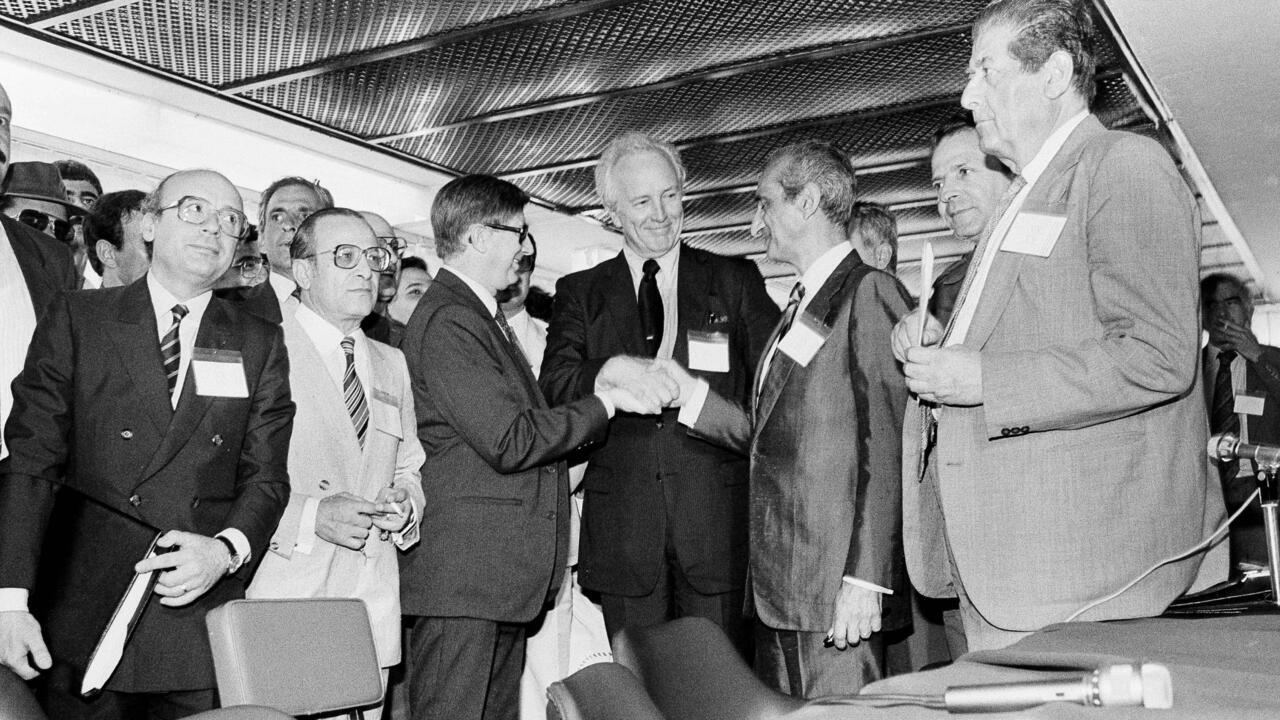
The current political climate is characterised by a rejection of compromise that draws heavy historical parallels to the failed May 17 Agreement of 1983. That deal, signed under US auspices to end the state of war and establish a security zone, was abrogated in 1984 due to Syrian pressure and internal Lebanese opposition. Hezbollah officials have dismissed potential new deals as worthless, citing the unimplemented 1983 agreement as a precedent for why peace accords fail in the region.
Analysts note that the regional context for these talks differs significantly from 1983, presenting both new opportunities and fresh obstacles. While Syria, previously a major obstacle to normalisation, is now reportedly open to direct negotiations with Israel regarding the Golan Heights, Hezbollah and its Iranian patron remain the primary blockers. Iran seeks to prevent Lebanon from normalising relations with Israel, viewing the country through the lens of Hezbollah as a strategic card to maintain leverage against the West.
Complicating the diplomatic landscape is the Israeli government's decision to draw a controversial "yellow line" deep inside southern Lebanon. Israeli authorities state this buffer zone is intended to protect northern communities from Hezbollah fire, yet critics in Lebanon interpret it as a unilateral border change reminiscent of annexation scenarios. This move instils doubt about Israeli intentions and adds another layer of complexity to the already fragile negotiations.
The Lebanese government is banking on the talks to secure an Israeli army withdrawal and a final border demarcation, yet the path forward is obstructed by the refusal of key internal actors to engage. President Aoun and Prime Minister Nawaf Salam face the difficult task of advancing these discussions while navigating implicit death threats and a narrative that frames peace efforts as treasonous acts against the nation's sovereignty.