Kenyan President Ruto faces diplomatic scrutiny after mocking Nigerian English proficiency
President William Ruto's assertion that Nigerian-accented English requires a translator has drawn condemnation from African leaders and critics, who argue the comments reflect colonial conditioning rather than genuine linguistic superiority
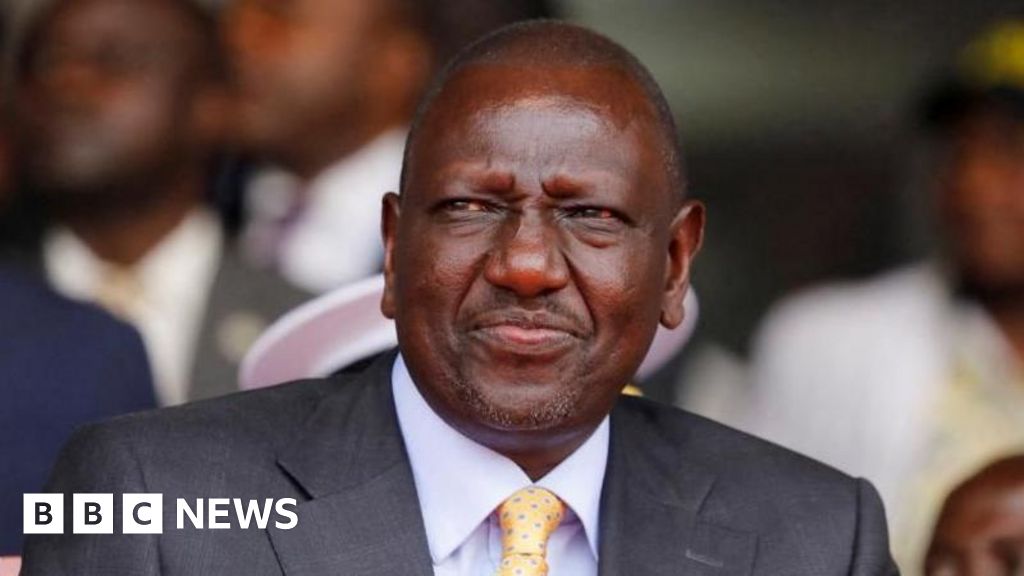
Kenyan President William Ruto has faced widespread social media condemnation after addressing Kenyans living in Italy, where he claimed that Nigerian-accented English is incomprehensible and requires a translator. While asserting that Kenyans speak some of the best English in the world, the President's remarks have triggered fierce online backlash, with critics accusing him of demeaning a fellow African nation and displaying a deep inferiority complex rooted in colonial conditioning.
The specific comments were delivered during an address to the Kenyan diaspora in Italy on Monday. Ruto stated that if one listens to a Nigerian speaking, they do not know what is being said, contrasting this with his claim that Kenya's education system produces strong English proficiency. He further suggested that while Kenya possesses excellent human capital, it merely needs sharpening with more training, a sentiment that sparked laughter in the room but anger on digital platforms.
Critics have highlighted the irony of such assertions given Nigeria's rich literary heritage. Nigerian Senator Shehu Sani pointed out the contradiction by referencing Nobel Prize-winning authors Wole Soyinka, Chinua Achebe, and Chimamanda Ngozi Adichie. Observers suggest that Ruto's remarks may be a response to earlier comments by Nigerian President Bola Tinubu, who faced backlash for claiming Nigerians are better off despite rising fuel prices, though no official response from Ruto's government has been issued.
The dispute underscores the complex relationship between the two nations, both of which are former British colonies that share English as an official language. Although they share this linguistic heritage, they have developed distinct spoken varieties influenced by their respective indigenous languages. Nigeria has over 500 languages which shape its cadence, while Kenya's accents derive from Bantu, Nilotic, and Cushitic influences, resulting in a recognised variety of Nigerian English that continues to influence global usage.
Online exchanges between Kenya and Nigeria are frequent, often involving intense, humorous, and sometimes volatile cyber wars revolving around economics, pop culture, and politics. While some Kenyans have defended Ruto, arguing that critics have missed the intended humour of his address, many users have urged the President to focus on addressing pressing domestic issues such as the cost of living and unemployment rather than engaging in what they describe as distractions.
There is currently no official clarification from the Kenyan administration regarding the diplomatic fallout. The incident serves as a reminder of how linguistic nuances can rapidly escalate into broader political tensions, particularly when framed within the context of national identity and post-colonial pride.