Japan's Core Inflation Accelerates to 1.8% in March as Policy Pressures Mount
Official data released by NHK News indicates that the consumer price index excluding volatile fresh food has climbed, suggesting sustained upward pressure on domestic costs.
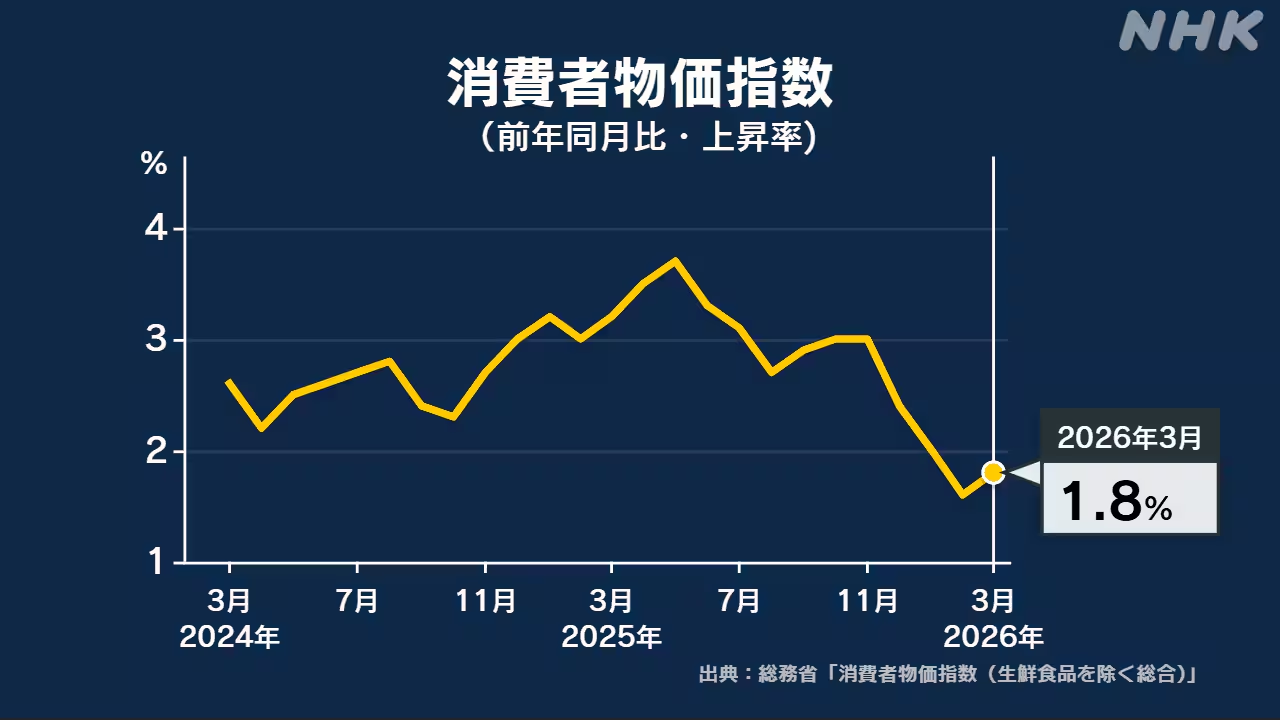
Japan's consumer price index for March has risen by 1.8 per cent compared to the same month last year, according to figures released by NHK News. The headline figure mirrors the movement of the core index, which specifically excludes fresh food subject to weather fluctuations, also recording a 1.8 per cent increase. This alignment between the broad measure and the core metric suggests that underlying price pressures remain persistent across the economy.
The rate of inflation has expanded by 0.2 percentage points relative to the previous month, rising from the 1.6 per cent increase recorded in February. This acceleration indicates that the upward trajectory in prices is not merely a result of seasonal volatility but reflects a broader trend in the cost of goods and services consumed by households. The data underscores a continued tightening of the monetary environment as price stability becomes increasingly elusive.
By excluding fresh food, the core index aims to filter out the significant distortions caused by weather conditions, providing a clearer picture of the structural inflationary trends facing the nation. However, the fact that the core rate has matched the headline rate implies that these structural pressures are strong enough to influence the overall basket of goods despite the exclusion of the most volatile category.
The release of these statistics by NHK News on 24 April 2026 highlights the ongoing challenge for policymakers in managing the balance between growth and price stability. As the year-on-year rise rate expands, the implications for fiscal planning and monetary policy become more pronounced, requiring careful consideration of how external shocks and domestic demand interact.
While the current data presents a confirmed statistical reality, the persistence of this inflationary trend necessitates a rigorous examination of the institutional frameworks governing the economy. The convergence of headline and core figures suggests that the measures taken to curb price rises may require recalibration to address the root causes of the 1.8 per cent escalation.
Ultimately, the March figures serve as a critical indicator for governance, signalling that the economic landscape is shifting in a manner that demands sustained attention from decision-makers. The consistency between the broad and core indices leaves little room for ambiguity regarding the direction of the economy.