Japanese Diet Adjourns Amid Stalled Deliberations and Sub-Capital Legislation
The 221st Special Session concludes with the passage of all 64 government bills, including laws supporting the 'sub-capital' decentralisation plan, while political friction between the ruling and opposition parties remains unresolved.
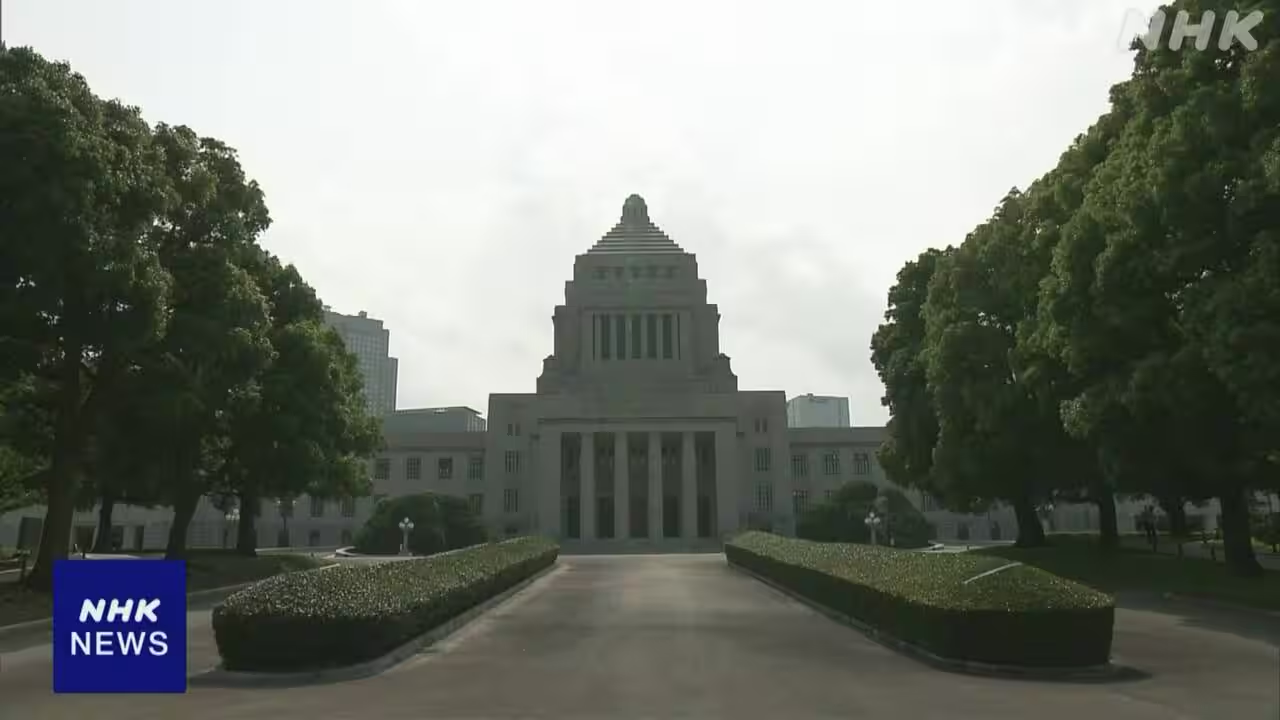
The Japanese Diet effectively adjourned on the evening of 24 July following the passage of legislation related to the 'sub-capital' concept. The conclusion of the 221st Special Session saw the enactment of all 64 government-proposed bills, marking the end of a parliamentary term defined by both legislative output and significant political friction.
The final stages of the session were characterised by intensified opposition between the ruling and opposition parties, which caused deliberations to stall. Despite these procedural hurdles, the 'sub-capital' legislation passed with the support of the Liberal Democratic Party, the Nippon Ishin no Kai, and the Mirai Party. The concept refers to a government plan to decentralise functions from Tokyo, a policy initiative that has generated considerable debate within the legislature.
Concurrent with the legislative developments, Aichi Prefecture has formally expressed its intention to become the designated 'sub-capital'. On 24 July, the Governor of Aichi Prefecture and the Mayor of Nagoya held a joint press conference to announce this ambition, signalling local government engagement with the national decentralisation strategy.
Political dynamics within the Diet remain constrained by the ruling party's continued lack of a majority in the House of Councillors. This structural disadvantage necessitates cross-party cooperation for legislative success, a challenge that is expected to remain central to the agenda in the next Diet session. The difficulty in forming consensus during the current session highlights the ongoing tensions that will likely shape future policy negotiations.
Procedural adjustments were also made as the session wound down. A concentrated hearing scheduled for the House of Representatives Budget Committee on 24 July was cancelled. Following an agreement between the ruling and opposition parties, the hearing has been rescheduled for 27 July, indicating a temporary truce in the immediate aftermath of the adjournment.