Japan bans mobile batteries on aircraft effective immediately amid safety concerns
The Ministry of Land, Infrastructure, Transport and Tourism has issued an immediate prohibition on using mobile batteries inside aircraft, citing recurring hazards associated with lithium-ion technology.
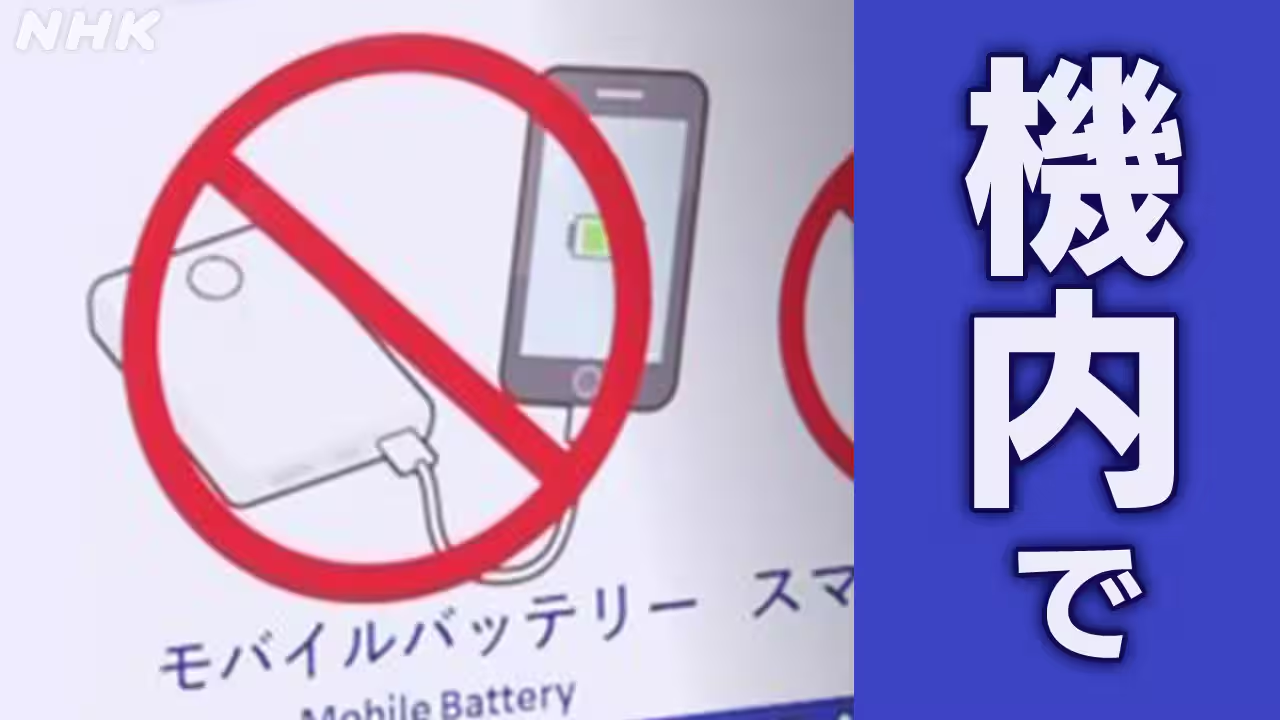
Effective from today, 24 April 2026, the Ministry of Land, Infrastructure, Transport and Tourism has prohibited the use of mobile batteries inside aircraft. The directive comes into force immediately, marking a significant shift in cabin safety protocols across the sector.
This regulatory move is a direct response to a series of incidents where lithium-ion batteries in mobile devices caught fire or emitted smoke on board. The Ministry has identified these specific safety hazards as the primary driver for the ban, aiming to mitigate the risks associated with the technology currently in widespread use.
The announcement explicitly targets mobile batteries utilising lithium-ion chemistry. While the regulation broadly refers to these devices in the context of recent fire incidents, the scope of the ban is framed around the specific incidents that prompted the intervention rather than a general capacity-based restriction.
In light of this new restriction, airlines are being urged to alert passengers to the prohibition. The carriers are now tasked with ensuring that the ban is communicated clearly to travellers, reinforcing the Ministry's directive that the safety of the aircraft cabin takes precedence over the utility of personal power sources during flight.
The Ministry of Land, Infrastructure, Transport and Tourism did not specify in its initial statement whether the ban applies to charging devices while the aircraft is on the ground or solely during flight operations. Similarly, details regarding the specific number of incidents or the severity of injuries involved in the events leading to this decision were not provided in the source text.
As the ban takes effect, the focus remains on the immediate implementation of the rule by carriers. The Ministry expects airlines to integrate this new requirement into their safety briefings and operational procedures without delay, ensuring that the policy is enforced consistently across all relevant operations.