Europe witnesses first total solar eclipse in three decades
Totality observed in Iceland and northern Spain as millions across the region monitor the Moon’s transit across the Sun
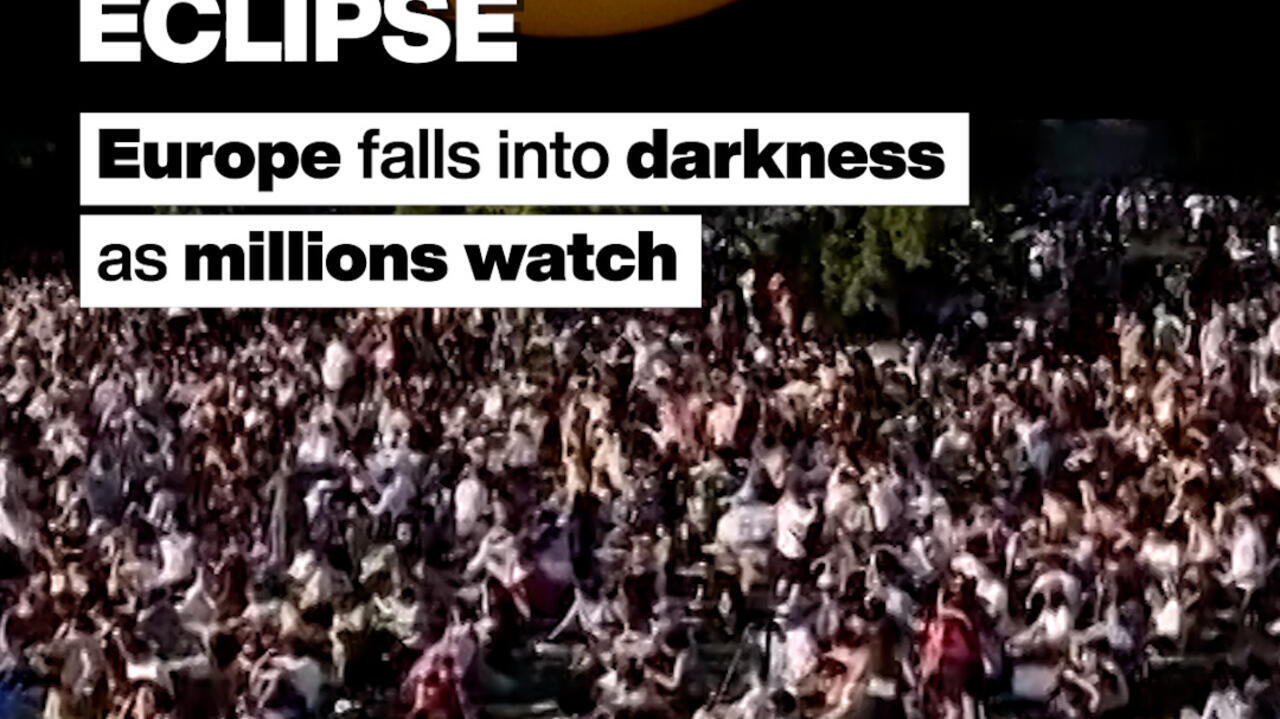
Millions of people across Europe observed a rare solar eclipse on Wednesday as the Moon passed in front of the Sun, marking the first total solar eclipse visible in mainland Europe since 1999. The event, reported by France 24 International, drew significant public attention as the celestial alignment cast shadows across the continent.
The eclipse was total in parts of Iceland and northern Spain. In Segovia, Spain, daytime darkness lasted for 59 seconds, allowing observers to view the solar corona. Locals and visitors gathered at key vantage points, including the 16th-century bell tower of the Cathedral of the Assumption of the Virgin and San Frutos, to witness the phenomenon.
Much of the continent, including France and the UK, experienced a partial eclipse. In many areas, more than 90% of the Sun was covered, creating what observers described as a spectacular view. The event is estimated to be visible to one in eight people worldwide in some capacity.
The occurrence highlights a significant gap in astronomical visibility for the region, with the previous total eclipse in mainland Europe having taken place 27 years ago. The specific duration of totality in Segovia was recorded at 59 seconds, though this may vary in other parts of Iceland and northern Spain.
France 24 International issued the content on 13 August 2026, noting the widespread observation across Europe. The event underscores the continued public interest in celestial mechanics, even as precise viewer numbers across the continent remain described generally as millions rather than exact figures.