Defence Secretary Hegseth confirms US Navy authorisation to target Iranian fast boats in Strait of Hormuz
Official confirmation follows previous directives to engage vessels laying mines, raising questions over the precise operational scope of the new mandate.
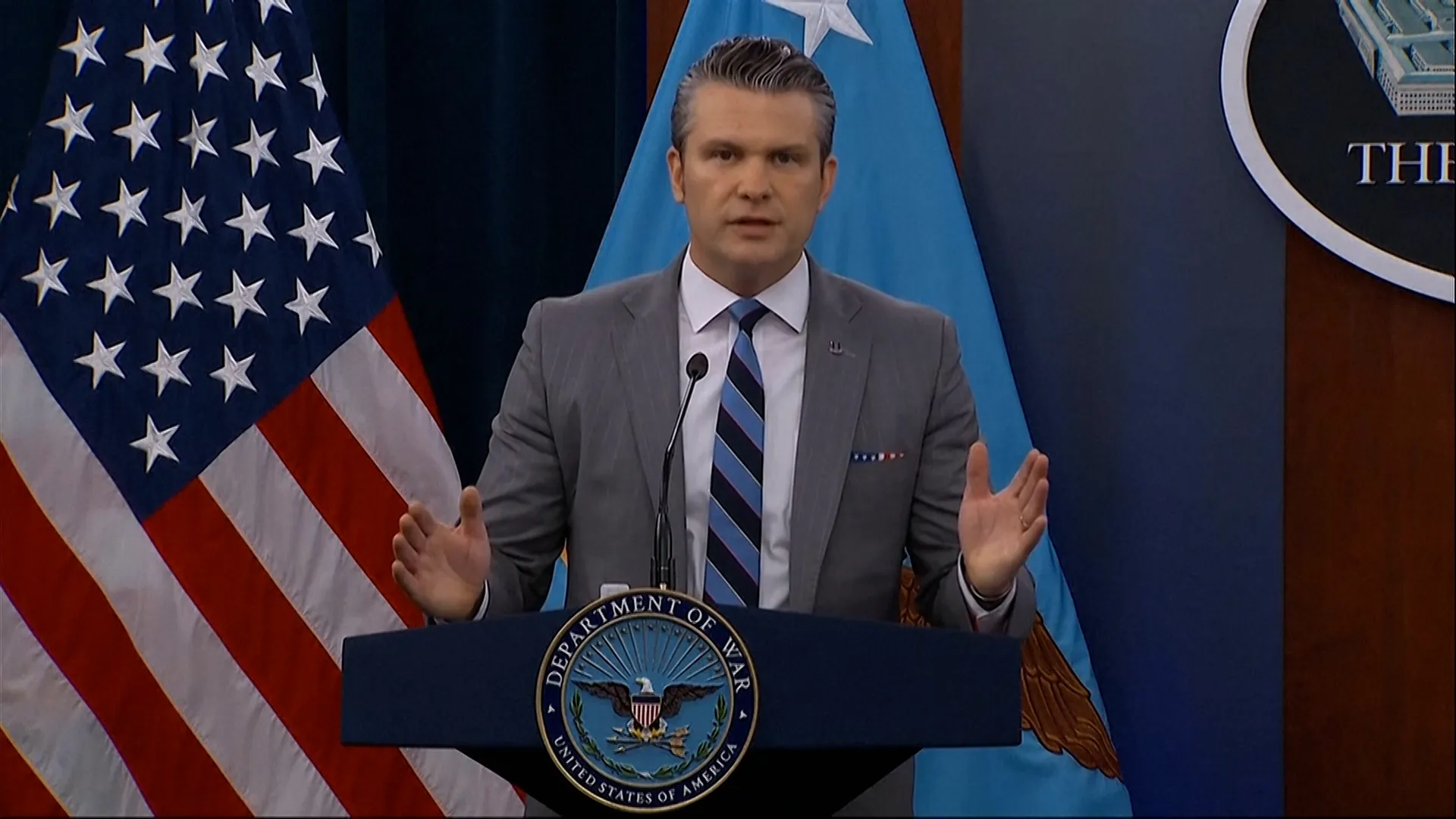
Defence Secretary Pete Hegseth has publicly confirmed that President Donald Trump has authorised the United States Navy to target Iranian fast boats operating within the Strait of Hormuz. This declaration marks a significant development in the ongoing maritime standoff, with the Department of Defence serving as the primary channel for this institutional update.
The authorisation specifically directs naval forces to engage fast boats in the strategic waterway. While the confirmation establishes the legal basis for such action, the current reporting does not detail whether this mandate extends to other vessel types or defines the specific conditions under which engagement is permitted beyond the fast boat designation.
This escalation occurs against a backdrop of heightened regional instability following the imposition of a naval blockade on Iranian ports. President Trump previously asserted that this measure was inflicting financial collapse on Tehran, a claim that prompted Iranian armed forces to close the Strait of Hormuz and stall global oil flows.
The situation has further complicated the security landscape, with Israel indicating readiness to resume bombing operations pending a green light from Washington. Israeli officials have identified targets, including energy and electricity facilities, underscoring the dependency of regional offensive capabilities on US approval.
Historical context suggests a pattern of increasing direct confrontation, as previous US directives have already ordered the Navy to engage and destroy Iranian vessels actively laying mines in the strait. The current authorisation to target fast boats appears to be a continuation of this shift from diplomatic pressure to kinetic maritime action.
Despite the clarity of the authorisation, uncertainties remain regarding the immediate operational status of the US Navy in the region and the specific reaction from the Iranian government. The scope of the directive remains the central focus of analysis for observers monitoring the potential for renewed direct conflict.