Canada opens Gordie Howe bridge in isolation as US-Canada trade rift widens
Ontario Premier Doug Ford and Prime Minister Mark Carney navigate diplomatic tensions as the $4.7 billion infrastructure project opens to traffic without American counterparts.
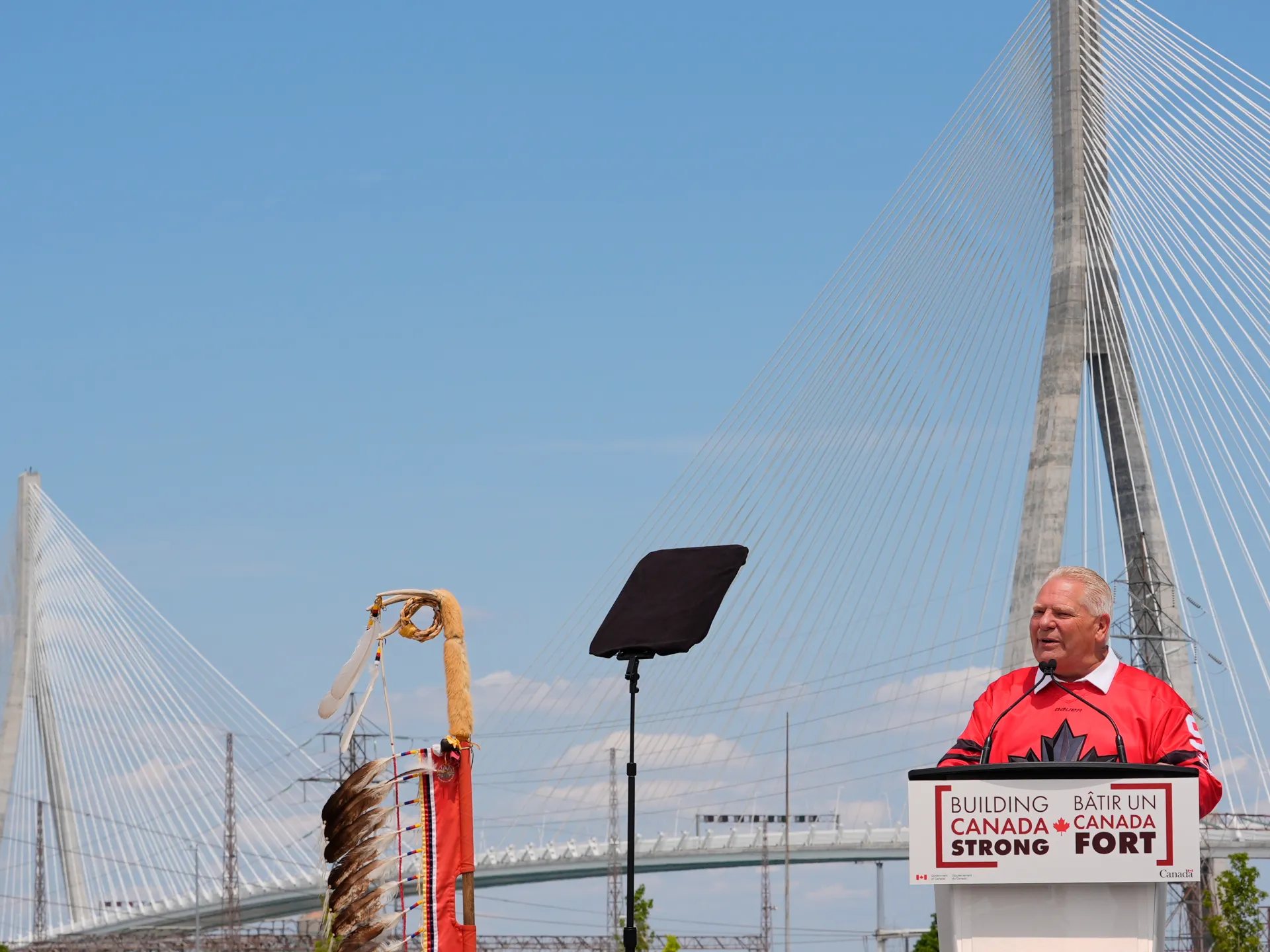
Canada has marked the opening of the Gordie Howe International Bridge with a standalone ceremony in Windsor, Ontario, explicitly excluding United States officials following a deterioration in bilateral trade relations. The decision to cancel the planned cross-border ribbon-cutting event underscores the deepening friction between Ottawa and Washington, driven by threats of 50 per cent tariffs from US President Donald Trump and unresolved disagreements over toll revenue sharing.
The milestone opening for the $4.7 billion bridge, which connects Windsor to Detroit, Michigan, was observed solely by Canadian officials and invited guests, including members of Gordie Howe’s family. Attendees were encouraged to wear red and white to demonstrate national pride and were prevented from crossing to the US side. The event, held amid tributes to the legendary hockey player after whom the bridge is named, proceeded as the structure prepares to open to traffic on Monday.
Ontario Premier Doug Ford, wearing a red Team Canada jersey bearing Howe’s number 9, acknowledged the strained diplomatic landscape while emphasising the project’s symbolic value. Ford stated that while the bridge exemplifies what can be achieved through cooperation, Ontario would not back down from US pressure. He reiterated that Canadians and Americans are better off working together, even as Trump’s tariff threats have complicated the relationship.
The exclusion of US delegates follows a series of escalating disputes, including Trump’s claim on Truth Social that the original bridge deal was “terribly negotiated” and that the United States now secures 50 per cent of the profits. Trump described the disinvitation as “fine,” while Canadian Prime Minister Mark Carney maintained that toll revenues would only be shared after the construction debt is fully repaid. This stance contradicts a draft agreement released on Wednesday, which suggests Canada will split net bridge and crossing-related revenues with the US for the first 15 years without an explicit provision for prior debt repayment.
The political backdrop includes allegations of influence peddling, with reports that Matthew Moroun, owner of the competing Ambassador Bridge, donated $1 million to a Trump-aligned political action committee in January before Trump threatened to block the project. While the White House and the committee have denied any connection between the donation and the threats, experts note the ambiguity in the current agreements allows both sides to claim victory. The bridge, funded entirely by Canada, serves as a faster alternative to the existing Ambassador Bridge, which has long been opposed by Moroun due to concerns over lost traffic and revenue.