Alleged Shift in Iranian Power Dynamics as Supreme Leader Delegates Authority to IRGC
Foreign media claims indicate Ayatollah Ali Khamenei is handing decision-making powers to the Islamic Revolutionary Guard Corps, raising questions about the future of Iran's governance.
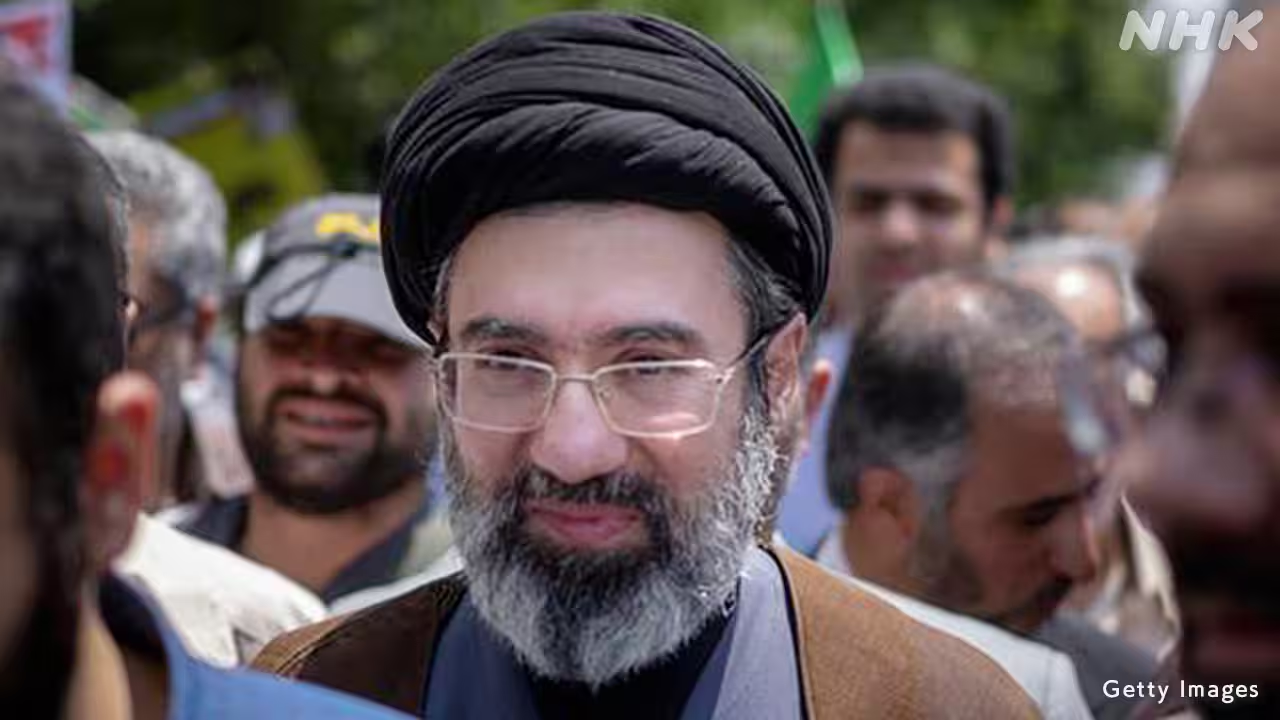
A report published by The New York Times on 23 April alleges that Iran's Supreme Leader, Ayatollah Ali Khamenei, is delegating decision-making authority to the Islamic Revolutionary Guard Corps. This assertion marks a potential shift in the balance of power within the country's political hierarchy, suggesting that the highest office in the land is increasingly relying on the military wing for critical governance choices.
The findings presented in the article are derived from interviews conducted with more than 20 officials and sources within Iran. While these accounts provide a glimpse into the internal workings of the regime, the specific identities, ranks, or reliability of the individuals interviewed have not been disclosed in the available reporting. This lack of transparency regarding the source material limits the ability to independently verify the extent of the alleged power transfer.
Ayatollah Ali Khamenei has served as Iran's Supreme Leader since 1989, holding the highest position in the nation's political structure. The Islamic Revolutionary Guard Corps is a powerful military and political organisation that has long been distinct from the regular army. Previous reporting has frequently highlighted the significant influence and autonomy of the IRGC in Iranian politics and security matters, yet this specific allegation of delegated authority represents a new development based on journalistic interpretation rather than official confirmation.
The term used to describe the change in dynamics, "delegating," implies a formal transfer of power that may not fully reflect the nuanced reality of the situation. It is possible that the relationship between the Supreme Leader and the IRGC involves increased influence or operational control rather than a complete abdication of constitutional authority. Such distinctions are critical when assessing the stability and direction of the Iranian state.
Given the sensitivity of the topic and the potential for misinformation in conflict zones, the veracity of these claims should be treated as unverified until corroborated by other independent sources or official channels. The report relies on foreign media interpretation and does not constitute an official statement from the Iranian government. Consequently, the extent of this change, whether it represents a permanent structural shift or a temporary measure due to the current geopolitical climate, remains unclear.
Until further information emerges, the situation in Tehran remains defined by the tension between established institutional roles and the evolving nature of power dynamics suggested by external observers. The implications of such a shift could have profound consequences for regional stability and the internal governance of the Islamic Republic.