White House faces 'panic' over Gulf security drift, analyst says
Analyst Borzou Daraghai warns that Washington is alarmed by the prospect of Gulf states forging independent defence pacts that could destabilise the Abraham Accords.
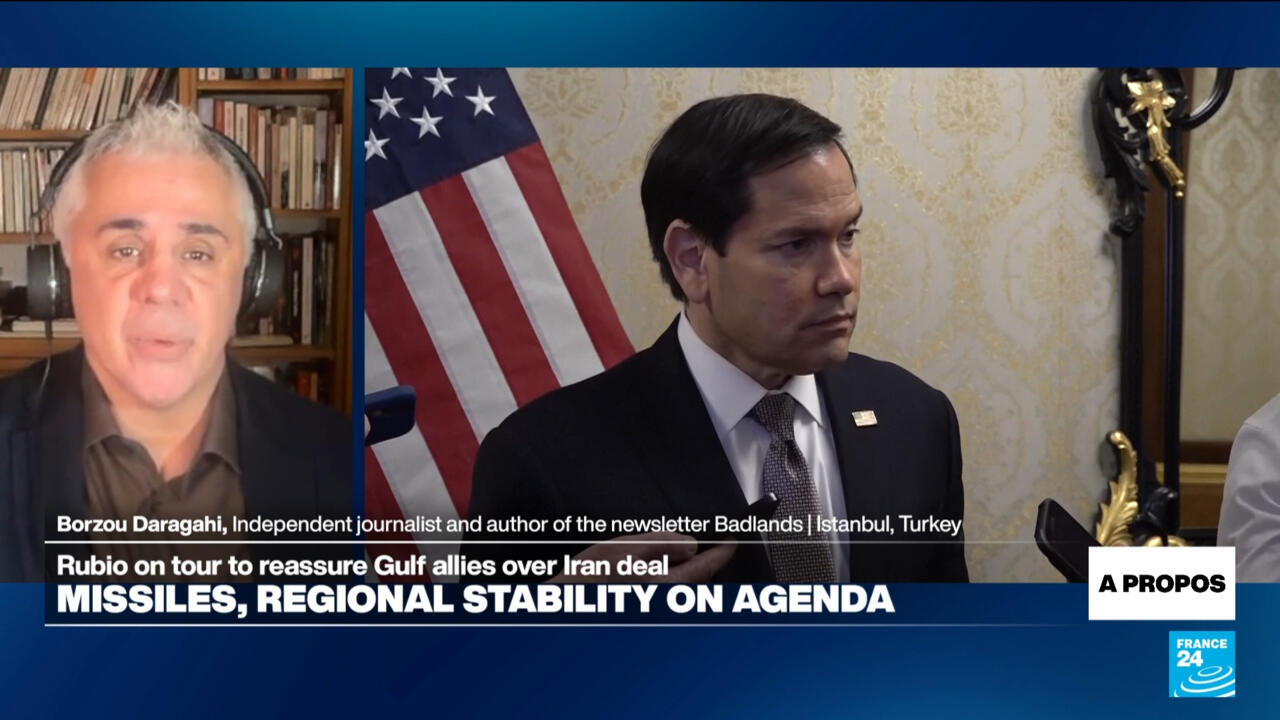
US Secretary of State Marco Rubio has provided firm assurances to Gulf allies that Washington will safeguard their interests as it negotiates a final settlement to the Middle East war with Iran. The diplomatic push comes amid heightened regional hostilities, including recent US airstrikes in southern Iran and Iranian threats to target vessels in the Strait of Hormuz.
Despite these official guarantees, independent journalist and author Borzou Daraghai told FRANCE 24 that the White House is experiencing "panic" regarding the potential for Gulf countries to establish alternative security arrangements. Daraghai, who contributes to the newsletter Badlands, suggested that Washington fears these independent moves could undermine the Abraham Accords, the series of normalisation agreements between Israel and several Arab states.
The concern stems from the possibility that Gulf nations, seeking to ensure their own safety amid the escalating conflict, might bypass US-led frameworks. Such a development would represent a significant shift in regional diplomacy, potentially fracturing the coalition that underpins the Accords and complicating US efforts to manage the broader geopolitical landscape.
Tensions in the region have intensified following Iranian military commands announcing they would target any ship transiting the Strait of Hormuz. This declaration followed strikes on two vessels and recent US military actions in southern Iran. While Iran has declared the waterway closed, US Central Command has denied a full closure, stating that commercial shipping continues to transit the strategic route.
The juxtaposition of Rubio’s public assurances and the reported internal anxiety within the White House highlights the delicate balance Washington must maintain. As negotiations with Iran proceed, the US must reassure its Gulf partners of their security commitments while preventing the emergence of competing security architectures that could dilute American influence and the stability of the Accords.