USPS mail voting rules advance despite internal warnings of mass disenfranchisement
A whistleblower alleges the untested system could reject entire batches of ballots due to a single barcode error, even as a federal court temporarily blocks the requirements.
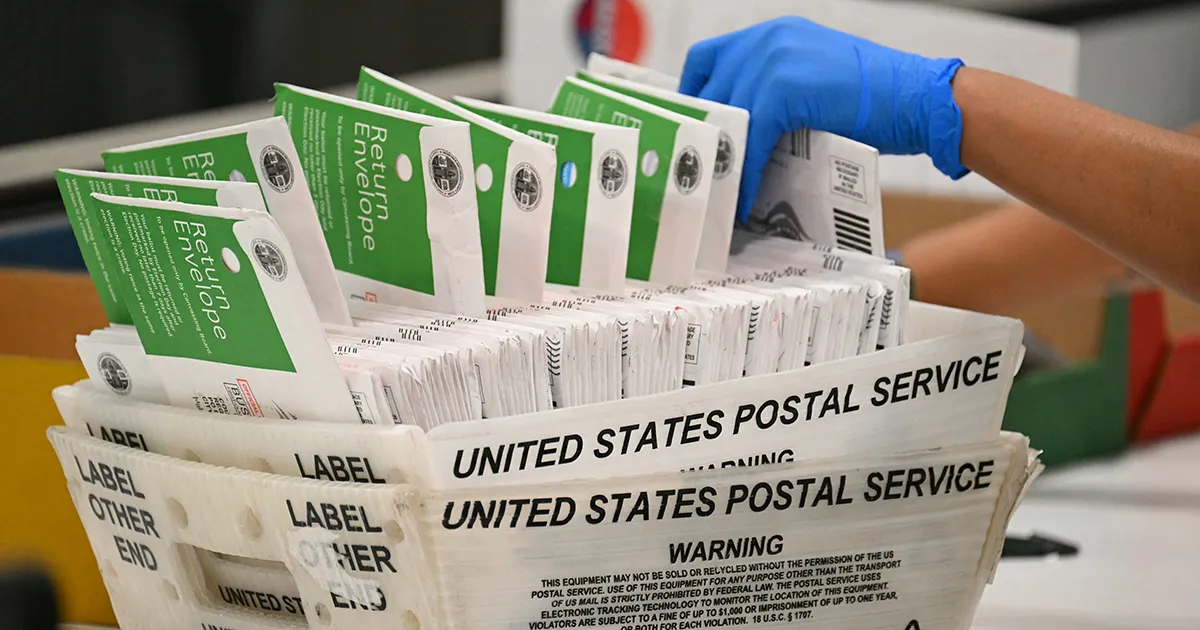
New mail voting regulations issued by the United States Postal Service (USPS) have moved forward despite internal concerns that the system could delay or block ballots for the upcoming midterms. The rules, mandated by a March executive order from President Donald Trump, require states to provide lists of eligible mail voters to the USPS for verification. While a federal court has temporarily blocked the requirements, the merits of the case are expected to reach the Supreme Court before the November election.
A whistleblower disclosure to Senator Richard Blumenthal alleges the untested system is error-prone and could lead to mass disenfranchisement. The whistleblower described the process as “secretive, rushed, chaotic, and fundamentally flawed,” warning of a “zero-percent failure policy” that could reject entire batches of ballots due to a single error. According to the disclosure, if even one barcode on a single ballot in a bulk mailing fails to scan, the entire batch is rejected and sent back to the state.
Election clerks raised similar concerns directly to USPS officials at a mid-August conference in Kansas City, Missouri. At the meeting, an example was given of Maricopa County, Arizona, which often sends out more than 2 million ballots at a time. USPS officials confirmed it was possible that one ballot with a bad barcode or wrong voter information within that volume could delay the entire mailing.
The system requires the creation of a new portal for states to upload voter information and back-end software to track and potentially block ballots. Staff began working on the system in mid-June with a September 1 deadline, a timeline experts say is typically too short for such a sophisticated tracking system. The whistleblower alleges the administration moved forward with system creation during two initial court injunctions, potentially violating court orders.
Uncertainties remain regarding the system’s readiness. It is unclear if the new system will be ready in time for the current election, as ballots for military and overseas voters must be sent out this month. The specific file formats and address types to be used for uploading voter lists have not yet been finalised, and it is uncertain whether the USPS will provide instructions for election officials to design and approve new ballot envelopes in time.
In a statement to ProPublica, a Postal Service spokesperson said the agency is carefully reviewing the whistleblower’s concerns and has spent months developing its system consistent with court orders. The spokesperson stated that the agency shares a common goal of ensuring Americans can have confidence that their election mail will be handled securely and delivered reliably.