US strikes launched after Tehran attacks destroyers in Hormuz Strait
Financial Times reports that military action has been taken following an assault on American vessels, raising concerns over regional stability
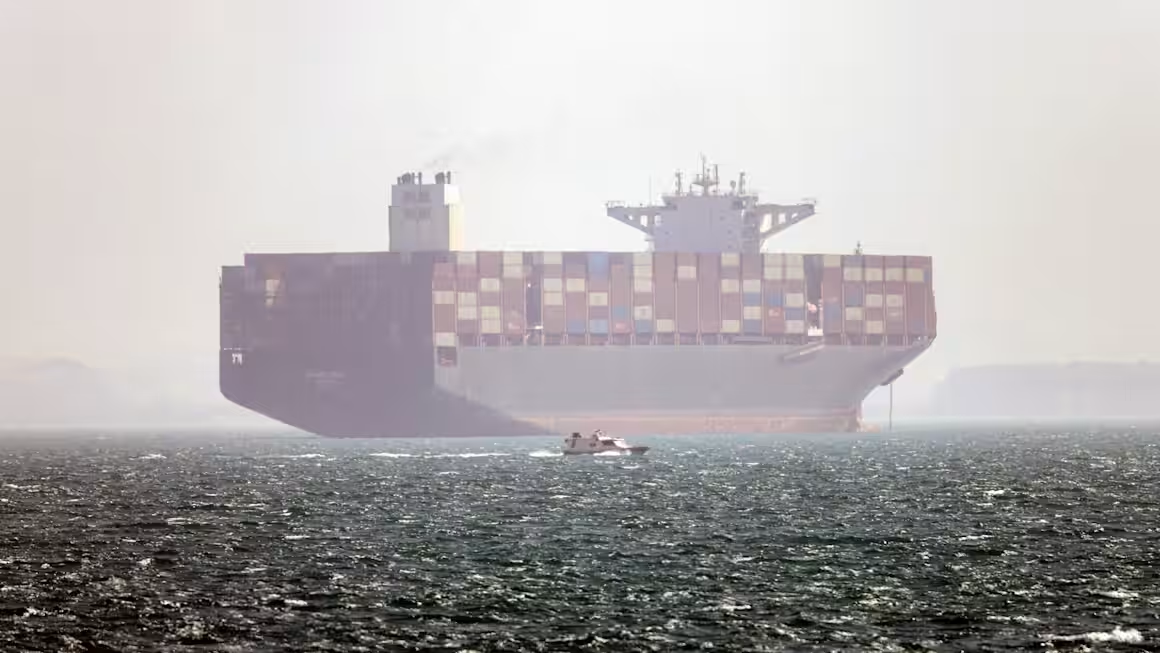
Washington has confirmed the launch of military strikes in the Hormuz Strait following an attack by Tehran on American destroyers. The development marks a significant shift in the current security posture, as the incident directly challenges a recent ceasefire that had been established between the two nations.
The conflict remains centred on the strategic waterway known as the Hormuz Strait, a critical chokepoint for global energy supplies. According to reports from the Financial Times, the escalation follows a specific incident where Tehran targeted US naval assets, prompting an immediate retaliatory response from Washington.
This latest confrontation casts a shadow over diplomatic efforts to de-escalate tensions in the region. Analysts note that the strain placed on the recent ceasefire could have wider implications for international markets and supply chains dependent on the flow of oil through the strait.
While the source material confirms the attribution of the initial attack to Tehran and the subsequent US response, specific details regarding the timing, scale, or precise nature of the military engagement are not detailed in the available reporting. The lack of granular data leaves the full extent of the retaliation somewhat undefined at this stage.
The situation underscores the fragility of the current diplomatic framework between the United States and Iran. As the geopolitical landscape shifts, the focus remains on whether the recent ceasefire can be preserved or if the region is moving toward a broader conflict.
Investors and policymakers are now watching closely for further developments, as the uncertainty surrounding the stability of the Hormuz Strait introduces a new layer of risk to global financial planning.