US Signals Diplomatic Opening with Iran Following Strait of Hormuz Incident
Tehran remains sceptical of Washington’s overtures, complicating efforts to de-escalate tensions after a US helicopter was downed in the strategic waterway.
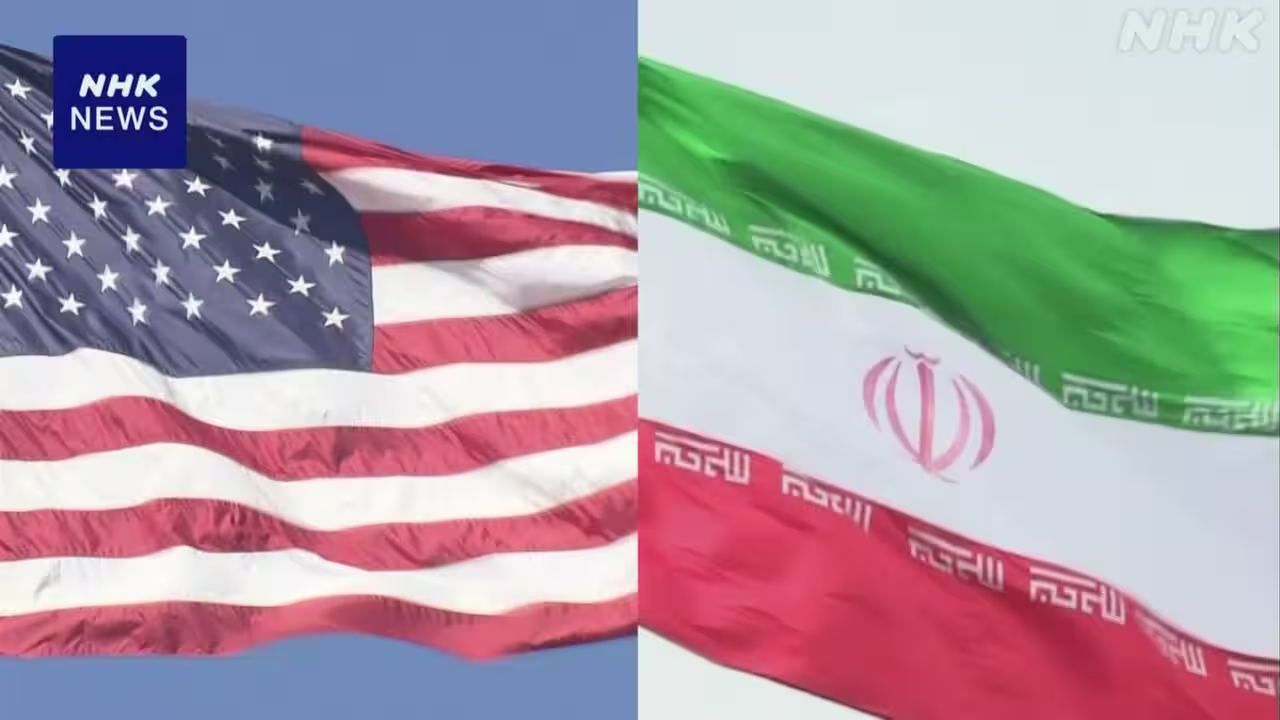
The United States has signalled that diplomatic negotiations with Iran remain possible, despite escalating tensions in the Middle East. The US Ambassador to the United Nations stated that President Donald Trump is leaving room for dialogue, pointing to the fact that the US military has not yet conducted direct attacks on Iranian territory.
The comments were made on Tuesday, 27 July 2026, following a significant security incident on Monday night in which a US Army AH-64 Apache helicopter was reportedly shot down over the Strait of Hormuz. While President Trump had previously accused Iran of the downing and vowed a necessary response, the Ambassador’s latest remarks indicate a shift towards diplomatic engagement rather than immediate military action.
In addition to signalling openness to talks, the Ambassador confirmed that the US is actively engaging with relevant countries regarding the situation. This diplomatic stance emerges in the wake of a high-profile summit in Beijing, where President Trump met with Chinese President Xi Jinping to discuss trade, artificial intelligence, and security in the Strait of Hormuz. The meeting marked the first visit by an American president to China since 2017.
However, Iranian officials have expressed strong scepticism regarding these diplomatic overtures. The economic climate in Iran, characterised by hyperinflation and military uncertainty, may further influence the government’s stance on any potential negotiations. The downing of the helicopter has added a layer of complexity to an already volatile regional environment.
Broader regional instability continues to pose challenges, with concerns over attacks on oil facilities and other geopolitical flashpoints. The exact nature and scope of the diplomatic channels being pursued by the US remain unspecified, and it is unclear whether Iran’s scepticism will lead to a rejection of talks or serve as a tactical position. The long-term impact of the helicopter incident on US-Iran relations remains uncertain given the conflicting signals from Washington.