US national debt breaches $40 trillion as interest costs rival Medicare
Treasury data reveals a doubling of the federal debt since 2017, driven by pandemic spending and rising mandatory outlays.
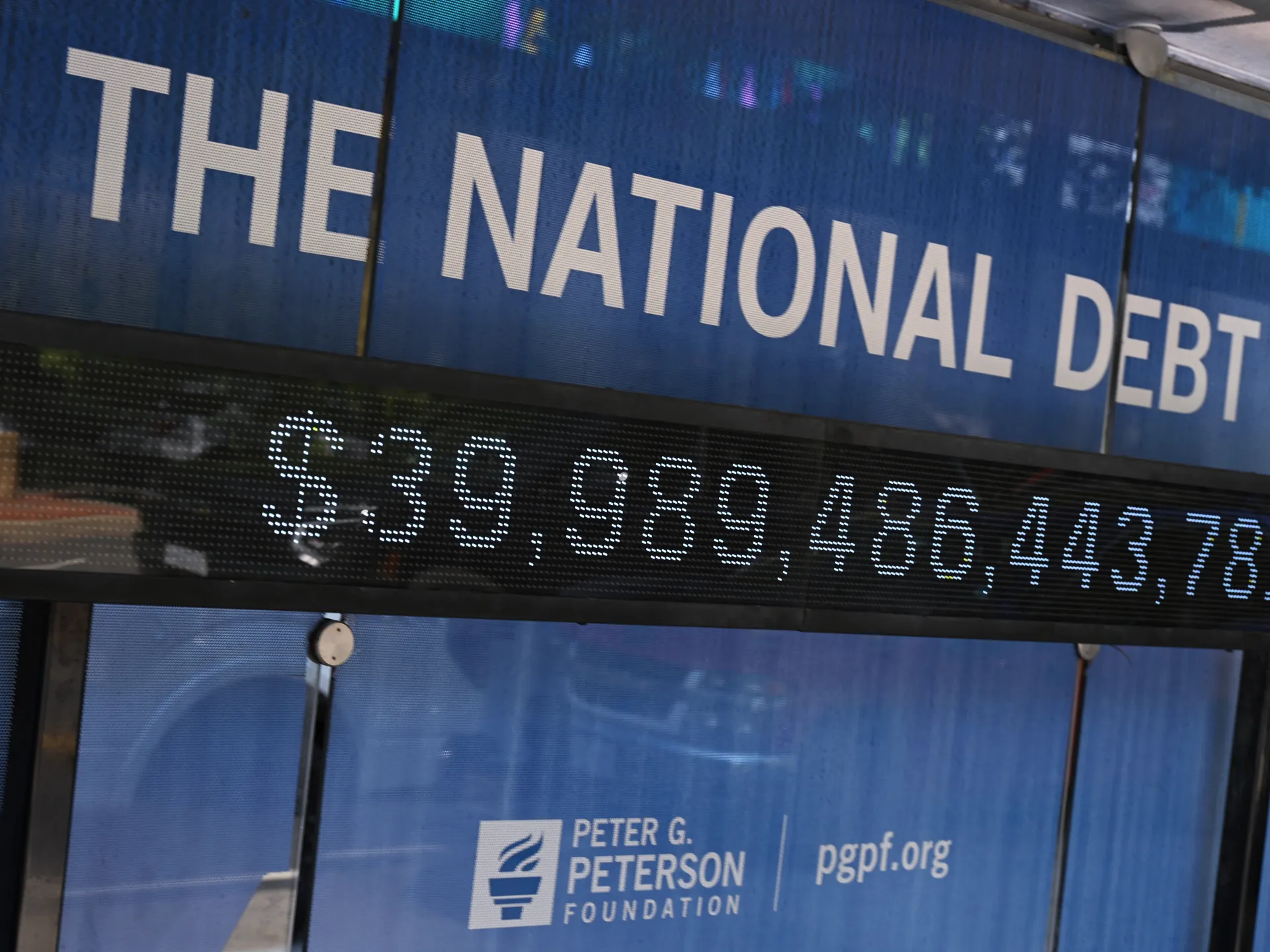
The United States national debt has surpassed the $40 trillion threshold for the first time, according to data released by the US Treasury Department on Wednesday. This milestone marks a significant shift in the federal fiscal position, with the total debt doubling from $19.95 trillion in January 2017. The accumulation spans the tenures of Presidents Donald Trump and Joe Biden, reflecting a sustained period of borrowing that has outpaced government revenue.
The debt load has increased by $3.8 trillion since Trump took office for a second time in January 2025, contributing to a total growth of $11.6 trillion across his two terms. During the Biden administration, the debt rose by $8.4 trillion, driven by pandemic recovery spending, infrastructure investment, and clean energy subsidies. Approximately one-third of the total increase occurred in the two years following the declaration of the COVID-19 pandemic in March 2020.
Current fiscal data indicates a July 2026 deficit of $432 billion, the fourth-highest monthly deficit in US history. This surge was exacerbated by tariff refunds following court rulings that struck down certain tariffs, which turned customs receipts negative for the third consecutive month. The deficit for the first 10 months of fiscal 2026 has already exceeded the total deficit for all of fiscal 2025, with two months remaining in the current fiscal year.
Interest costs have emerged as a critical component of the federal budget, surpassing Medicare outlays to become the second-largest line item behind Social Security. In the 2025 fiscal-year budget, debt service costs exceeded Pentagon funding for the first time. The US spends roughly $7 trillion annually, with 60 percent earmarked for mandatory programmes such as Social Security, Medicare, and Medicaid, which generally grow to keep pace with living costs.
The Congressional Budget Office estimates that the "One Big Beautiful Bill Act" will add $4.7 trillion to the federal debt. Margaret Spellings, CEO of the Bipartisan Policy Center, noted that federal programmes spend much more than the government takes in, with major budget items running on autopilot. She warned that the rising debt is increasing the cost of living and threatening long-term economic prosperity.
The $40 trillion figure equates to approximately $117,000 per person and $297,000 per household in the US. While the Trump administration has tasked the Department of Government Efficiency with slashing the federal workforce, much of the spending reductions have targeted discretionary programmes, which constitute the smallest portion of the federal budget. The structural reliance on mandatory spending continues to strain trust funds as payroll and income tax revenues fall short of covering federal costs.