Trump’s social media order reshapes US-South Korea security framework
A directive issued via Truth Social has triggered a rapid reduction in joint military exercises, exposing fractures in the alliance and prompting Seoul to reassess its defence posture.
The United States and South Korea have agreed to significantly scale back their annual joint military exercises following an order from US President Donald Trump. The directive, which mandated a substantial reduction in the Ulchi Freedom Shield drills, was communicated via the president’s Truth Social account hours before the exercises were scheduled to commence. This method of communication bypassed traditional diplomatic channels, catching South Korean officials by surprise during a public holiday.
By Wednesday, the two militaries had formalised the changes, reducing the exercise duration from 11 days to five and scaling back the scope of several field training drills. Minister of Foreign Affairs Cho Hyun confirmed to lawmakers that neither the South Korean government nor US officials had received advance notice of the president’s post. The Pentagon stated it was actively executing the directive, while US Forces Korea commander General Xavier Brunson met with South Korean Defense Minister Ahn Gyu-back to coordinate the adjustments.
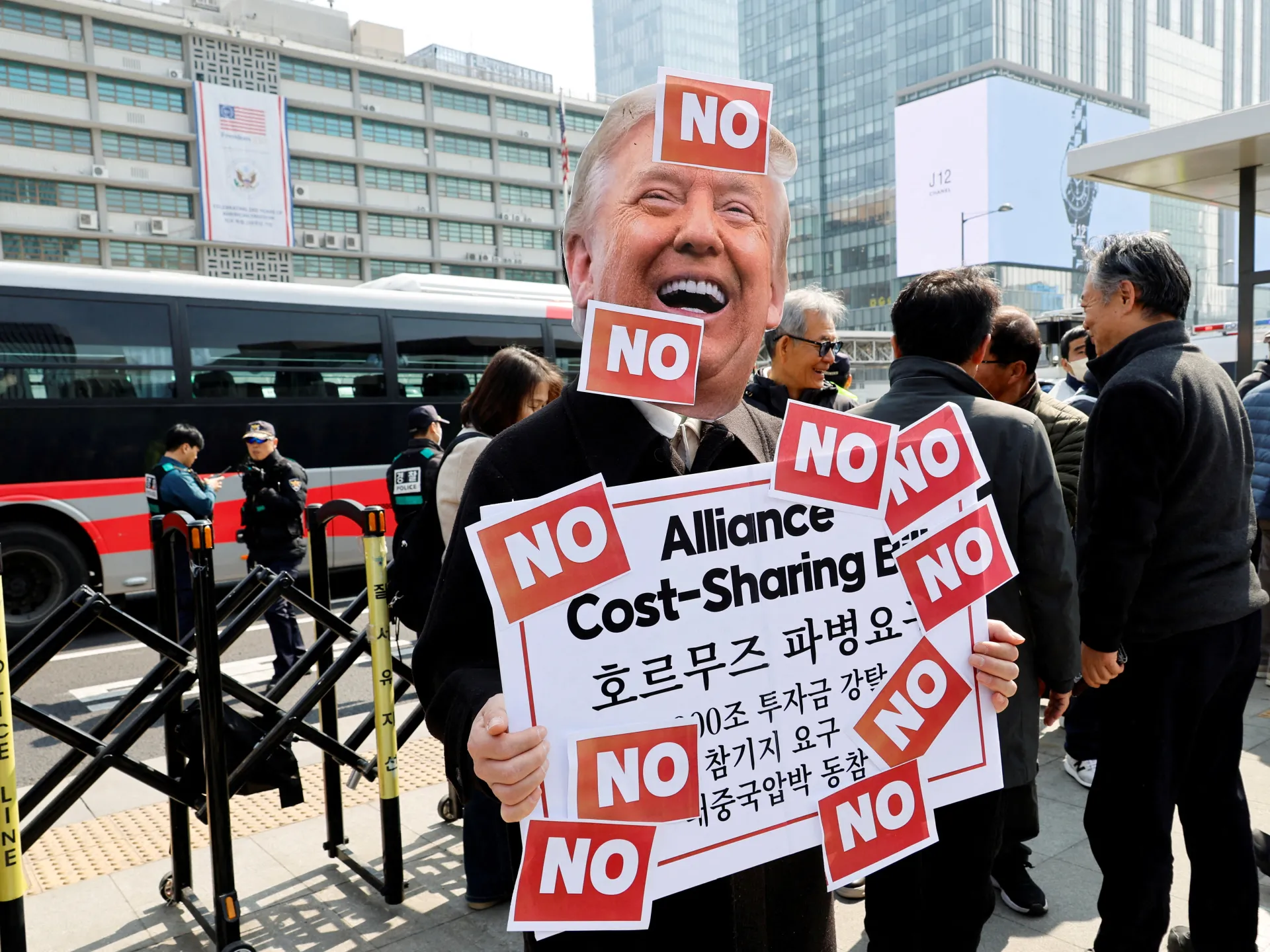
President Trump cited the drills as sending an “inappropriate and hostile” signal to North Korea and pointed to Seoul’s refusal to join the US-Israel war on Iran. He argued that the United States maintains 39,000 troops in the region to guard against North Korea, yet questioned why South Korea would not assist in what he described as a “very easy military operation” in Iran. The decision has reignited debate over the reliability of the US security guarantee, which has underpinned the alliance since the 1950-53 Korean War ended in an armistice rather than a peace treaty.
In response, South Korean President Lee Jae Myung addressed his Cabinet, stating that while the alliance remains essential, the country must strengthen its self-reliant defence capabilities. He signalled a willingness to assist with freedom of navigation in the Strait of Hormuz, which Iran has blockaded, and indicated that his government would continue discussions on practical contribution measures. This diplomatic pivot aims to address US grievances while maintaining the bilateral relationship.
The episode has intensified scrutiny of the broader bilateral relationship, which is currently weighed down by unresolved trade negotiations, including a South Korean pledge to invest $350bn in the US for tariff relief. Analysts note that the predictability of Washington’s security commitments is increasingly viewed as uncertain. Cha Du Hyeogn, vice president of the Asan Institute for Policy Studies, suggested that if South Korea does not align with US expectations, Washington may reconsider elements of its security commitment.
The National Assembly’s defence committee is scheduled to issue a formal response on Thursday, though aides described the atmosphere as too sensitive for immediate discussion. The incident has also revived longstanding debates within South Korea regarding the potential for self-nuclearisation and the need to reduce vulnerabilities created by over-dependence on decisions made in Washington.