US Indicts Former Cuban Leader Raul Castro Over 1996 Shootdown
The indictment of 94-year-old Raul Castro arrives amid heightened tensions, recent US sanctions on Cuban officials, and reports of Havana acquiring military drones from Russia and Iran.
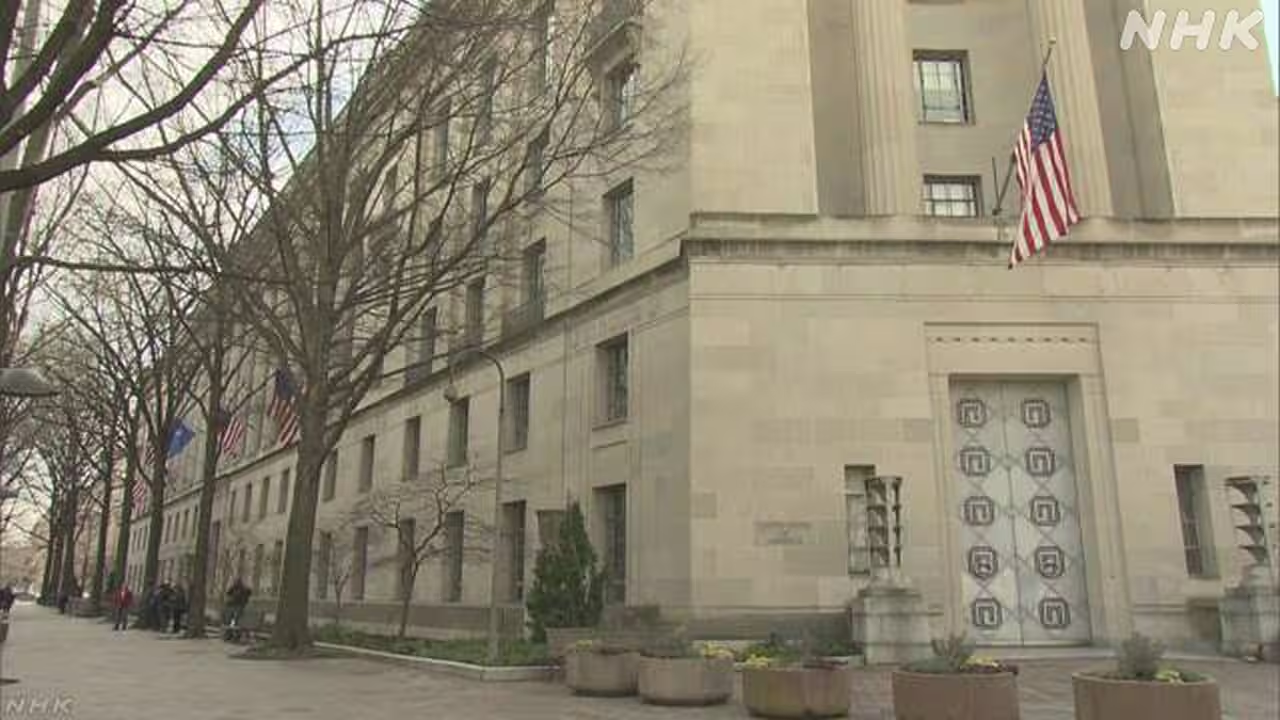
The US Department of Justice has announced the indictment of Raul Castro, the former President of the National Assembly of Cuba, in connection with the 1996 shootdown of two American civilian light aircraft. The charges stem from an incident in which the Cuban military downed planes operated by the Miami-based exile group Brothers to the Rescue. At the time of the event, Castro served as Cuba’s Minister of Defence.
According to the indictment, which was unsealed on Wednesday, Castro faces one count of conspiracy to kill US nationals, four counts of murder, and two counts of destroying an aircraft. The legal action marks a significant escalation in long-standing grievances between Washington and Havana regarding the incident, which occurred three decades ago.
The announcement comes against a backdrop of deteriorating relations and recent geopolitical developments. The US Treasury has recently imposed sanctions on Cuba’s intelligence agency, nine Cuban nationals, and several top Communist Party officials and generals. Concurrently, reports have emerged indicating that Havana has acquired over 300 military drones from Russia and Iran, further complicating the security landscape in the region.
Cuban President Miguel Diaz-Canel has previously warned of a "bloodbath" in the event of a US attack, reflecting the high stakes of current diplomatic tensions. Despite the severity of the charges, analysts suggest the indictment could backfire by strengthening hardliners within Cuba’s communist base. Raul Castro, aged 94, is viewed by some as a "legitimacy anchor for the regime," and the Cuban government is unlikely to surrender him.
The Cuban government has not immediately commented on the indictment. The legal proceedings face significant logistical hurdles, as the specific jurisdiction and procedural status, including whether a trial can proceed in absentia, remain undetermined. The move underscores the persistent friction in US-Cuba relations, even as recent diplomatic efforts, such as visits by CIA Director John Ratcliffe, attempted to engage with Havana.