US and Iran escalate Gulf conflict as blockade takes effect and oil prices surge
Washington conducts third night of airstrikes against Iranian military sites, prompting retaliatory missile and drone attacks from Tehran across the Gulf region, while President Donald Trump reimposes a naval blockade and threatens further strikes on nuclear facilities.
The United States carried out a third consecutive night of airstrikes against military targets in Iran, marking a significant intensification of hostilities in the Gulf region. US Central Command confirmed that operations began at 20:45 GMT on Monday, lasting five hours and targeting facilities in Bushehr, Bandar Abbas, Chah Bahar, Jask, Konarak, Abu Musa, and Kish Island. The stated objective of the campaign was to degrade Iran’s capacity to attack commercial shipping and civilians in the Strait of Hormuz. Iranian state media reported explosions across the southern coast, including in the port city of Bandar Abbas and the town of Jam, though officials stated no casualties resulted from the strikes.
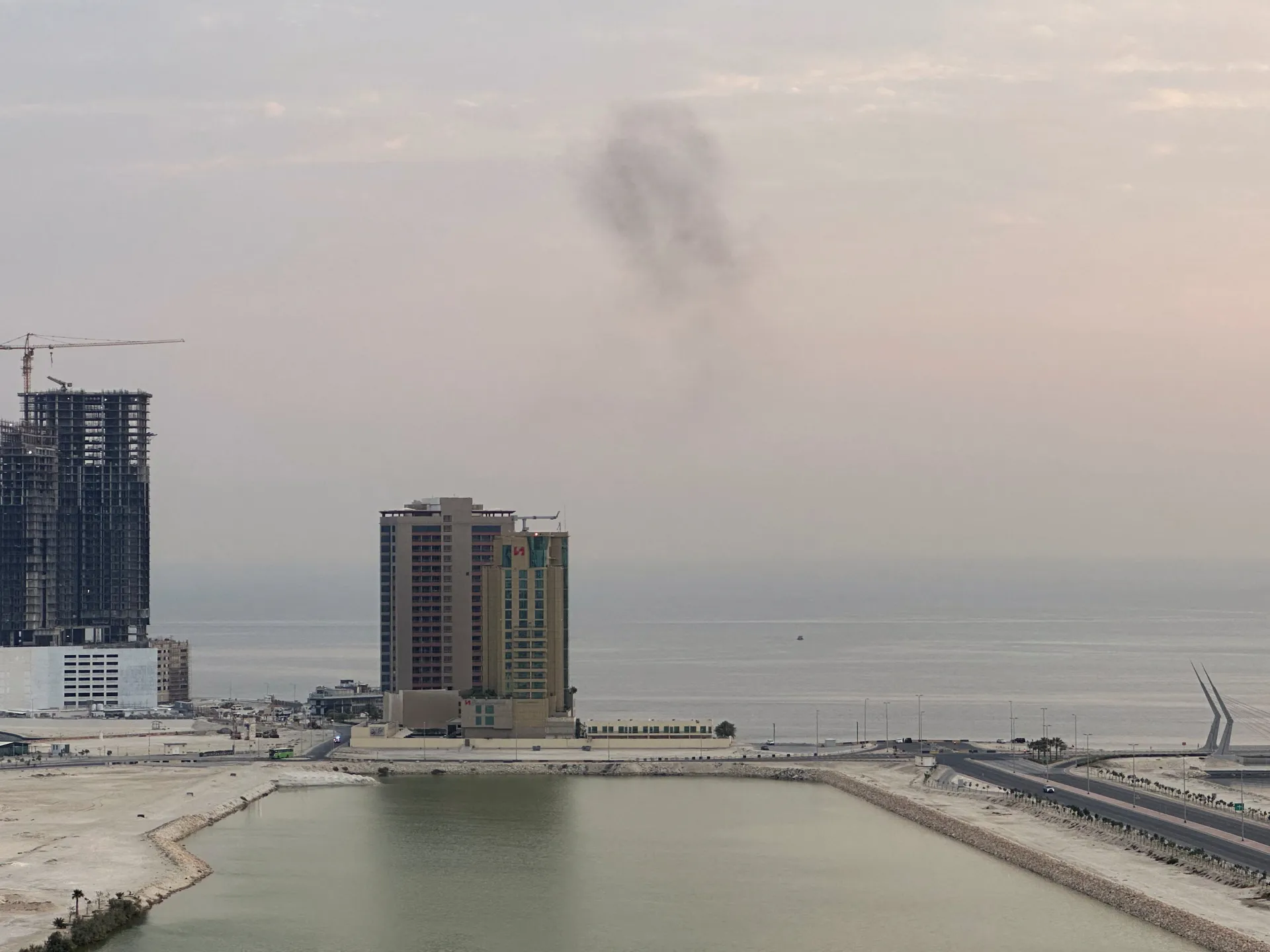
In response, Iran’s Islamic Revolutionary Guard Corps launched a widespread retaliatory campaign against US military assets and interests across the Gulf. The IRGC reported striking US military facilities in Bahrain, Kuwait, and Jordan, including a satellite communications centre, weapons storage depots, and a US Fifth Fleet base in Bahrain. In Kuwait, the Iranian army claimed to have targeted a US Patriot missile system and ammunition depots via drone. Jordan’s army reported shooting down four missiles in its airspace, after which the IRGC stated it had launched ballistic missiles at an airbase housing US forces, explicitly directing its animosity toward the US military presence rather than the Jordanian state.
The conflict has also directly impacted commercial maritime traffic, resulting in casualties. The United Arab Emirates reported that two of its oil tankers were struck by Iranian cruise missiles in Omani waters within the Strait of Hormuz. The attack resulted in the death of one Indian national and injuries to eight others. Iranian state news agency Tasnim described the vessels as “offending” supertankers, aligning with Tehran’s broader strategy to disrupt shipping lanes. The UAE noted that air sirens had sounded multiple times in Bahrain following the exchange of fire.
On the diplomatic and legal front, President Donald Trump formally notified Congress on July 10 that fighting had resumed on July 7, invoking authority to maintain US combat operations for an additional 60 days. While Trump stated that Iran’s offensive capabilities were being dismantled, he indicated that a diplomatic deal remained possible. However, he also threatened to strike Kuh-e Kolang Gaz La, a suspected nuclear site near Natanz, and reiterated demands that Gulf nations contribute to the cost of protecting shipping lanes. Concurrently, the US reimposed a naval blockade on Iran’s southern coastline, effective from 20:00 GMT on Tuesday, covering all ports and terminals along the coast as confirmed by the Joint Maritime Information Centre.
The escalation has triggered immediate economic repercussions, with Brent crude oil prices rising more than 9 percent to approximately $81 a barrel. Shipping traffic through the Strait of Hormuz fell by roughly 52 percent between July 10 and July 12, according to ship-tracking firm Kpler. In Tehran, Ebrahim Azizi, head of the Parliament’s National Security Committee, announced the formal introduction of a bill to manage the Strait of Hormuz, warning that Iran remains steadfast in defending its red lines regarding the security and sustainable progress of the waterway.