US and Chinese leaders signal positive stance on relations
The meeting in China highlights a divergence in diplomatic tone, with Taiwan and Iran emerging as key points of contrast in the bilateral dialogue.
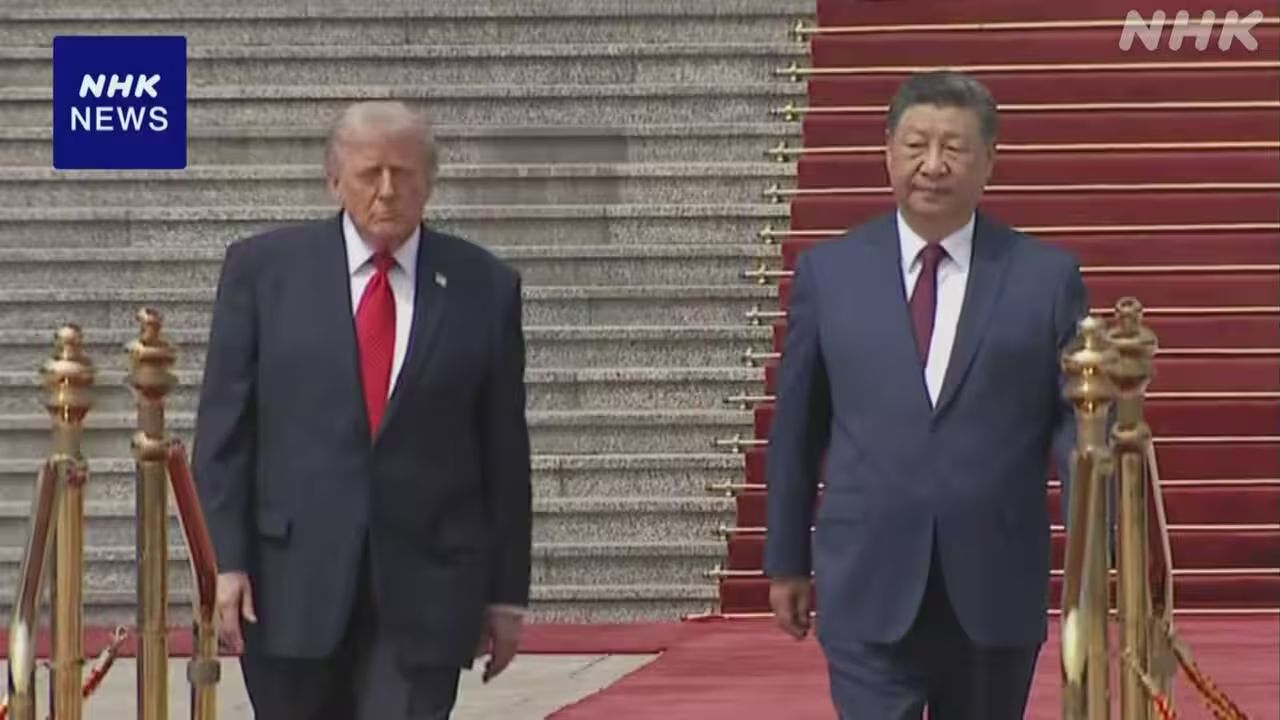
US President Donald Trump and Chinese President Xi Jinping held talks in China on 15 May 2026, marking a significant engagement between the two nations. The leaders discussed economic cooperation and demonstrated a positive attitude towards the development of bilateral relations, signalling a willingness to strengthen ties across key sectors.
However, the diplomatic dialogue was not without its complexities. President Xi strongly cautioned the US regarding Taiwan during the discussions, indicating a clear divergence in statements compared to other issues such as the situation in Iran. This distinction suggests that while economic and general diplomatic channels remain open, core sovereignty concerns continue to define the boundaries of the relationship.
The summit has prompted immediate regional responses, with Japan reportedly advancing its understanding of the meeting's content. Tokyo is currently adjusting a US-Japan telephone consultation to align with the latest developments, reflecting the broader geopolitical implications of the US-China dialogue.
Attention also remains fixed on other geopolitical flashpoints, including the Middle East and the Hormuz Strait. The report highlights specific focus areas regarding the US-China relationship alongside ongoing diplomatic activity between the US and Iran, where continued attacks have been reported near the strait.
While the full details of the economic cooperation agreements are not explicitly detailed in the immediate aftermath of the summit, the positive stance on bilateral relations underscores the importance of maintaining dialogue. The temperature difference in announcements regarding Iran versus Taiwan remains a point of observation for international observers monitoring the stability of global diplomatic channels.