UN maritime agency to evacuate 11,000 sailors as US warns against Hormuz tolls
The International Maritime Organization coordinates evacuation with regional states while Secretary of State Marco Rubio asserts international law prohibits tolls on the strategic waterway.
The United Nations’ International Maritime Organization (IMO) has announced plans to evacuate more than 11,000 sailors stranded in the Gulf following the US-Israel war against Iran. The operation will be conducted in cooperation with Iran, Oman, the US, and other regional states. US Secretary of State Marco Rubio warned that no country may impose tolls on the Strait of Hormuz, citing international law. An interim deal has been signed to end the conflict, though disputes remain regarding IAEA inspections of Iran’s nuclear programme. Since the conflict began in February, global oil prices surged past $100 a barrel, and maritime traffic remains below pre-conflict levels.
IMO Secretary-General Arsenio Dominguez stated that safety guarantees have been secured and conditions for safe navigation verified for the evacuation operation, which will be conducted in cooperation with Iran, Oman, the US, and other coastal states. "We have secured the necessary safety guarantees and have thoroughly verified the conditions for safe navigation to support these operations," he added. Dominguez described the deal as a decisive step towards restoring maritime security and ending attacks against civilian shipping, welcoming the peace agreement concluded between the United States and Iran.
US President Donald Trump claimed on social media that Iran had agreed to "highest level Nuclear inspections long into the future," a statement Iran contradicted by asserting the UN watchdog would not be able to inspect nuclear sites bombed by the US and Israel last year. Iran’s President Masoud Pezeshkian stated during a visit to Pakistan that Iran would "never negotiate with anyone, under any circumstances, ever, about our defensive capabilities." A US official responded that Tehran had agreed to robust IAEA inspections of the remains of its nuclear weapons programme.
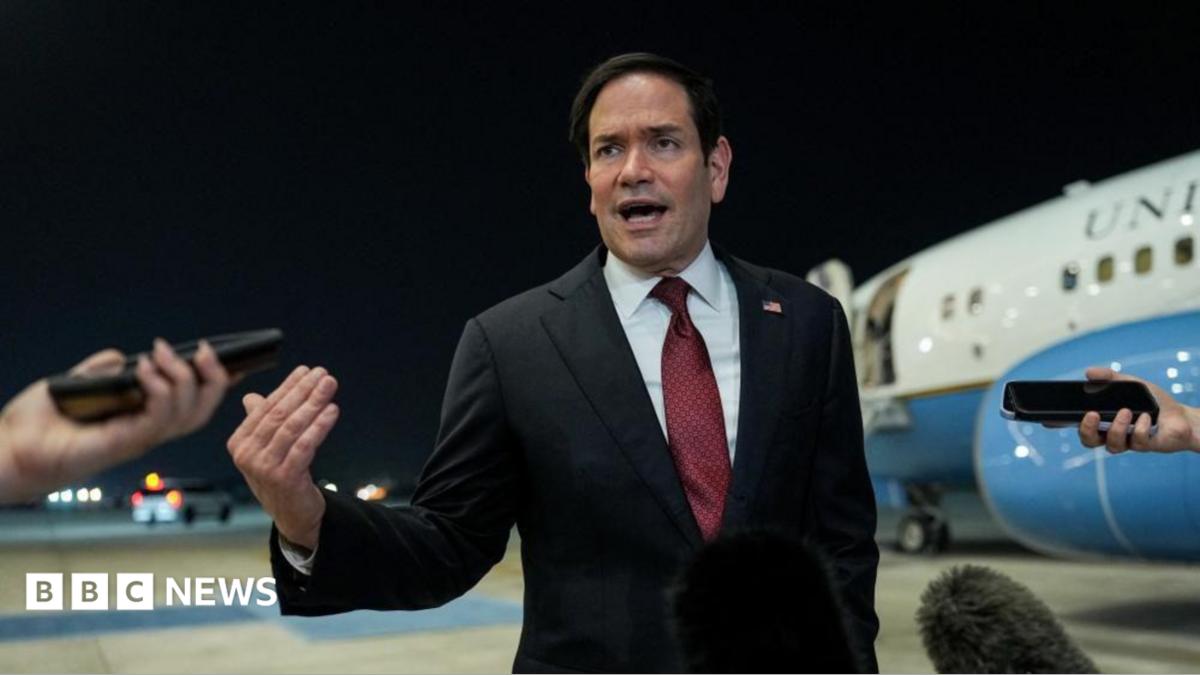
Rubio began a tour of the Gulf, visiting the UAE, Kuwait, and Bahrain, to discuss the deal with Tehran. The secretary of state warned that imposing tolls on the Strait of Hormuz violates international law regarding international waterways. "It's an international waterway. No country is allowed to charge tolls or fees on an international waterway. That's existing international law," he said upon arriving in the UAE, expressing confidence that regional countries would agree with the US position.
Maritime intelligence firm Kpler reported that at least 172 vessels have travelled through the reopened Strait of Hormuz since the conflict began, with 42 ships transiting on Saturday alone. Ship-tracking data analysed by BBC Verify indicates that more than 200 tankers appear to be waiting inside the strait as of Tuesday. Two temporary routes through the strait have been identified for the evacuation plan, with vessels to be contacted individually for instructions. The IMO said it would issue a daily report on the number of ships leaving the region safely.