Trump’s tariffs may push BRICS towards financial alternatives
An Al Jazeera opinion article argues that US economic pressure could encourage BRICS members to reduce their exposure to the dollar-centred financial system, despite deep divisions within the bloc.
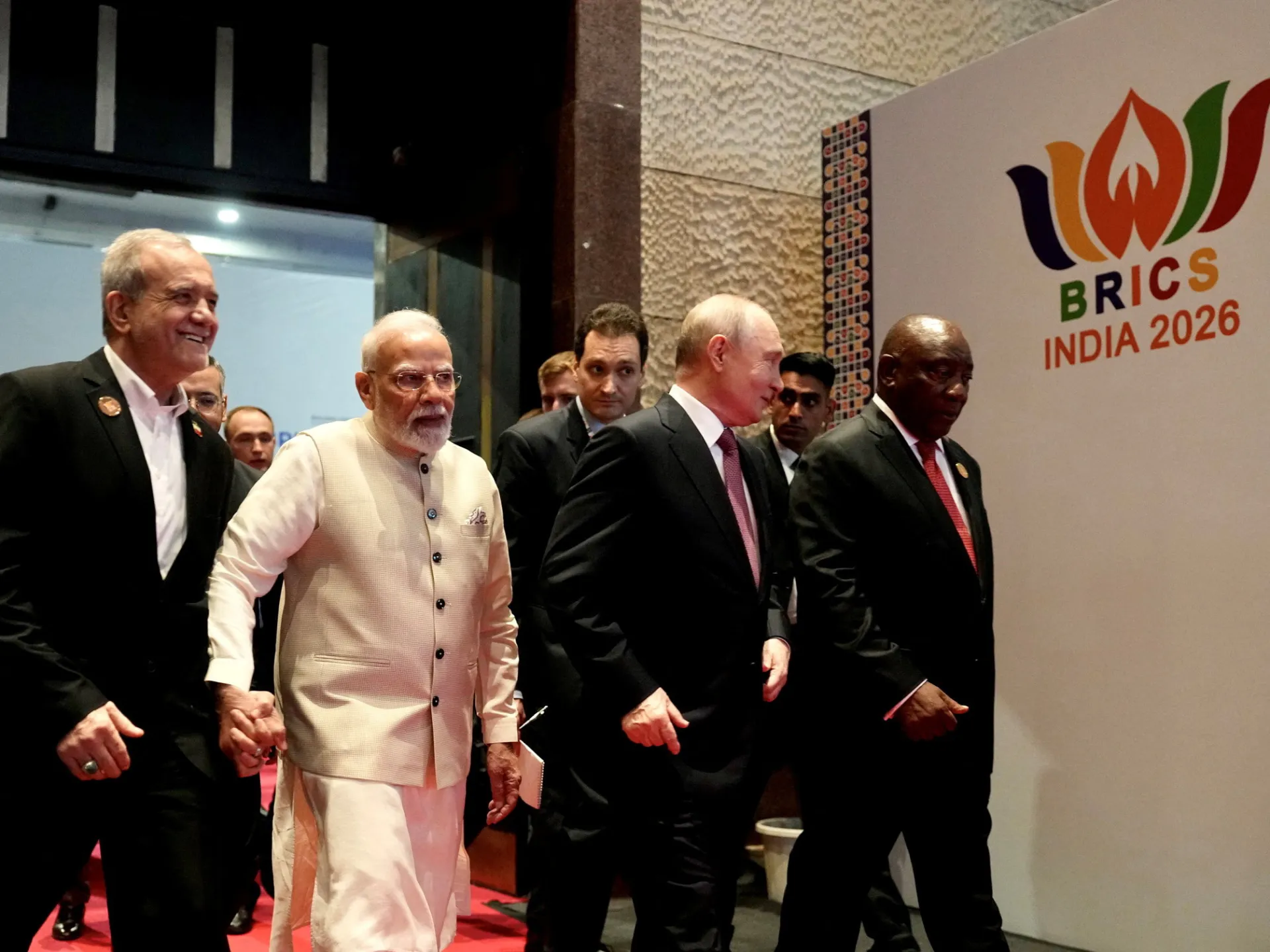
BRICS leaders are meeting in New Delhi as debate grows over whether United States President Donald Trump’s tariff policies and use of financial power could encourage closer economic cooperation among the group’s members and other countries.
An Al Jazeera opinion article argues that Washington’s use of market access, sanctions and the dollar as instruments of political leverage may strengthen incentives to develop alternative payment and trade arrangements. It does not establish that Trump’s policies have directly caused new BRICS cooperation.
The 11-member grouping represents nearly half the world’s population and about 40 per cent of global gross domestic product. But its members have significant political differences, including tensions between India and China and divisions involving Iran, Saudi Arabia and the United Arab Emirates. BRICS does not share a common ideology, security policy or geopolitical alignment.
The dollar remains dominant in global finance. It accounted for 57.1 per cent of global foreign-exchange reserves in the first quarter of 2026, compared with 2 per cent for China’s renminbi. The article distinguishes between replacing the dollar and reducing reliance on it, saying the latter is already being tested through bilateral transactions.
South Africa has connected to China’s Cross-Border Interbank Payment System, while Brazil and China are increasingly using their own currencies in bilateral trade. India and the UAE have settled transactions in rupees and dirhams, and China and Russia have shifted much of their trade into national currencies.
BRICS members are also discussing links between fast-payment networks and potentially central bank digital currencies. The New Development Bank is targeting 30 per cent of financing in members’ local currencies, with that share potentially rising to 40–50 per cent in the 2027–2031 cycle.
The initiatives remain experimental, bilateral or limited in scale, and do not amount to a rival global financial system. The article argues they could nevertheless give governments and businesses more options to conduct transactions outside Western-dominated financial infrastructure.