Total Solar Eclipse Casts Shadow Over Spain in First Century-Long Wait
The path of totality traversed the Iberian peninsula on 12 August 2026, marking the first total solar eclipse visible in Spain in over a century.
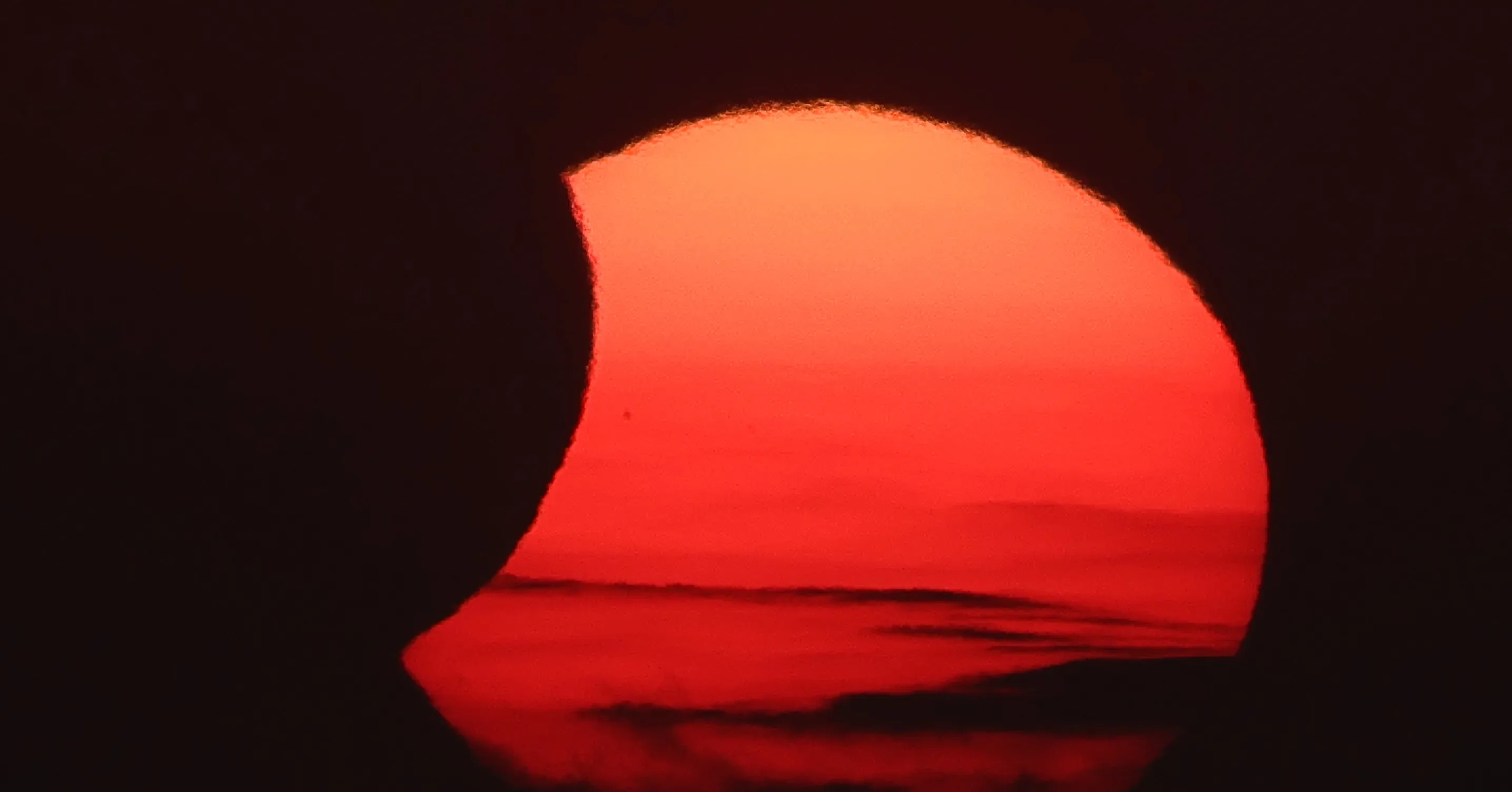
Spain witnessed its first total solar eclipse in more than a century on Wednesday, as the moon’s shadow swept across the Iberian peninsula. The astronomical phenomenon, which was also partially visible across northern North America, much of Europe, and western Africa, drew significant public attention as crowds gathered to observe the sky darken. The event lasted approximately four and a half hours, with the phase of totality lasting just under two minutes in specific regions.
The path of totality began in the Arctic Ocean north of Greenland, continued west of Iceland, and crossed the North Atlantic before reaching the Iberian peninsula at exactly 8:30 p.m. CEST. Regions experiencing full totality included Galicia, Asturias, Castile and León, Madrid, Aragon, Catalonia, the Valencian Community, and the Balearic Islands. In contrast, the rest of the country and parts of Portugal observed a partial eclipse.
During the brief window of darkness, the solar corona became visible, particularly noted at locations such as Arenal Beach in Llucmajor, Mallorca, and San Asensio in La Rioja. The sun’s position just above the horizon created a photogenic sight for observers. Crowds gathered at El Cerro del Tío Pío Park in Madrid and various beaches in Mallorca and Valencia to witness the event. In a unique intersection of sport and astronomy, Real Madrid fans observed the eclipse through special glasses prior to a Teresa Herrera Trophy match at Riazor Stadium.
Beyond public observation, the eclipse provided a critical opportunity for scientific research. NASA conducted experiments along the path of totality, including tracking the moon’s shadow with a WB-57 high-altitude research aircraft flying at 50,000 feet. The agency’s scientists aimed to gather new data on the dynamics of the solar corona, the sun’s outermost atmosphere, which can only be studied in detail during total eclipses.
The space agency also facilitated a project involving students from various US universities who launched scientific balloons in Iceland and Spain. The objective was to analyse how the temporary darkening of the sky alters conditions in Earth’s atmosphere. Data gathered from these missions will help researchers better understand the environmental effects of such astronomical events. A partial lunar eclipse is scheduled for later in the month, visible across the Americas.