Tokyo Stock Market Re-Enters 60,000 Yen Range Amid Global Market Volatility
The Nikkei Average surged over 300 yen on Monday, driven by prior gains in the US technology sector, as NHK reports on concurrent seismic and wildfire activity across Japan.
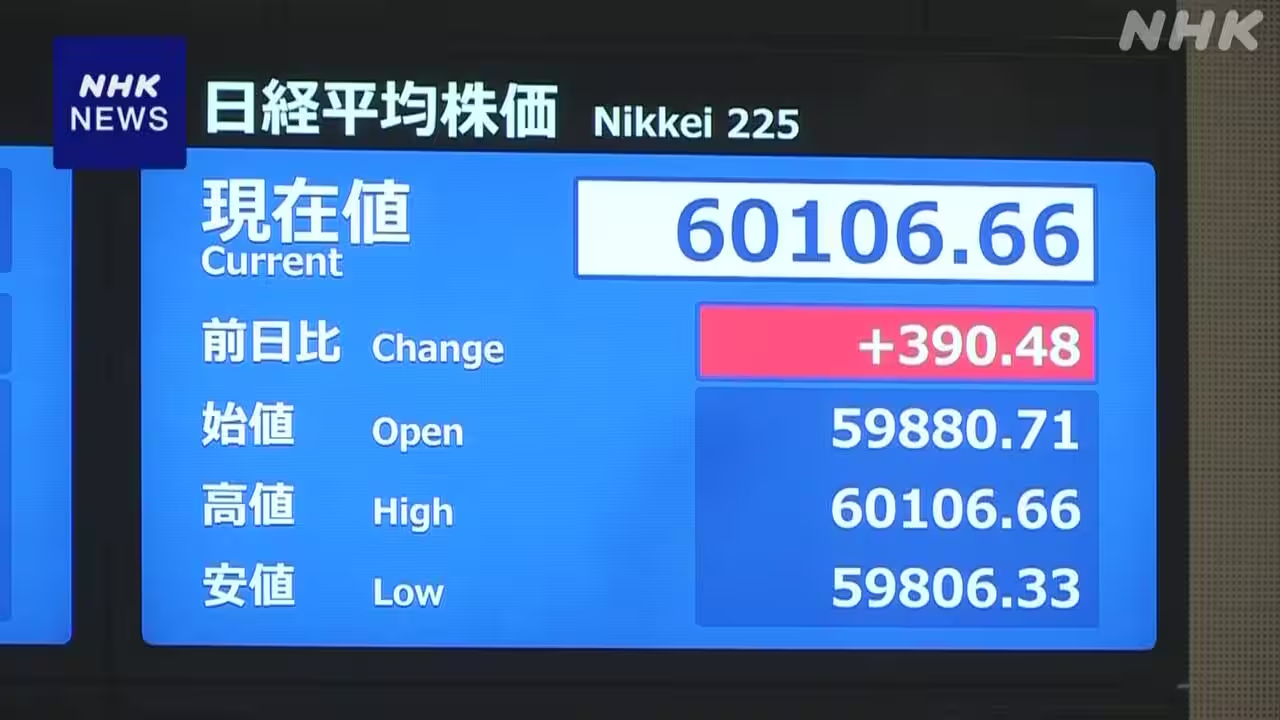
The Tokyo Stock Market witnessed a significant shift in momentum on Monday, 27 April 2026, as the Nikkei Average climbed by more than 300 yen. This surge propelled the index back into the 60,000 yen range, marking a re-entry into a level previously vacated by the benchmark. During the trading session, the index updated its intraday high, reflecting renewed investor confidence in the immediate term.
According to reporting by NHK, the market movement was closely linked to external factors, specifically the performance of the United States equity markets on 24 April. The Japanese market appears to have reacted to strong gains recorded in New York, particularly within the Nasdaq Composite. This index is heavily weighted towards technology stocks, suggesting that sector-specific optimism in the US may have transmitted through global trading channels to influence the Tokyo session.
While the financial data points to a recovery in sentiment, the broader news cycle on the same day highlighted severe challenges facing the nation's physical infrastructure. Concurrent with the market rally, a magnitude 5 strong earthquake struck southern Tokachi in Hokkaido. The seismic event prompted travel disruptions for JR北海道, with certain train services suspended, and led to warnings from the Meteorological Agency regarding potential aftershocks over the coming week.
Compounding the regional instability, reports from NHK indicated active wildfire incidents in multiple prefectures. Blazes were confirmed in Iwate and Fukushima, with fire suppression efforts in the latter area resuming after several days of containment attempts. Additionally, a wildfire in the Rikuchu region continued to burn, necessitating ongoing emergency responses. These natural disasters presented a stark contrast to the optimism displayed in the financial sector.
Despite the volatility and the backdrop of natural emergencies, the financial data suggests a resilience in the Japanese market. The ability of the Nikkei Average to reclaim the 60,000 yen threshold, even while domestic authorities manage earthquake and fire risks, underscores the complex interplay between global capital flows and local governance challenges. The market's reaction to the US Nasdaq performance remains the primary driver of this specific trading day's outcome.
As trading concluded, the focus remains on whether this surge represents a sustained policy shift or a transient reaction to overseas indices. With the intraday high updated and the index firmly back in the 60,000 yen bracket, analysts will be watching for further confirmation of this trend against the backdrop of the ongoing natural disasters affecting northern and northeastern Japan.