The end of celebrity neutrality: Why silence is no longer a safe political stance
Sociologist Ellis Cashmore argues that the social-media age has transformed public figures into political actors, creating a "minefield" where even inaction carries consequences.
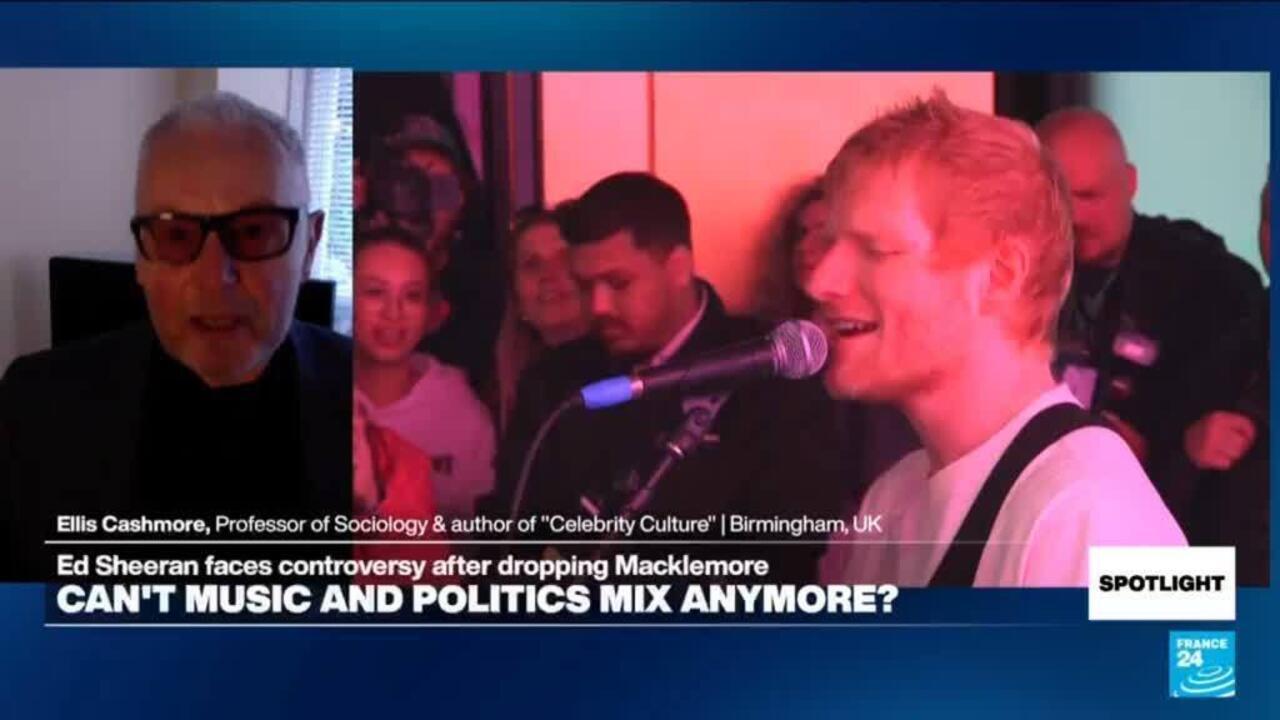
The traditional boundary between entertainment and politics has effectively dissolved, according to sociologist and author Ellis Cashmore. Speaking on France 24’s *Spotlight*, Cashmore argued that contemporary celebrity culture has fundamentally altered the expectations placed on public figures. While there was a time when stars could retain the option of political neutrality, he noted that today, even silence or a refusal to engage is increasingly interpreted as a political act.
Cashmore traced this historical shift from the explicitly political counterculture of the 1960s, through an era where commercially minded stars could distance themselves from contentious issues, to the current social-media age. In this modern landscape, audiences expect access not only to celebrities’ performances and private lives but also to their political convictions. The sociologist highlighted that movements such as #MeToo and Black Lives Matter accelerated this transformation by making public expressions of solidarity normative across both entertainment and sport.
However, Cashmore noted that while issues such as racism or equal rights often allow celebrities and institutions to present a unified voice, deeply contested geopolitical conflicts offer no comparable consensus. Despite the lack of a clear moral framework in these complex scenarios, the expectation for public figures to take a position remains. This dynamic creates what Cashmore described as a "minefield," where speaking, taking a stand, or remaining silent all carry significant political consequences.
The argument is contextualised by recent disruptions to Ed Sheeran’s North and South American tour. The tour was affected after Macklemore was dropped as an opening act following his onstage pro-Palestinian comments. In response, four supporting acts, including Aaron Rowe, Beoga, Lukas Graham, and Finneas, withdrew in solidarity with Macklemore.
This incident illustrates the high stakes now inherent in celebrity politics. As Cashmore observed, the modern audience is no longer satisfied with performance alone; they seek to understand the political convictions of the figures they follow. The Ed Sheeran tour disruption serves as a practical example of the "minefield" Cashmore describes, where the actions of one artist can trigger a chain reaction of political solidarity and withdrawal.
For public figures, the calculus of engagement has changed. The era of the apolitical celebrity, who could focus solely on commercial success, appears to be waning. As Cashmore’s analysis suggests, the pressure to define one’s political stance is now an intrinsic part of maintaining relevance in the social-media age.