Syria, Israel and Turkiye trade accusations over military presence at UN Security Council
Diplomatic tensions flared during the council’s monthly session on Syria’s post-Assad transition, with each nation challenging the legitimacy of foreign forces on its soil.
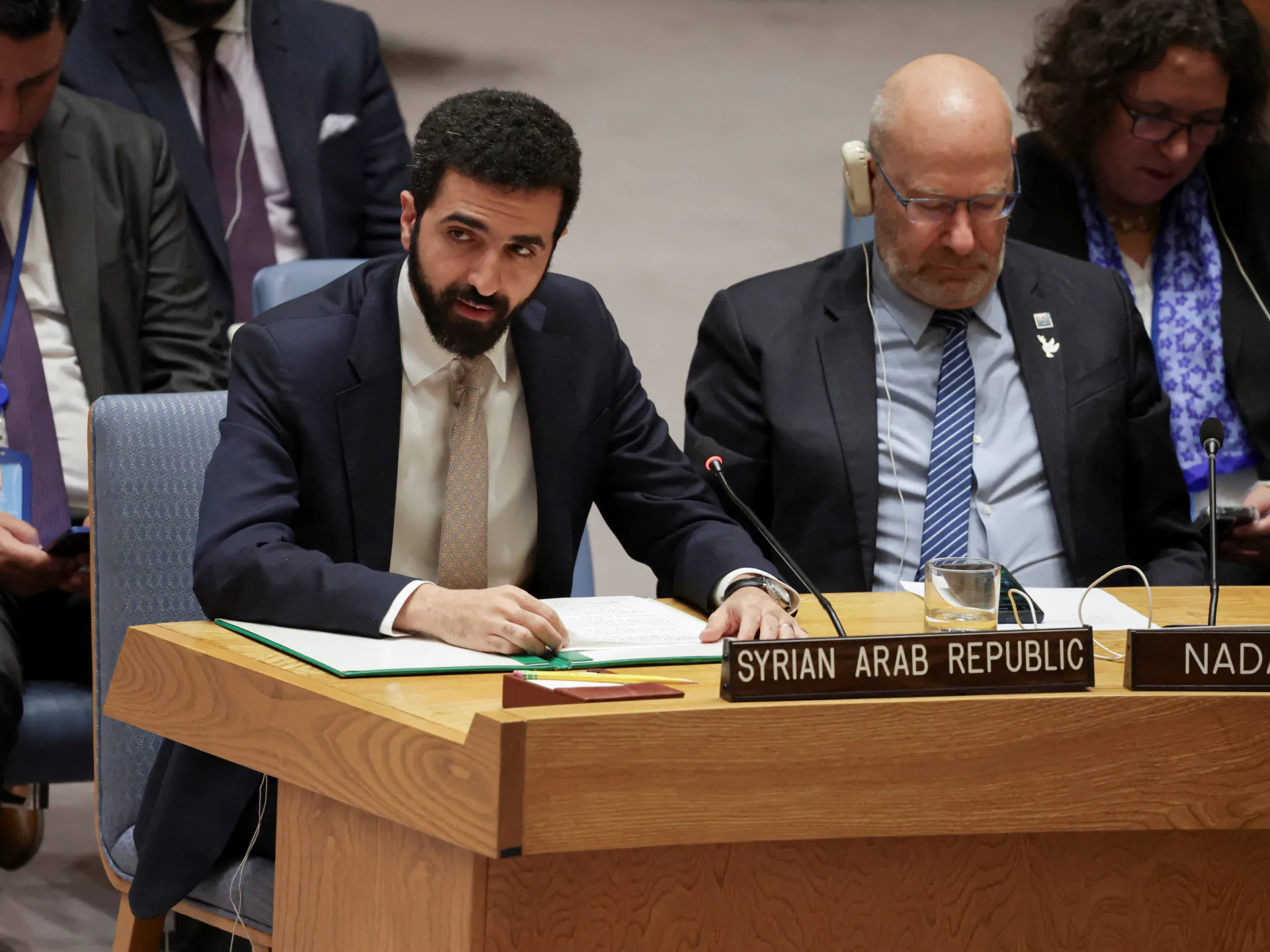
The United Nations Security Council’s monthly session on Syria’s post-Assad transition devolved into a sharp exchange between Syria, Israel and Turkiye regarding the legitimacy of their respective military presences in Syrian territory. The dispute centres on which foreign forces hold the right to operate on Syrian soil following the recent change in regime, with each representative citing international law and regional stability to support their position.
Syria’s Permanent Representative to the UN, Ibrahim Olabi, stated that he had hoped to focus on the country’s progress but was compelled to address Israeli actions. He described Israel as posing the “greatest threat facing the stability of the entire region, not just Syria.” Olabi accused Israel of responding to mediation efforts and dialogue with “air strikes, incursions and violations,” noting that Israeli forces had penetrated villages, displaced people and bombed facilities.
Olabi pointed to an emergency declaration by 44 nations outside the council chamber, which condemned a visit by Israeli leadership to Jabal al-Sheikh on 9 September as an unlawful act and a “blatant violation” of international law. This declaration served as a key reference point for Syria’s argument that Israeli incursions lack proper legal basis.
Israeli Ambassador Danny Danon countered by downplaying Israel’s presence in Syria and shifting the focus to Turkiye. He claimed that Ankara controls five per cent of Syrian territory with 20,000 troops and over 100 bases, an area he described as 50 times larger than Israel’s “security buffer.” Danon warned that Turkiye planned to expand its military capabilities inside Syria, asserting that the country is “following the Iranian proxy playbook.”
Turkish Ambassador Ahmet Yildiz defended the Turkish presence as being conducted at the invitation of the Damascus government. He categorically rejected Israel’s attempts to portray Turkiye’s cooperation with Syria as a threat, arguing that Israel was doing so to justify its own violations of international law. Yildiz accused Israel of undermining the current trajectory through “reckless attacks” and incursions, calling on Israel to de-escalate and withdraw its forces.
Yildiz further argued that Syria’s meetings should no longer focus on proxy issues, a dynamic he associated with the previous regime era. He described the ongoing focus on these matters as “frankly traumatising,” urging the council to move beyond the conflicts of the past.