Sports science experts dismiss concerns over Oklahoma QB John Mateer’s increased muscle mass
Despite social media speculation that the quarterback’s 224-pound frame could restrict mobility, experts say proper training maintains flexibility and rotational force generation.
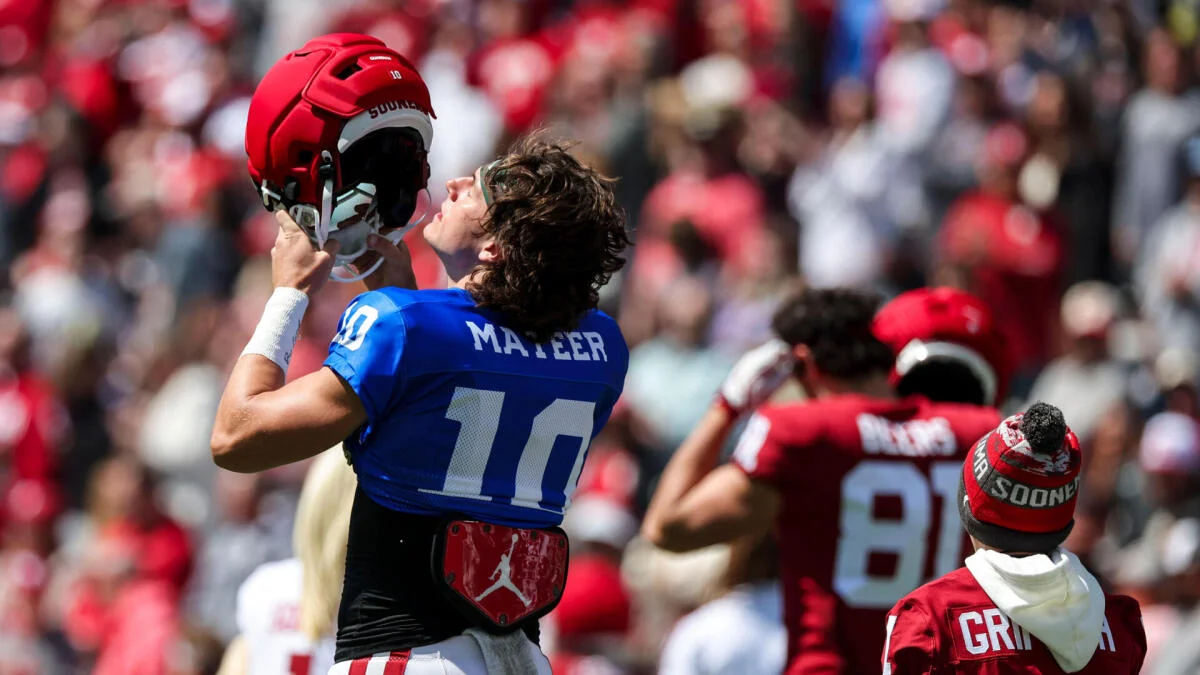
Oklahoma Sooners quarterback John Mateer has entered training camp weighing 224 pounds, a physical change that has sparked debate regarding his on-field mobility. Having gained between five and 10 pounds over the summer, Mateer’s increased muscle mass prompted social media speculation that his physique might restrict his throwing mechanics. However, sports science experts have dismissed these concerns, asserting that his physical development is unlikely to hinder his performance.
The discussion intensified after Mateer posted multiple shirtless images on Instagram following his appearance at the Manning Passing Academy in late June. Online commentary questioned whether his strapping build would affect the fluidity of his motion, with some commentators suggesting that increased bulk could lead to tightness that impedes throwing down the seam. Oklahoma did not respond to requests for comment from Mateer, his quarterback coach, or the strength and conditioning coordinator.
Pat Powers, a sports science researcher with experience in the NFL and Driveline Baseball, argued that the notion of bulk inhibiting passing ability is incorrect. He noted that reputable training programmes incorporate mobility and flexibility work to ensure that general fitness gains do not compromise specific skill development. Powers explained that ecological dynamics allow players to adapt to body changes, meaning that improved general fitness can actually enhance a player’s capacity to practice and refine their skills.
Mateer’s athletic background further supports the view that his physical changes will not impede his performance. A former baseball player who skipped high school 7-on-7 football camps to play on the diamond, Mateer utilises a sidearm throwing motion similar to a shortstop turning a double play. Experts point out that baseball and football share similar rotational force generation mechanics, where power is drawn from the ground through the core rather than relying solely on the arm.
This approach contrasts sharply with the mechanics of former Oklahoma quarterback Tim Tebow, whose throwing style was often described as inefficient and overly reliant on upper body strength. While Tebow’s accuracy suffered due to a long, looping motion, Mateer’s ground-force-driven style is considered more efficient. With other SEC quarterbacks such as Arch Manning and Byrum Brown listed at similar weights, analysts suggest that Mateer’s added mass may actually help him withstand the physical demands of the conference.
Mateer’s previous season was marked by a hand injury sustained against Auburn, which diminished his passing effectiveness until he returned for the Red River Rivalry against Texas. While his 2025 campaign was up-and-down, experts maintain that the 10 pounds of muscle he has added is unlikely to ruin his development as a passer. The consensus among analysts is that proper conditioning will allow him to leverage his new frame without sacrificing the rotational power essential for his position.