SEC commissioner urges NCAA reform over breakaway amid league tensions
While some SEC leaders view a split as a viable option if federal legislation stalls, the commissioner maintains that unity and compromise with rivals like the Big Ten offer a more stable path forward.
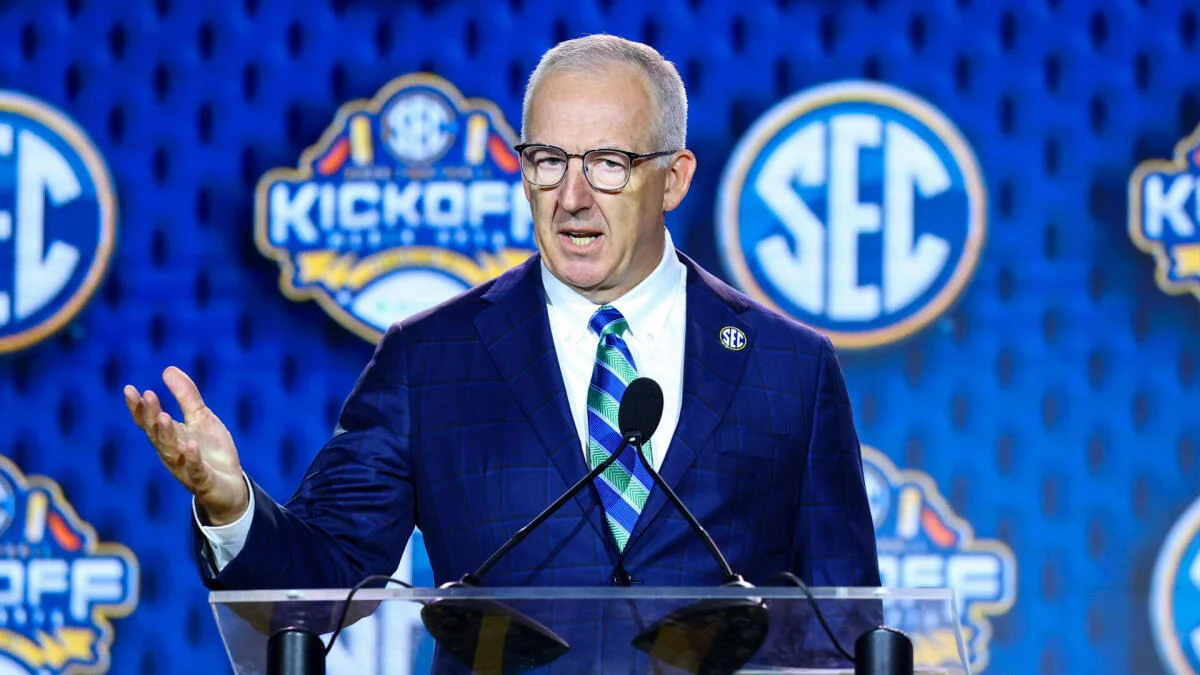
SEC Commissioner Greg Sankey has urged the conference to prioritise reform within the National Collegiate Athletic Association rather than pursuing a breakaway, despite intensifying frustration among some league leaders. The comment comes as speculation surrounding a potential SEC split from the NCAA continues to dominate the college football landscape, with Sankey characterising the dissent as honest communication rather than a strategic leverage tactic.
The push for a potential split gained traction during the SEC’s spring meetings in Destin, Florida, where Georgia president Jere Morehead warned that the conference must consider defecting if proposed federal legislation fails to deliver the regulatory solutions it has lobbied for. Georgia head coach Kirby Smart echoed this sentiment, stating that if uniform rules cannot be established, the conference should play its own game. Sankey, however, told CBS Sports that while the frustrations are real, the solution lies in improving the existing system rather than abandoning it.
Sankey argued that a breakaway would not resolve core challenges such as Name, Image, and Likeness regulations, revenue sharing disputes, or the barrage of eligibility-related lawsuits. He warned that leaving the NCAA would likely invite further congressional scrutiny, noting that the SEC would find itself back in front of lawmakers regardless of its structural independence. Instead, he advocated for realistic fixes and common-sense compromises with other major conferences, particularly the Big Ten.
The commissioner cited his leadership during the 2020 pandemic season as evidence of the value in maintaining a unified structure. When the Big Ten and Pac-12 initially postponed their fall seasons, Sankey worked to secure commitments from the ACC and Big 12, arguing that three Power Five conferences playing together provided necessary legitimacy. This coordinated approach eventually forced the Big Ten and Pac-12 to reverse course and play shortened schedules, demonstrating the power of collective action in a crisis.
Despite the SEC’s status as a television ratings behemoth, Sankey acknowledged that the conference’s leverage has shifted in recent years. The Big Ten has won the last three national championships and has swayed the ACC and Big 12 to support a 24-team College Football Playoff format, leaving the SEC somewhat isolated in its expansion desires. Sankey emphasised that splintering the sport would not improve college football, urging stakeholders to focus on finding workable solutions within the current framework rather than engaging in six months of offseason debate over national championship legitimacy.