School shootings in Thailand and Philippines expose gaps in regional firearm governance
Recent attacks by teenagers in Southeast Asia have prompted a critical review of how civilian firearms are regulated, stored, and transferred across national borders.
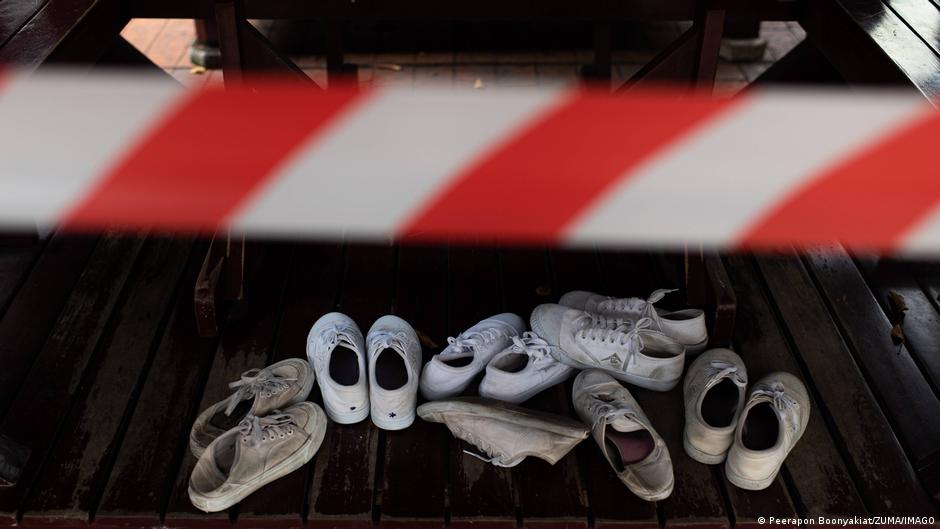
Deadly school shootings in Thailand and the Philippines have intensified scrutiny of firearm access and regulatory enforcement across Southeast Asia. In Thailand, a 14-year-old student killed his grandparents and six others at a school outside Bangkok, using a handgun belonging to his grandfather. In the Philippines, a ninth-grade student in Zamboanga killed a classmate before dying by suicide, using a weapon owned by his father, a customs police official. These incidents have highlighted the ease with which minors can access legally owned weapons in the region.
The scale of the issue is underscored by data from the Small Arms Survey, which estimated in 2017 that Thai civilians possessed around 10.3 million firearms, with more than 4 million unregistered. This high density of civilian firearms contributes to Thailand’s estimated firearm death rate of 3.49 per 100,000 people, one of the highest in Asia. The Philippines also holds several million firearms in civilian hands, raising similar concerns about storage and accountability.
In response to the recent violence, Thai Prime Minister Anutin Charnvirakul has suspended new firearm purchase permits and ordered a review of existing licences. The government is considering measures such as limiting licence validity, tightening health checks, and introducing an amnesty for unregistered weapons. However, critics note that previous emergency responses have often been scaled back, suggesting that ad hoc measures may lack long-term efficacy.
Experts argue that the core issue is not merely the existence of laws, but the gap between regulation and the political economy of firearms. In Thailand, possession licences remain valid for life, and applicants are not subjected to mental-health screening. Additionally, government "welfare gun" programs have allowed officials to obtain discounted firearms, which critics say has contributed to a vast secondary market. Raihan Yusoph, a researcher at Mindanao State University, noted that once millions of firearms are in circulation, registration laws alone cannot remove them.
In the Philippines, the recent attacks have sparked debate over juvenile criminal responsibility, with politicians reviving proposals to lower the age of criminal accountability. However, Yusoph described this as a distraction from the fundamental question of firearm access. The Philippine government has acknowledged a legal gap concerning the criminal responsibility of firearm owners whose weapons are used by others, a problem illustrated by a June shooting in Tacloban where weapons issued to a police officer’s aunt and a private security company were used by teenagers.
Calls are growing for systemic legislation that holds gun owners accountable throughout the lifetime of a weapon. This includes tougher storage requirements, regular licence renewals, and penalties for negligence that allows unauthorised access. Regional intelligence sharing against illicit trafficking is also seen as essential, given the porous borders and the movement of guns between legal and illegal markets.
Beyond legislation, analysts point to the social status attached to firearms as a persistent driver of demand. Piyaporn Tunneekul, a criminologist at Nakhon Pathom Rajabhat University, stated that in Thailand, firearms are often viewed as symbols of power and protection. This cultural perception, combined with shifting social dynamics and declining patience in conflict resolution, continues to drive the acquisition of weapons, posing a challenge that legislation alone may not resolve.