Ousted Ukrainian defence chief demands wartime presidential vote
Mykhailo Fedorov’s call for an election during the conflict highlights deepening institutional tensions, despite constitutional prohibitions and severe security risks.
Mykhailo Fedorov, Ukraine’s former defence minister, has publicly urged President Volodymyr Zelenskyy to hold a presidential election while the war continues. In a nine-minute video released on Tuesday, Fedorov, who was dismissed from his post in July, argued that the state must maintain functional governance regardless of the conflict's duration. He contended that Russia should not have the authority to dictate when Ukrainians can elect their leaders, stating that democracy must not be held hostage by the ongoing hostilities.
The proposal has drawn support from former foreign minister Dmytro Kuleba, who warned that delaying elections until after the war could result in prolonged political stagnation. Kuleba noted that the political model established in 2019 has become emotionally exhausted and that the timeline for the end of the conflict remains uncertain. He suggested that waiting for a post-war environment might not yield a more civilised electoral process than one conducted during the conflict.
However, legal and security experts maintain that such an election is currently unfeasible. Olexiy Haran, a professor at the Kyiv-Mohyla Academy, pointed out that Ukraine’s constitution directly prohibits voting during wartime. He further highlighted the logistical impossibility of conducting campaigns amidst near-daily Russian missile and drone attacks, which pose significant risks to public gatherings and electoral infrastructure. Haran argued that a stable truce of at least six months is a prerequisite for a legitimate vote.
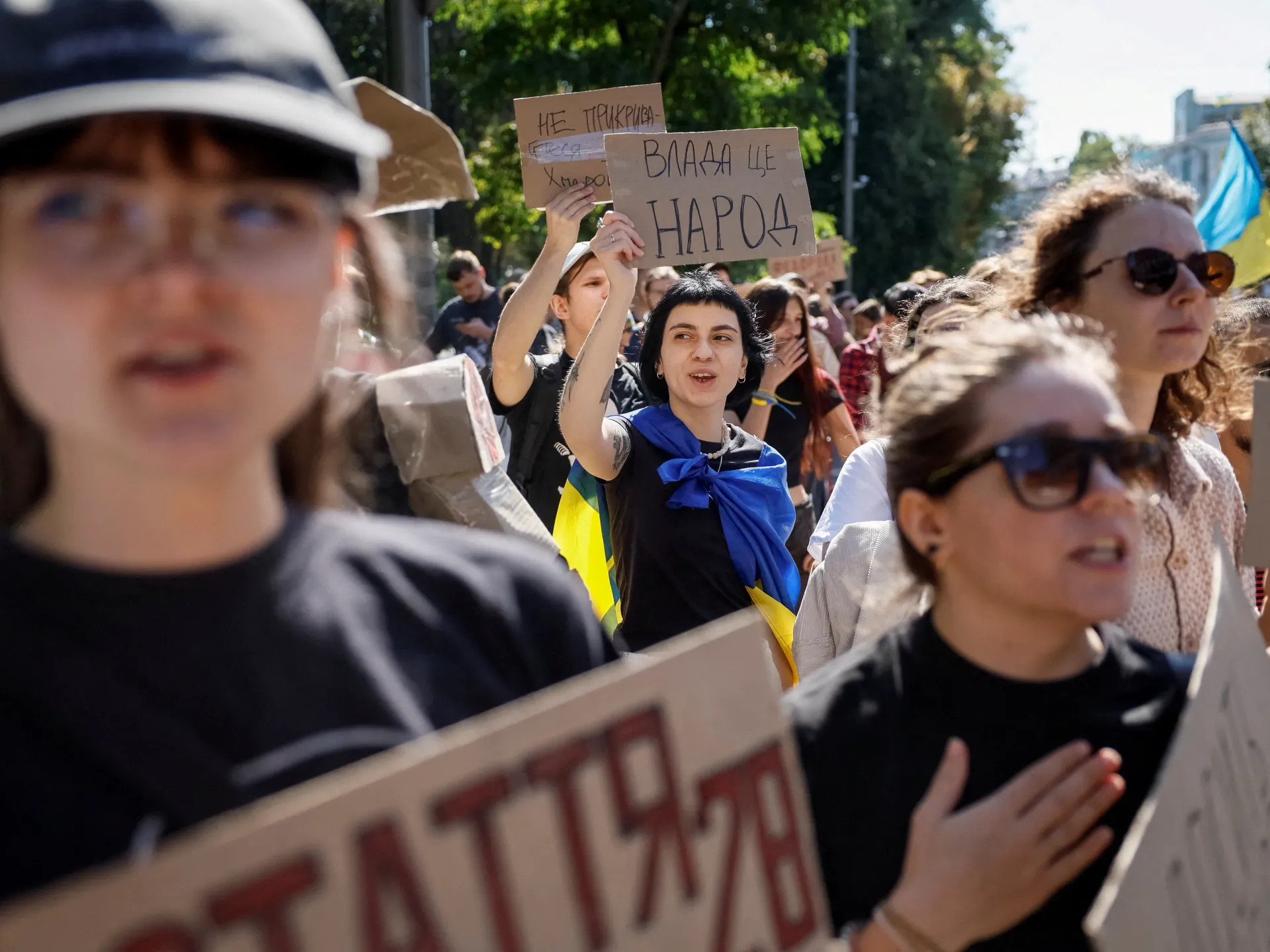
Fedorov’s intervention comes amid significant internal political friction. A late July poll by the Kyiv International Institute of Sociology indicated that Fedorov is the second-most-trusted potential president, with 63 percent trust, compared to 66 percent for former top general Valerii Zaluzhnyi and 56 percent for President Zelenskyy. Public rallies in Kyiv have drawn thousands of supporters urging the president to reinstate Fedorov, reflecting broader dissatisfaction with the current leadership structure and allegations of corruption within the administration.
Analysts suggest that Fedorov’s move reflects deeper institutional challenges rather than a viable electoral strategy. Kyiv-based analyst Igar Tyshkevych noted that the president’s inner circle has faced discreditation due to corruption scandals, leading to a loss of trust in state institutions. While Fedorov has refused other roles, including a position as presidential aide, observers like Svetlana Chunikhina, vice president of the Association of Political Psychologists of Ukraine, characterised his call for a wartime election as a "false start" that undermines his political authenticity.
The debate underscores the tension between the desire for political renewal and the practical constraints of wartime governance. As the conflict enters its fifth year, the lack of a stable truce remains the primary barrier to electoral reform. Fedorov’s stance, while resonating with some citizens seeking accountability, is viewed by many experts as a reflection of personal political positioning rather than a feasible policy solution.