Russia’s first wartime parliamentary vote tests Kremlin’s grip on a weary electorate
With the war in Ukraine entering its fifth year, Russian voters face a State Duma election overshadowed by fuel shortages, mobilisation fears, and the exclusion of the main anti-war party.
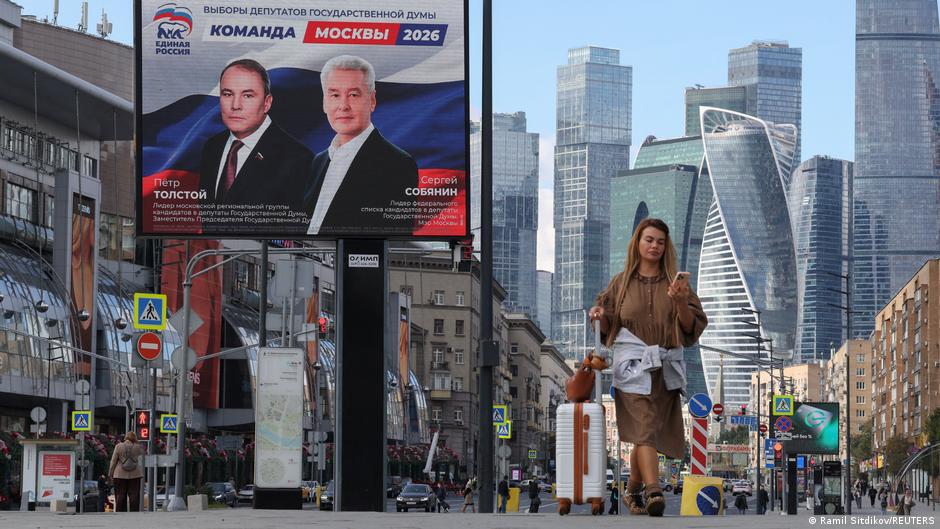
Russians are set to vote for a new State Duma between 18 and 20 September 2026, marking the first parliamentary election held during the ongoing war in Ukraine. The vote comes at a time of heightened public anxiety, driven by rising fuel shortages, drone strikes, and persistent rumours of a new mobilisation drive. For the Kremlin, the election serves less as a democratic contest and more as a critical gauge of domestic loyalty and support for the continuation of the conflict.
Polling data indicates a significant shift in public sentiment. According to independent pollster ExtremeScan, 60 per cent of Russians believe the war has had negative consequences for their day-to-day lives. State pollster FOM reports that nearly half of respondents describe a prevailing sense of alarm in their communities. Furthermore, the Levada Center finds that six in 10 Russians now favour peace negotiations with Ukraine, a sentiment that contrasts sharply with the ruling party’s platform.
United Russia, the party de facto led by President Vladimir Putin, is expected to secure victory. The party is campaigning on a platform that lists victory in the war among its primary priorities, with its candidate list headed by individuals presented as veterans of the conflict. However, the exclusion of the liberal opposition party Yabloko has complicated the political landscape. Yabloko, the only registered political force explicitly opposing the war, was barred from running by a recent court decision despite a surge in popularity among younger voters.
The removal of Yabloko has prompted opposition figures to organise alternative forms of protest. Yulia Navalnaya and Maxim Katz are urging supporters to back any party other than United Russia to reduce the ruling party’s tally. Yabloko, meanwhile, is encouraging its base to spoil their ballots. Opposition politician Ilya Yashin has suggested that the true measure of discontent will be the length of queues at polling stations at noon on 20 September, which he describes as a visible expression of public mood.
Sociologists note that the current climate is defined by uncertainty. Margarita Zavadskaya, a senior research fellow at the Finnish Institute of International Affairs, attributes the growing war fatigue to a shift in how Russians perceive the cost of the conflict. Elena Koneva, founder of ExtremeScan, notes that citizens are increasingly asking how much the war costs their families and whether they are prepared to pay that price. Some citizens are even leaving the country ahead of the vote, fearing they could be drafted.
The Kremlin is reportedly monitoring turnout closely, aware that low participation could undermine the narrative of broad support. Recent hints from Moscow regarding a potential round of peace talks in October may be a tactical move to calm the electorate. As the war enters its fifth year with little sign of an imminent end, the election results will provide a key indicator of how much legitimacy the government retains to pursue further escalation.